
French Brioche Bread
French Brioche Bread
This is my Michelin Star dad’s French brioche bread recipe from back in his restaurant days. Things may have changed a fair bit since then but this homemade brioche bread really takes me back – it’s so soft and buttery and pretty simple to prepare!
I like to eat mine plain with even more butter on top (!), but you could try making brioche french toast, or a brioche bread and butter pudding.
Check out the video and follow my step-by-step guide to this classic french brioche recipe.
Looking for more bread recipes? Check out my Bread 101 video and my Soft Milk Bread recipe.

Ingredients
Method
Add the flour, sugar and salt to the bowl of a stand mixer fitted with a dough hook attachment. Add in the eggs, milk and yeast, then knead on a low speed for 5 minutes, then on a medium speed for 10 minutes. Scrape the sides every couple of minutes.
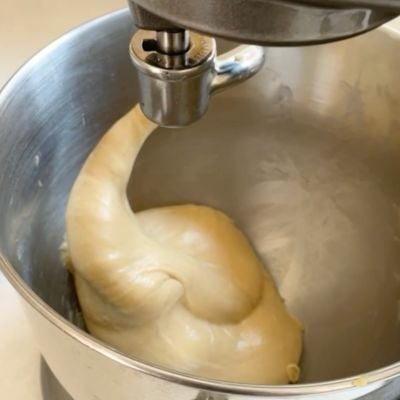
Slowly add in the butter, a piece at a time and again scrape down the bowl as needed, then continue kneading for 7-8 minutes or until shiny and glossy.
Lift the dough onto a lightly floured work surface and shape into a rough ball. Add it to a lightly oiled bowl and proof for 2 hours.
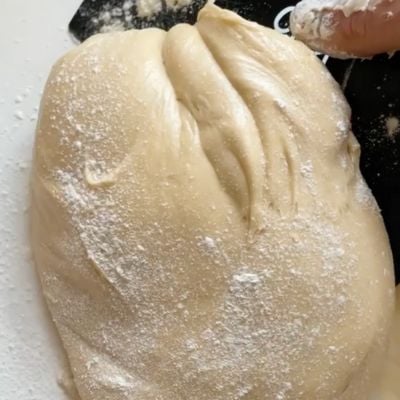
After 2 hours, knock the dough back, shape it into a rough ball again, then add it back into a lightly oiled bowl and refrigerate overnight.
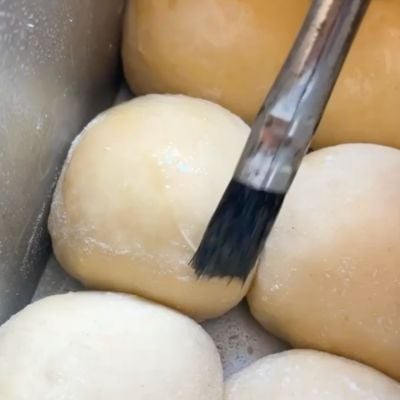
The next day, split the dough into 65g balls. Lift them into a tin (8 per tin - it will make 2 loaves), egg wash and proof for another 1.5 hours.
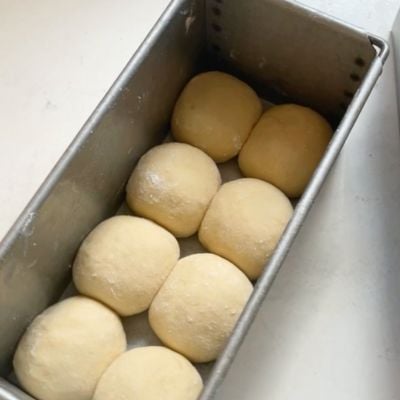
Once proofed, egg wash the dough again and bake them in a preheated oven, non fan assisted at 200C for 15 minutes then at 185C for another 20-30 minutes or until golden. Allow to cool to room temperature if you can wait, or serve warm with lashings of butter!
Are you able to make and use the same dough within the same day?
It is hard as the dough is so soft and buttery it is very hard to handle. If you need to, you can proof the dough for an 45m at room temperature, then do another 1.5h in the fridge. That will make it colder and slightly easier to shape!
Matt, I just made a half batch of this in a pan. It’s so effing amazing. The texture, the butter taste. Unbelievable
So glad!!
Matt, are you sure this is The correct amount of
Butter? Mine is like a slab of buttee after the fridge.
Did you use a stand mixer?
Hi Matt,
My brioche isn’t rising, is there a way I can fix this? I’ve made the balls and put them in the loaf tins already?
Unfortunately it sounds like your yeast may have been inactive in which case I’m afraid it won’t rise
Can’t we bake it in the same day?
Enriched doughs like this are best chilled. Much easier to handle and gives the yeast time to feed on all the sugars!
Very low sugar, no?
Yes
Hi Matt could I use this for cinnamon rolls
I would recommend my cinnamon buns recipe for that 🙂
75g of milk?
Surely you mean 75ml?
75g
I don’t think I’ve ever, EVER, commented on one of these. Cannot thank you enough for sharing this. Perhaps the best brioche dough I’ve ever handled. Best wishes to you and yours. Happy thanksgiving!
Thank you so much!
Hello, both this recipe and the soft milk bread use non fan assisted oven. Why non fan assisted rather than assisted? Thank you!
No particular reason, I just always use non fan assisted!
Is it possible to freeze the dough at any point?
Best to freeze it once baked
Hi Matt,
If I want to use sourdough, which will be the amount?
Best,
I’m afraid I haven’t tested that
Hi! Why is the recipe from your cookbook that I have here different from the recipe above? Which one should I use?
Thanks!
You can try either 🙂 Both different!
Hi Matt,
Why is this recipe different from the one in your book?
Great book btw!
Matt
Just a different version to try! I would probably say I prefer the book one!
Could the dough be made in a breadmaker?
No
Brioche is almost 50% butter so the kneading attachment on a bread machine would never be strong enough to knead and emulsify the butter into the dough
Oooh la la. This amazing recipe was delicious and I want to thank you for sharing your talents with the World.
Keep doing awesome work.
Davina
London
I’m surprised that you take the dough out of the mixer just to shape it and put it back in before letting it rise the first time. Is that really necessary?
I can understand why it would be needed in a commercial bakery because the mixer would be needed for other things but if I’m only making the brioche I would be inclined to simply leave it in the bowl until it needs to be knocked down. Will that make a difference?
You want to shape the dough to build some surface tension and make it smooth so when you remove it from the bowl later, it is easier to shape.
I have two questions.
Why the resting time over night? Is that length of time important for any reason ? Like for example croissants rest for 48 hrs before they are baked … does this help for the final result to be even more airy?
The second question – it is very very soft dough … I don’t know if it’s meant to be or if my no4 shipton mill flour isn’t suitable (but I do use it for overnight leavened breads as well as Swiss Zopf and it seems to work fine)..
thank you.
It is an enriched dough, so it takes longer for the dough to ferment as the fat inhibits the yeasts ability to feed so a long overnight proof helps and also chills the dough making it much easier to handle. If the dough is chilled it shouldn’t be too soft really as the butter will firm up making it easy to handle!