
Apple & Almond Puff Pastry Tart
TIER 1
Apple & Almond Puff Pastry Tart
In Tier 1 we’re mastering the essential technique of laminating inverse puff pastry. This is trickier as the dough is wrapped in a butter block which means it can get a little sticky, but the resulting pastry melts in the mouth. We’ve covered laminating a few times so if you’ve tried those classes, you will be really confident heading into this. Once the dough has rested, we cut it into discs, fill it with an almond cream and finally add some sliced apples. After your first bite, you’ll want to eat the whole tray!

6
TARTS
Ingredients
Makes 6 Individual Tarts
Inverse Puff Pastry
Butter Block
100g Plain/All-Purpose Flour
300g Unsalted Butter, Room Temperature
Dough
200g Plain/All-Purpose Flour
4g Fine Sea Salt
120g Double/Heavy Cream
20g Cold Water
5g White Vinegar
Almond Cream
55g Unsalted Butter, Soft
55g Icing Sugar
130g Ground Almonds
10g Cornstarch/Cornflour
45g Whole Eggs, Room Temperature
2-3 Pink Lady Apples
Egg Wash
35g Egg Yolk
30g Double/Heavy Cream
Icing/Powdered Sugar To Decorate
Special equipment
Stand mixer
Digital thermometer
12cm cookie cutter
Piping bag
Method
Inverse Puff Pastry
Butter Block
1. Add the soft butter and flour into a stand mixer fitted with a paddle attachment. Beat for 1-2 minutes on a medium speed until smooth, scraping down the bowl as needed.
- 100g Plain/All-Purpose Flour
- 300g Unsalted Butter, Room Temperature
2. Trace a rectangle 35 x 20 cm/14 x 8 inches in the centre of a large sheet of parchment paper or acetate, then flip it over. Place the butter mixture into the centre, folding over the edges of the paper and taping them in place if needed.
3. Use a rolling pin to roll it into a rectangle with even thickness. Chill for 3 hours in the fridge or overnight.
Dough
1. For the dough, add all the ingredients to a large bowl and stir together until there are no more dry ingredients. It can help to squeeze it together with your hands.
- 200g Plain/All-Purpose Flour
- 4g Fine Sea Salt
- 120g Double Cream
- 20g Cold Water
- 5g White Vinegar
2. Tip the mixture onto a lightly floured work surface and knead it for 1–2 minutes. Initially, it will be quite dry, but as you continue to work it, it will become smooth and gain some very slight elasticity.
3. Trace a rectangle 17.5 x 20cm into the centre of a large sheet of baking parchment or acetate and flip it over. Place the dough in the centre and fold over the edges of the parchment, taping it in place if needed. Roll the dough to the edges until you have an even block. Refrigerate for 3 hours, or ideally overnight. A longer chill is preferable to relax the gluten.
4. Once both have chilled, remove the butter block from the fridge, it needs to be 9–10°C (48–50°F) before using. Once it is close to temperature, remove the dough from the fridge; this needs to be at 6–7°C (43–45°F).
5. Place the dough block in the centre of the butter and fold the butter over, sealing the seam with your fingers. Be quite generous with flouring the work surface and the dough here, or the butter will stick.
6. Rotate the dough 90 degrees so the seam is facing you horizontally, and use a sharp knife to score the edges of the dough where it is folded over the butter. This will release tension and make it easier to roll.
7. Lightly roll the dough to give it some slight width, then rotate the dough 90 degrees again so the seam is now vertically in line with your body.
8. Roll the dough lengthways into a long rectangle, being liberal with the flour so that it doesn’t stick, until it reaches a thickness of about 5–7mm. Use a sharp knife to trim off any wonky ends and dust off any excess flour.
9. Perform a double fold, folding one side of the dough up about 1/5th of the way, bringing the opposite side over to meet it, and then folding the whole piece in half. Wrap the dough tightly in cling film, and place it in the freezer for 15 minutes, then into the fridge for 10 minutes.
10. Remove the dough from the fridge, and with the open seam facing you (i.e if you were looking at the dough straight on, you would be able to see where it has been folded over itself), use a sharp knife again, to score the edges of the dough where it is folded.
11. Turn the dough 90 degrees so the open seam is now horizontal to you and give the dough a quick roll, to give it a little bit of width.
12. Turn the dough 90 degrees again so the open seam is facing you again and begin to roll the dough. Roll the dough into a long even rectangle, very very lightly flouring it, just as we did in step 8.
13. Perform another double fold, and place it in the freezer for 15 minutes, then into the fridge for 10 minutes.
14. Repeat this process one more time, but finishing with a single fold rather than a double fold. To do this, take one-third of the dough and fold it up, then take the other third of dough and fold this over the top.
15. Wrap the dough tightly in clingfilm and refrigerate, ideally overnight. Again, a longer chill helps to relax the gluten.
Almond Cream
1. Into a stand mixer fitted with a paddle attachment, beat the butter and icing sugar on a medium-low speed until smooth, 1-2 minutes.
- 55g Unsalted Butter, Soft
- 55g Icing Sugar
2. Scrape down the sides and add the ground almonds and cornstarch, then mix again just until combined.
- 130g Ground Almonds
- 10g Cornstarch/Cornflour
3. Finally pour in the eggs and beat until it is evenly combined.
- 45g Whole Eggs, Room Temperature
4. Cover this and set it to one side at room temperature.
Assembly
1. Preheat the oven to180C/355F Non-Fan assisted (165C/330 Fan).
2. Remove the puff pastry from the fridge and lightly flouring it, roll it into a rough square shape, around 3-4mm thick.
3. Using a 12cm/4.5” cookie cutter, cut 6 discs of pastry and lift these onto a baking tray lined with a silicon baking mat (or a perforated tray lined with a perforated baking mat). Cut more discs if you have enough dough.
4. Add the pistachio cream into a piping bag, and pipe and even layer into the centre of the puff pastry, leaving about a 1.5cm/0.6” border around the outside.
5. Take the apples and core them, then cut them in half. Next, thinly slice them with a knife or a mandolin.
6. Stack the apple slices together, fanning them apart just slightly and place enough into the tart to cover the pistachio cream, but avoid going over the border of puff pastry.
7. Whisk the egg wash ingredients together and with a pastry brush, very lightly brush the border of puff pastry. You can sprinkle some coarse brown/demerara sugar over the top too for some added crunch, or even toasted flaked almonds.
- 35g Egg Yolks
- 30g Double/Heavy Cream
8. Place these into the centre of the oven and bake for around 35-40 minutes, or until a golden brown colour.
9. Remove them from the oven and lift them onto a wire rack to cool for 15 minutes, then serve. They can be eaten warm or you can allow them to cool completely. Before serving, add a dusting of icing/powdered sugar to finish.
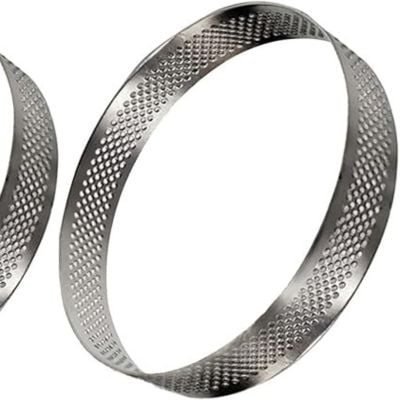
Shop the Equipment


Pistachio Galette Des Rois
TIER 2
Pistachio Galette Des Rois
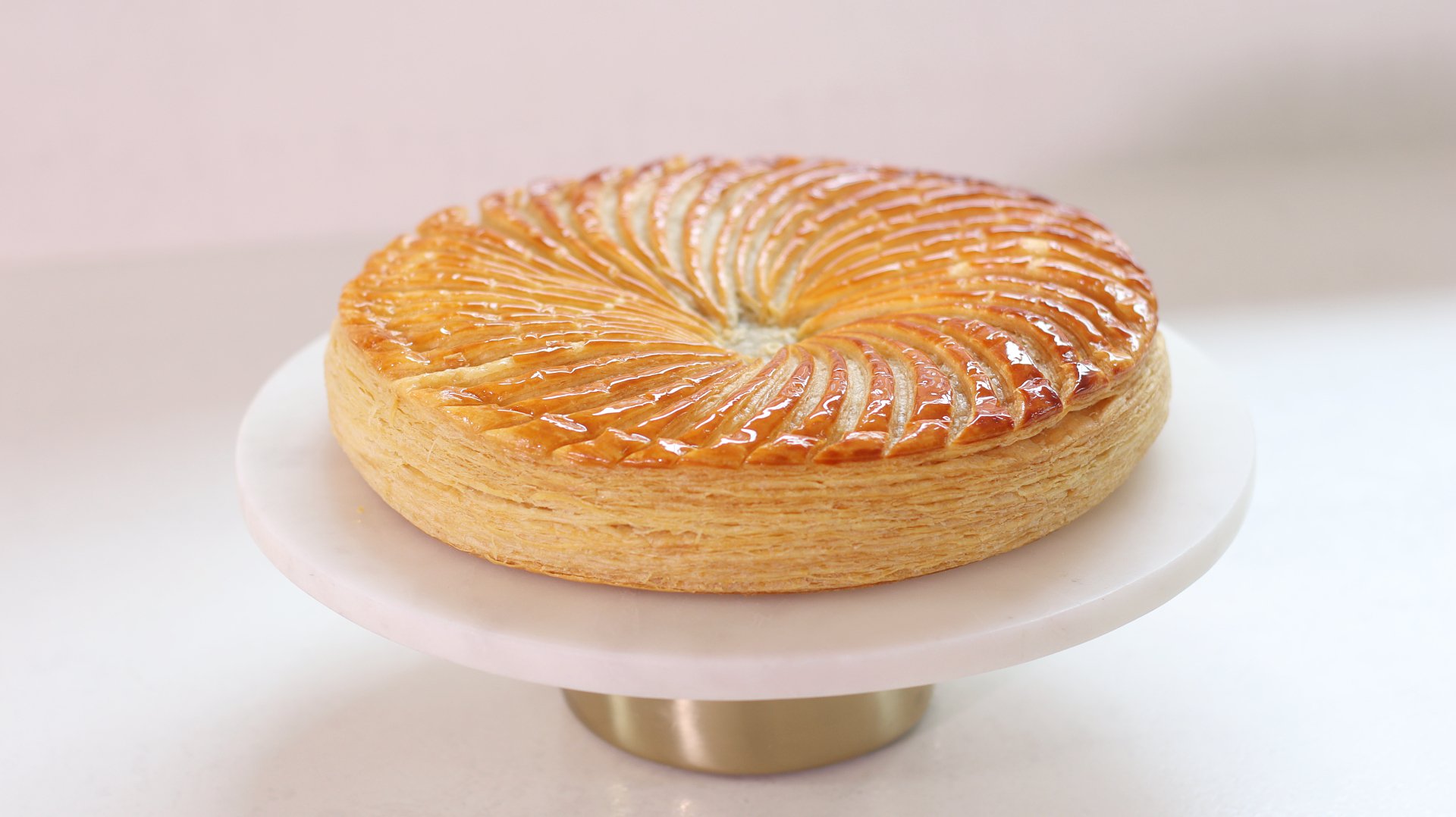
For Tier 2 I was determined to use our inverse puff pastry to make a Galette Des Rois. After all my fails, I realised I wasn’t resting the dough enough and that I needed to adjust my filling slightly to add more nuts. The resulting galette has the most amazing puff, that stays even, holds its shape and has a soft, pistachio filling. Although we’re at the end of galette season, I think it’s something you should make all year round it’s that good! Take your time with this recipe, especially paying attention to the scoring pattern. There’s lots of helpful tips in the PDF recipe so much sure to download that.
8-10
SERVINGS
Ingredients
Makes 8-10 Servings
Inverse Puff Pastry (x2)
Butter Block
100g Plain/All-Purpose Flour
300g Unsalted Butter, Room Temperature
Dough
200g Plain/All-Purpose Flour
4g Fine Sea Salt
120g Double/Heavy Cream
20g Cold Water
5g White Vinegar
Pistachio Cream
85g Unsalted Butter, Soft
85g Icing Sugar
130g Ground Pistachios
70g Ground Almonds
15g Cornstarch/Cornflour
70g Whole Eggs, Room Temperature
Egg Wash
35g Egg Yolk
30g Double/Heavy Cream
Hot Syrup
50g Caster Sugar
35g Water
Special equipment
Stand mixer
Digital thermometer
Silicon mat
18cm ring mold (optional)
Piping bag
23cm disc (for measuring)
Method
Inverse Puff Pastry
Note that you will need two batches of pastry (one for the top of the galette, and one for the bottom). As we are laminating by hand, I prefer to do this in two separate batches to ensure not too much gluten is developed. So you will need to create this recipe twice.
Butter Block
1. Add the soft butter and flour into a stand mixer fitted with a paddle attachment. Beat for 1-2 minutes on a medium speed until smooth, scraping down the bowl as needed.
- 100g Plain/All-Purpose Flour
- 300g Unsalted Butter, Room Temperature
2. Trace a rectangle 35 x 20 cm/14 x 8 inches in the centre of a large sheet of parchment paper or acetate, then flip it over. Place the butter mixture into the centre, folding over the edges of the paper and taping them in place if needed.
3. Use a rolling pin to roll it into a rectangle with even thickness. Chill for 3 hours in the fridge or overnight.
Dough
1. For the dough, add all the ingredients to a large bowl and stir together until there are no more dry ingredients. It can help to squeeze it together with your hands.
- 200g Plain/All-Purpose Flour
- 4g Fine Sea Salt
- 120g Double Cream
- 20g Cold Water
- 5g White Vinegar
2. Tip the mixture onto a lightly floured work surface and knead it for 1–2 minutes. Initially, it will be quite dry, but as you continue to work it, it will become smooth and gain some very slight elasticity.
3. Trace a rectangle 17.5 x 20cm into the centre of a large sheet of baking parchment or acetate and flip it over. Place the dough in the centre and fold over the edges of the parchment, taping it in place if needed. Roll the dough to the edges until you have an even block. Refrigerate for 3 hours, or ideally overnight. A longer chill is preferable to relax the gluten.
4. Once both have chilled, remove the butter block from the fridge, it needs to be 9–10°C (48–50°F) before using. Once it is close to temperature, remove the dough from the fridge; this needs to be at 6–7°C (43–45°F).
5. Place the dough block in the centre of the butter and fold the butter over, sealing the seam with your fingers. Be quite generous with flouring the work surface and the dough here, or the butter will stick.
6. Rotate the dough 90 degrees so the seam is facing you horizontally, and use a sharp knife to score the edges of the dough where it is folded over the butter. This will release tension and make it easier to roll.
7. Lightly roll the dough to give it some slight width, then rotate the dough 90 degrees again so the seam is now vertically in line with your body.
8. Roll the dough lengthways into a long rectangle, being liberal with the flour so that it doesn’t stick, until it reaches a thickness of about 5–7mm. Use a sharp knife to trim off any wonky ends and dust off any excess flour.
9. Perform a double fold, folding one side of the dough up about 1/5th of the way, bringing the opposite side over to meet it, and then folding the whole piece in half. Wrap the dough tightly in cling film, and place it in the freezer for 15 minutes, then into the fridge for 10 minutes.
10. Remove the dough from the fridge, and with the open seam facing you (i.e if you were looking at the dough straight on, you would be able to see where it has been folded over itself), use a sharp knife again, to score the edges of the dough where it is folded.
11. Turn the dough 90 degrees so the open seam is now horizontal to you and give the dough a quick roll, to give it a little bit of width.
12. Turn the dough 90 degrees again so the open seam is facing you again and begin to roll the dough. Roll the dough into a long even rectangle, very very lightly flouring it, just as we did in step 8.
13. Perform another double fold, and place it in the freezer for 15 minutes, then into the fridge for 10 minutes.
14. Repeat this process one more time, but finishing with a single fold rather than a double fold. To do this, take one-third of the dough and fold it up, then take the other third of dough and fold this over the top.
15. Wrap the dough tightly in cling film and refrigerate, ideally overnight. Again, a longer chill helps to relax the gluten.
Pistachio Cream
1. Into a stand mixer fitted with a paddle attachment, beat the butter and icing sugar on a medium-low speed until smooth, 1-2 minutes.
- 85g Unsalted Butter, Soft
- 85g Icing Sugar
2. Scrape down the sides and add in the ground pistachios, ground almonds and cornstarch, then mix again just until combined.
- 130g Ground Pistachios
- 70g Ground Almonds
- 15g Cornstarch/Cornflour
3. Finally pour in the eggs and beat until it is evenly combined.
- 70g Whole Eggs, Room Temperature
4. You will need 320g of mixture so pour the batter into a bowl and weigh the required amount.
5. To make the mixture neat, place an 18cm ring mold onto a baking tray lined with a silicon mat. Scoop the mixture in, and level it so it is smooth with a palette knife. Place this into the freezer for 1-2 hours. You can also place a fève into the mixture (or a whole pistachio) which is very traditional.
6. If you do not have a ring mold, the mixture can just be piped fresh onto the puff pastry. In this case, add it into a piping bag fitted with a large round tip nozzle and refrigerate until your pastry has been rolled out. (Once you have rolled out one portion of the pastry, pipe and even disc, 18 cm wide)
Assembly
1. Remove one batch of inverse puff pastry from the fridge and lightly flouring it, roll it into a rough square shape, around 3-4mm thick. Carefully lift this onto a lined baking tray and place it into the fridge.
2. Roll out the second piece of pastry to the same thickness.
3. Remove the first batch of pastry from the fridge and with it still on the tray, lift the frozen pistachio cream and place the disc into the centre of the pastry.
4. Lightly brush around the disc of pistachio cream with water – do not go to heavy on the water, just enough to moisten is to the pastry sticks together,
5. Lift the second piece of pastry on top, and using your hands, lightly cup around the outside of the cream layer, tucking it so it hugs the filling. This pushes out any trapped air. Ensure the two layers of pastry are firmly sealed together,
6. Finally, take a disc (like the bottom of a tart ring) that is 23cm in diameter, and place this on top. Use a sharp knife/box cutter, cut around this, to create a neat 23cm galette. Use a skewer to prick a few small holes all over it.
7. At this point we want to rest it again, to relax the gluten in the dough and prevent it from shrinking. Ideally this should be refrigerated overnight (covered with cling film) or 1-2 hours.
8. Once it has chilled, prepare the egg wash, whisking together the ingredients.
9. Meanwhile, preheat the oven to 180C/355F Non-Fan assisted (165C/330 Fan).
10. Remove the galette from the fridge and flip it over, onto a baking tray with a silicon baking mat (or ideally a perforated tray with a perforated mat if you have one) so the smooth side is on top. Brush the egg wash evenly over the surface of the dough. Note – for a deeper, darker finish to your galette, you can apply one layer of egg wash, then refrigerate it for 45m, then add another layer, before proceeding with the scoring.
- 35g Egg Yolk
- 30g Double/Heavy Cream
11. Use a sharp knife to gently score the dough, ensuring you don’t cut through the dough, in a decorative pattern. I use the design below. Once you have completed the scoring, use a skewer, to create 5-8 holes, piercing through the top layer of puff pastry (indicated by the green dots). This will allow the steam to escape.
12. Place the galette into the centre of the oven and bake for 45 minutes, then lower the temperature to 170C/340F non-fan assisted (155/310F fan assisted) and bake for a further 20-30 minutes, or until the galette is a deep golden brown colour.
13. Just before it has finished baking, prepare the hot syrup, by adding the ingredients to a small saucepan, and bringing them to the boil until the sugar has dissolved. Set this to one side.
- 50g Caster Sugar
- 35g Water
14. Once the galette is a deep golden brown colour, remove it from the oven and lift it onto a wire cooling rack. Brush a thin layer of sugar syrup over the top and then allow it to cool for 30 minutes before serving.
Shop the Equipment