
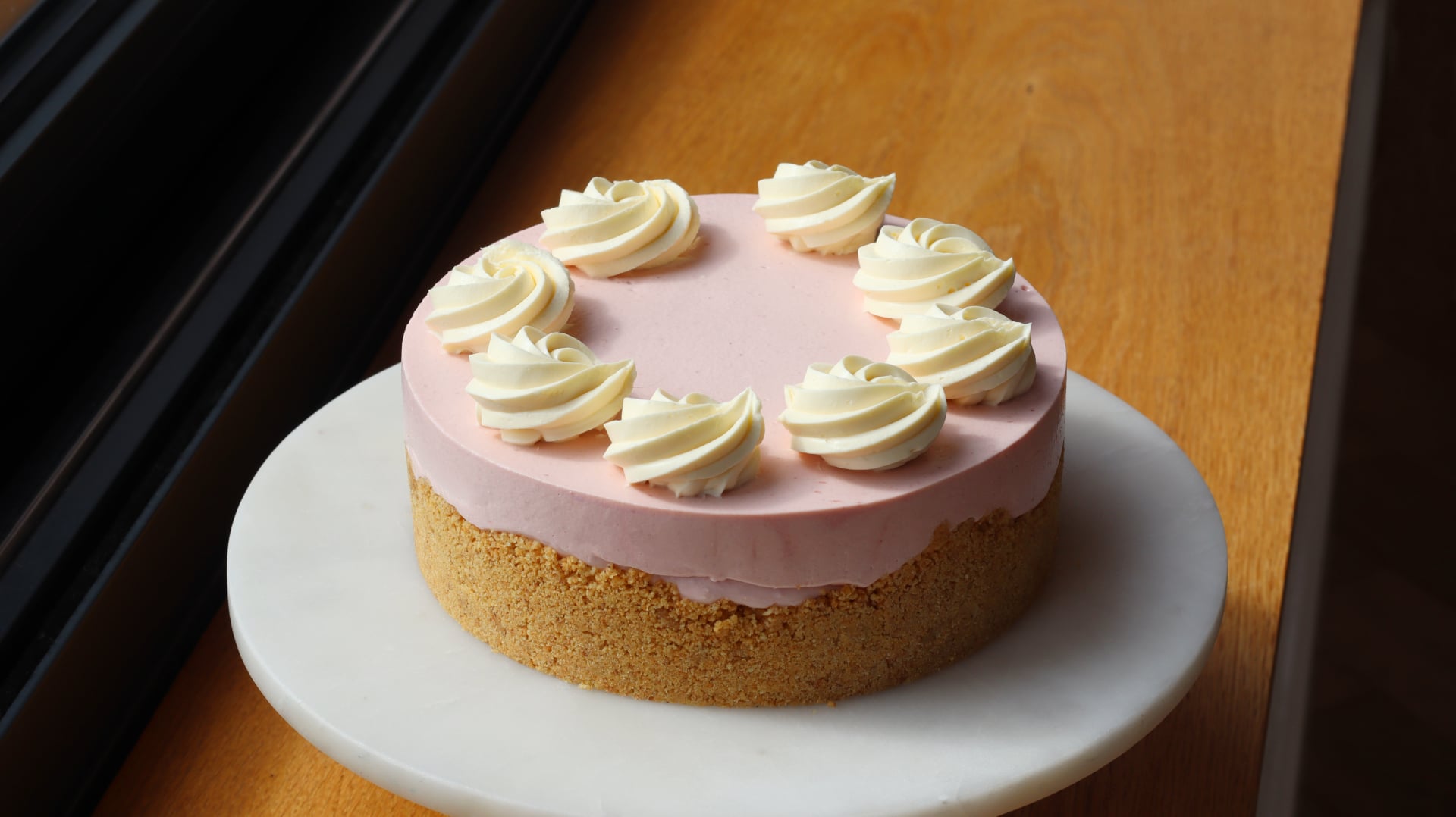
No-Bake Strawberry Cheesecake
TIER 1
No-Bake Strawberry Cheesecake
Everyone needs a foolproof, no-bake strawberry cheesecake recipe, and this one is quick to make with a smooth and creamy texture. It’s a simple biscuit base teamed with a brightly coloured strawberry cheesecake filling, which holds its texture really well. We make it in a ring mold for a more professional finish, and pipe mascarpone cream on top for a final touch of elegance.

1
7-INCH CAKE
Ingredients
Makes 1 7-inch cake
Gelatin Mass
10g Powdered Gelatin (Platinum/Knox Bloom)
60g Cold Water
Biscuit Base
180g Digestives/Graham Crackers
70g Unsalted Butter, Melted
Pinch of Flakey Sea Salt
Zest ¼ Lemon
Strawberry Cheesecake
50g Gelatin Mass (or 2.5 gelatin leaves, any grade)
230g Strawberry Puree
125g Caster/White Sugar
500g Full Fat Cream Cheese
325g Double/Heavy Cream
Mascarpone Cream
300g Double/Heavy Cream, Divided
20g Gelatin Mass (or 1 gelatin leaf, any grade)
50g Mascarpone
30g White Chocolate
Special equipment
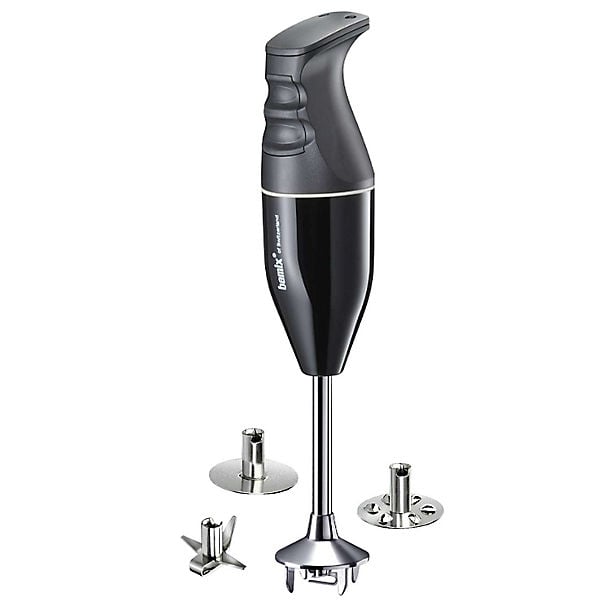
Hand blender
Food processor (optional)
18x6cm ring mold
Silicon mat
Digital thermometer
Stand mixer or Electric hand whisk
Blow torch or Heat gun
Piping bag
Star tip nozzle
Method
Gelatin Mass
1. Add the powdered gelatin and water to a small bowl and stir together to combine. Set this aside in the fridge to bloom for 15 minutes.
- 10g Powdered Gelatin (Platinum/Knox Bloom)
- 60g Cold Water
Mascarpone Cream
1. Into a tall measuring jug, add gelatin mass, white chocolate and mascarpone. Set this aside.
- 20g Gelatin Mass
- 30g White Chocolate
- 50g Mascarpone
2. Add 200g of the cream into a small saucepan and place it over a medium heat. Stir until the mixture is steaming then remove it from the heat and pour it into the measuring jug.
- 200g Double/Heavy Cream
3. Allow it to sit for 2 minutes before blending until smooth. Add in the remaining 100g of cream and blend again.
- 100g Double/Heavy Cream
4. Pour the mixture onto a baking tray and cover the surface with clingfilm. Refrigerate it for a minimum of 3 hours.
Biscuit Base
1. Into a blender, add the biscuits, and blend to a fine crumb. Pour these into a medium bowl.
- 180g Digestives/Graham Crackers
2. Add the butter into a small saucepan and stir until melted.
- 70g Unsalted Butter
3. Add the salt and lemon to the bowl, then stir in the melted butter, starting with about half and stirring just until the mixture is sticking together. You don’t want it to be too soggy.
- Pinch of Flakey Sea Salt
- Zest ¼ Lemon
4. Line a baking sheet with a silicon mat and place a 18x6cm ring mold in the centre.
5. Line the tart ring with the biscuits, starting with the sides so they go up about halfway up the side of the ring, then fill in the base. Ensure it is quite thin and smooth. We don’t want an overly thick base/sides so if there is any left over you can eat it!
6. Set this in the freezer while you make the cheesecake filling.
Strawberry Cheesecake
1. Into a small saucepan, add the strawberry puree and gelatin mass. Stir this over a low heat until the gelatin mass has melted. It should be around 50/60C (122-140F). If it doesn’t get warm enough the gelatin won’t melt and you will get chunks! If you are using gelatin leaves, just soak them in cold water until soft, then add them to the pan along with the puree and heat until melted as above. Set the pan aside to cool, it needs to be around 40C/104F when we use it, or just above body temp.
- 50g Gelatin Mass (or 2.5 gelatin leaves, any grade)
- 230g Strawberry Puree
2. Into the bowl of a stand mixer or a large bowl if using an electric hand mixer, add the cream cheese and sugar and beat for a minute until smooth.
- 125g Caster/White Sugar
- 500g Full Fat Cream Cheese
3. Add in the cooled strawberry mixture and beat again until combined, scraping down the bowl as needed.
4. Add the cream into the bowl of a stand mixer or a large bowl if using an electric hand whisk, and whisk to medium/soft peaks.
- 325g Double/Heavy Cream
5. Working quickly as the cheesecake mixture will be beginning to thicken as the gelatin activates, fold the cream in, in two parts.
6. Remove the chilled base from the freezer and pour the cheesecake mixture in, right to the top. Use a palette knife to smooth it, so it is flush with the top of the ring mold. Refrigerate the cheesecake for 3 hours.
Assembly
1. Once chilled remove it from the fridge and lift it onto your serving plate. Use a blow torch or heat gun to gently warm the sides of the ring mold and carefully lift it off.
2. Remove the chilled mascarpone cream from the fridge and add it to the bowl of a stand mixer fitted with a whisk attachment (or a large bowl if using an electric hand whisk). Whisk it until it reaches a medium peak, then add it into a piping bag fitted with an open star tip nozzle.
3. Pipe 6 swirls around the outside of the cheesecake and then serve.
Shop the Equipment


Elevated Strawberry Cheesecake
TIER 2
Elevated Strawberry Cheesecake
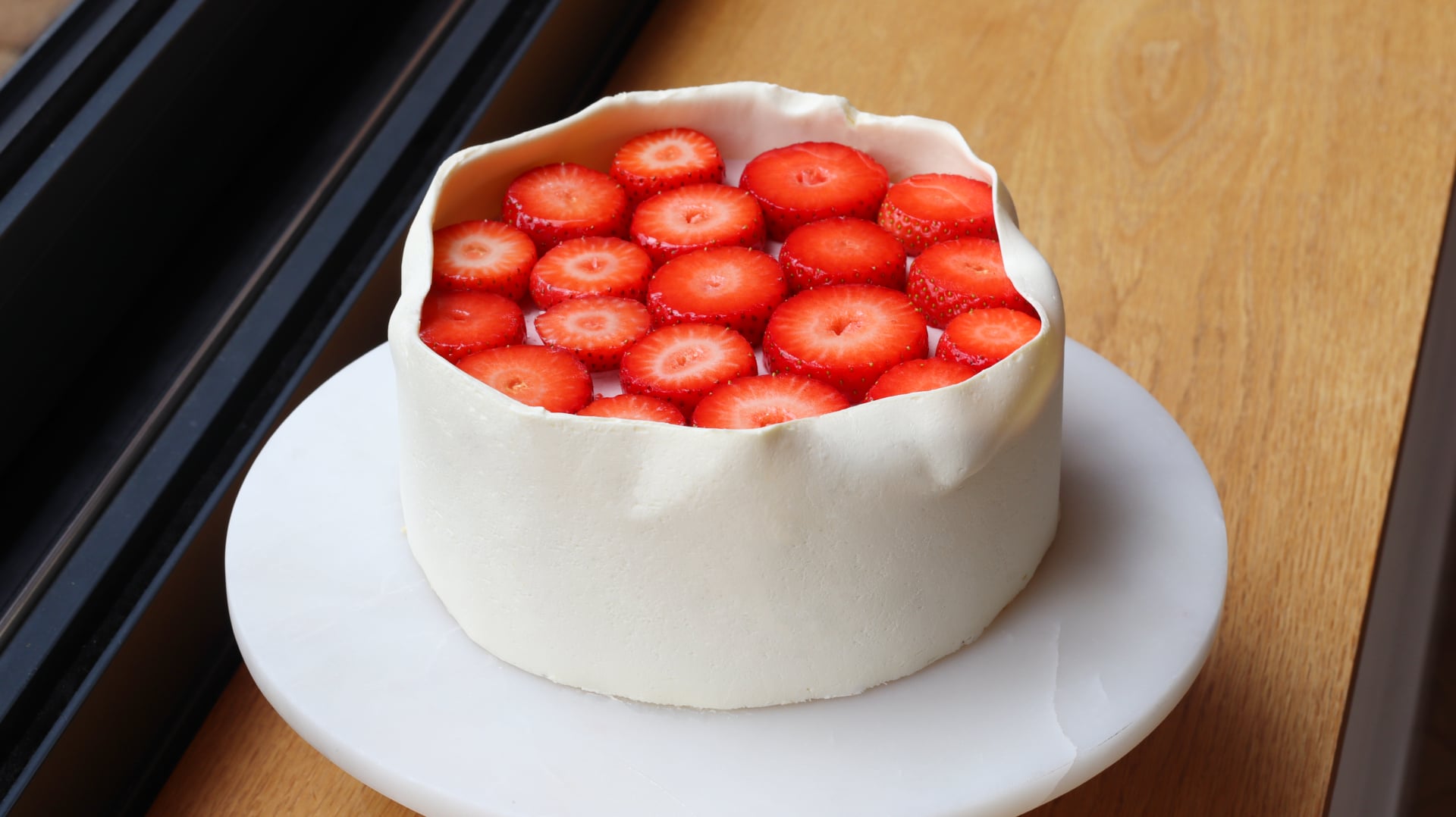
Taking inspiration from a modern Fraisier cake, this cheesecake has a fun, but slightly tricky design, made by “wrapping” a smooth cream around the outside using acetate. The cheesecake is frozen for a short time, so we also look at how to adjust the ingredients in the cheesecake mixture to help ensure a smooth, and ice-free texture! Excuse my slightly unique way to create the shape – I’m open to any alternative suggestions!
1
7-INCH CAKE
Ingredients
Makes 1 7-inch cheesecake
Gelatin Mass
10g Powdered Gelatin (Platinum/Knox Bloom)
60g Cold Water
Mascarpone Cream
300g Double/Heavy Cream, Divided
20g Gelatin Mass (or 1 gelatin leaf, any grade)
50g Mascarpone
30g White Chocolate
Genoise Sponge
220g Whole Eggs
130g Caster/White Sugar
30g Unsalted Butter, Melted
Zest ¼ Lemon
125g Plain/All-Purpose Flour
Pinch of Salt
Strawberry Cheesecake
50g Gelatin Mass (or 2.5 gelatin leaves, any grade)
230g Strawberry Puree
125g Caster/White Sugar
35g Invert Sugar/Trimoline
550g Full Fat Cream Cheese
325g Double/Heavy Cream
Pinch of Salt
2 Tbsp Strawberry Jam To Fill
Fresh Strawberries To Decorate
Special equipment
Hand blender
39x27cm baking tray
Silicon mat
Electric hand whisk
Stand mixer (optional)
Digital thermometer
18x6cm ring mold
Acetate
Blow torch or Heat gun
Pastry rods (optional)
Method
Gelatin Mass
1. Add the powdered gelatin and water to a small bowl and stir together to combine. Set this aside in the fridge to bloom for 15 minutes.
- 10g Powdered Gelatin (Platinum/Knox Bloom)
- 60g Cold Water
Mascarpone Cream
1. Into a tall measuring jug, add gelatin mass, white chocolate and mascarpone. Set this aside.
- 20g Gelatin Mass
- 30g White Chocolate
- 50g Mascarpone
2. Add 200g of the cream into a small saucepan and place it over a medium heat. Stir until the mixture is steaming then remove it from the heat and pour it into the measuring jug.
- 200g Double/Heavy Cream
3. Allow it to sit for 2 minutes before blending until smooth. Add in the remaining 100g of cream and blend again.
- 100g Double/Heavy Cream
4. Pour the mixture onto a baking tray and cover the surface with clingfilm. Refrigerate it for a minimum of 3 hours.
Genoise Sponge
1. Preheat the oven to 175C non-fan assisted (160C/320F fan assisted). Take a 39x27cm baking tray, lightly grease it with butter and line it neatly with parchment paper.
2. For the sponge, add the eggs, sugar & lemon zest into a medium bowl and place it over a pan of gently simmering water.
- 220g Whole Eggs
- 130g Caster/White Sugar
- Zest ¼ Lemon
3. Using a hand whisk, whisk them together until they reach 40C/104F on a digital thermometer.
4. Remove it from the heat and add the mixture to the bowl of a stand mixer, fitted with a whisk attachment (or a medium bowl if using an electric hand whisk)
5. Whisk on a medium-high speed for 3-5 minutes, or until the mixture is thick and holds a ribbon when you drizzle it from the whisk.
6. Remove the bowl from the stand mixer and sift over the flour and salt.. Fold this together, being as gentle as possible until there are no more lumps of flour.
- 125g Plain/All-Purpose Flour
- Pinch of Salt
7. Take a small portion of the batter and add it into a bowl. Pour in the melted butter and fold this mixture together so there are no streaks of butter.
- 30g Unsalted Butter, Melted
8. Add this back into the main bowl and fold it through to incorporate.
9. Pour the mixture onto the lined baking tray and spread it out evenly with an offset spatula.
10. Bake it in the oven for 15 minutes, then remove it and allow it to cool completely.
Strawberry Cheesecake
1. Into a small saucepan, add the strawberry puree. Place the entire pan onto a tared scale and note the weight.
- 230g Strawberry Puree
2. Place it over a medium low heat and stir it occasionally, until the puree has reduced by 85g (from 230g to 145g). You can do this by placing the pan back on the tared scale as you are cooking it to see how much the weight has reduced by.
3. Remove it from the heat and stir in the gelatin mass until it has completely melted. Set the pan aside to cool, it needs to be around 40C/104F when we use it, or just above body temp.
- 50g Gelatin Mass (or 2.5 gelatin leaves, any grade)
4. Into the bowl of a stand mixer or a large bowl if using an electric hand mixer, add the cream cheese, invert sugar and caster/white sugar and beat for a minute until smooth.
- 125g Caster/White Sugar
- 550g Full Fat Cream Cheese
- 35g Invert Sugar/Trimoline
5. Add in the cooled strawberry mixture and beat again until combined, scraping down the bowl as needed.
6. Add the cream into the bowl of a stand mixer or a large bowl if using an electric hand whisk, and whisk to medium/soft peaks.
- 325g Double/Heavy Cream
7. Working quickly as the cheesecake mixture will be beginning to thicken as the gelatin activates, whisk in the first half of cream, then fold the remaining cream in with a spatula until smooth. Right at the end fold through a pinch of salt.
- Pinch of Salt
Assembly
1. Take a 18x6cm ring mold and cut a disc of the genoise sponge and lift it onto a baking tray lined with a silicon mat.
2. Spread the strawberry jam across the sponge and place the rind mold around the outside.
- 1-2 Tbsp Strawberry Jam
3. Scoop the cheesecake mixture into the ring mold, pressing it in firmly with a spatula to remove any air pockets. Fill the ring mold right to the top then flatten it with a warm spatula so that it is flush with the ring mold.
4. Place it into the freezer for 2 hours.
5. Just before it is chilled, cut a piece of acetate so that it is long enough to wrap around the outside of the cheesecake and about ½” taller.
6. Remove the chilled mascarpone cream from the fridge and add into the bowl of a stand mixer fitted with a whisk attachment (or a medium bowl if using an electric hand whisk). Whisk to a medium soft peak.
7. Lay the acetate flat on your work surface (it can help to oil the surface slightly so it sticks in place) and use a palette knife to spread the cream evenly across the acetate.
8. Remove the cheesecake from the freezer and gently heat the ring mold with a blow torch to remove it.
9. Carefully lift the acetate from the work surface and wrap the cream around the outside of the cheesecake. Once it is stuck on there you can’t really move it (!) so try and do this as carefully as possible the first time around.
10. This is where you have to get a little creative to create the ‘dents’ in the cream. I used a few skewers, rested against small cups to weigh down the outside edge of the acetate in different places, to create the indent. But feel free to use whatever you think might work! Your acetate might even be flexible enough that you can just press it into shape with your fingers.
11. Place it carefully back into the freezer for 30-60 minutes, just until the mascarpone cream has frozen and you can peel away the acetate cleanly without it ripping the cream.
12. Once it is ready, peel off the acetate and lift the cheesecake onto your serving plate.
13. Slice some strawberries and place them in the centre of the cheesecake. For evenly sized strawberries, first trim off the tops. Then place each strawberry between two pastry rods set to around 10–12mm high and carefully slice off the base. This creates strawberries with a flat top and bottom, all at a consistent height, so they sit neatly and evenly inside the cheesecake.
14. To make the strawberries glossy, you can brush them with a little bit of nappage or melted marmalade jam (with a splash of water).
15. Allow the cheesecake to defrost for around 30 minutes at room temperature before serving (you can check it has thawed by inserting a skewer into the centre and checking there is no resistance).
Shop the Equipment


Berry Charlotte Cake
TIER 2
Berry Charlotte Cake
In Tier 2 we take the precision of the ladyfingers to another level, using them to decorate the outside of this berry charlotte cake. When piping them, we want to get them as neat and as even as possible so making the Tier 1 tiramisu is a great place to build your confidence. The charlotte cake has a light berry mousse, with two layers of the lady fingers covered in raspberry jam, and it’s finished with a smooth mascarpone cream. This is frozen overnight and takes a little while to defrost, so keep those timings in mind!
8-10
SERVINGS
Ingredients
Makes 8-10 Servings
Savoiardi Biscuits
115g Egg Yolks
25g Whole Eggs
40g Caster/White Sugar (A)
100g Plain/All-Purpose Flour (A)
260g Egg Whites
100g Caster/White Sugar (B)
1.5g Fine Salt
35g Plain/All-Purpose Flour (B)
Caster/White Sugar To Coat
Berry Bavarois Mousse
6g Gelatin Powder (220-250 Bloom) + 36g Cold Water (or 2 Sheets of Gelatin, soaked)
75g Egg Yolks
30g Caster/White Sugar
50g Whole Milk
300g Double/Heavy Cream (A)
250g Fruit Puree (Raspberry or Strawberry)
400g Double/Heavy Cream (B)
Mascarpone Cream
3g Powdered Gelatin + 18g Cold Water (or 1 Gelatin Sheet, Soaked)
250g Double/Heavy Cream (A)
100g Mascarpone
15g Icing/Powdered Sugar
50g Double/Heavy Cream (B), Cold
To Assemble
Crushed Pistachios
Raspberry/Strawberry Jam
Fresh Strawberries/Raspberries, Sliced
Special equipment
10mm round tip nozzle
Piping bag
Stand mixer
Digital thermometer
Hand blender
7” ring mold
1M star tip nozzle
Method
Savoiardi Biscuits
1. Pre-heat the oven to 160C/320F non-fan assisted.
2. Take 2 large sheets of baking paper and draw two sets of train track lines on the baking paper, each 90mm/3.5” tall. Flip these upside down (so the ink doesn’t touch the pastry) and place them on a baking sheet.
3. Take another baking sheet and draw two 7” circles on baking paper. Flip this upside down.
4. Take a small round tip nozzle (10mm) and put it into a piping bag. The piping nozzle needs to be smaller than you think, as the batter will spread slightly as it is piped.
5. Into a medium bowl, add the egg yolks, whole eggs, and sugar (A). Whisk this to combine, then add the flour (B) and whisk to form a thick paste. Set this to one side.
6. Into the bowl of a stand mixer, add the egg whites (room temperature) along with the salt.
7. With the whisk attachment, whisk on a medium-low speed until it becomes frothy, with small bubbles on top (this will take a few minutes).
8. Slowly add in the sugar (B), about a tablespoon at a time. Once you have added all the sugar, whisk until you have a stiff peak.
9. Take about ⅕ of the meringue mixture and whisk it through the egg yolk mixture. This will be quite stiff, so it needs to be whisked firmly to smooth it out.
10. Add the remaining meringue in 2-3 parts, gently folding it through to ensure you don’t beat out too much air.
11. Once smooth, sift over the remaining flour (B) and fold through until there are no more lumps.
12. Add the mixture into your piping bag and let it rest for a few minutes; this will just make it slightly easier to pipe.
13. Using the guides on your baking tray, pipe two large 7” circles and then individual lines for the lady fingers. You will need 25-30 lady fingers, depending on the size of the ring mold you are using for the mousse. The more you can make, the better! But remember, they need to be baked immediately or the meringue will begin to collapse.
14. Once piped, sprinkle a thin coating of caster/white sugar over the top.
15. Place them directly into the oven and bake until a deep golden brown colour.
Note – as we are baking multiple trays of ladyfingers and sponge discs for the charlotte cake, the placement in the oven affects browning. The top tray will turn golden first because it’s directly exposed to the heat from the top of the oven, while the lower trays are shielded, preventing them from browning properly. We don’t care about the 7” disc brownings, but we need both sets of lady fingers to be golden, so rotate the trays halfway through baking, bringing the lower trays to the top and vice versa. Just do it very very quickly, so we don’t deflate the lady fingers.
16. Bake everything for around 30 minutes, being sure not to underbake the lady fingers especially. They need to be firm to the touch. What I like to do is pop the 7” circles back in the oven just to get them slightly more golden.
17. Remove them from the oven and then allow them to cool at room temperature. Leave the 7” discs out at room temperature but freeze the remaining lady fingers in a sealed tupperware as we won’t need these until the next day.
18. If you want to make these ahead of time, you can place them in an airtight container and freeze them for up to 2 months.
Berry Bavarois Mousse
1. Add the powdered gelatin into a small bowl and pour the cold water over the top. Let it bloom for 5-10 minutes. If using a gelatin sheet, soak this in ice-cold water.
2. Into a medium bowl, add the egg yolks and sugar and whisk briefly to combine.
3. Meanwhile, add the cream and milk to a medium saucepan and heat just until it is steaming.
4. Slowly pour the hot cream over the egg yolk mixture and whisk to combine.
5. Pour it back into the pan and whisk constantly, cooking until it reaches 82C/180F on a digital thermometer, then immediately remove it from the heat. You need to do this quickly or it will begin to scramble.
6. Pour it straight through a sieve into a tall measuring jug.
7. Scoop in the bloomed gelatin powder (or squeeze the water out of the gelatin sheet), and then use a hand blender to blend until smooth.
8. Pour in the fruit puree and blend to combine.
9. Pour this mixture into a tray and cover the surface with cling film. We need this to cool to around 30C/86F on a digital thermometer, so refrigerating it can be the quickest way to chill it.
10. Once at temperature, add the remaining cream to the bowl of a stand mixer and whisk on a medium speed until you have a medium stiff peak.
11. Pour the chilled fruit mixture into a bowl, and then whisk in the whipped cream in 3 parts until you have a smooth mousse.
Assembly Part 1
1. Take the cooled 7” savaordi biscuit discs and, using your 7” ring mold, trim them down to size.
2. Line the inside of the 7” cake ring mold with acetate and place this onto a tray lined with a baking mat.
3. Take a few tablespoons of jam and spread this evenly across each disc, then place one into the base of the ring mold.
4. Take the berry bavarois mousse and fill the ring mold up halfway.
5. Add the second savoiardi disc.
6. Pour the remaining mousse in, filling it to the top of the rind mold. It should settle evenly, but if it needs it, flatten it with a palette knife.
7. Place this into the freezer, ideally overnight, but a minimum of 6 hours.
Mascarpone Cream
1. Add the powdered gelatin into a small bowl and pour the cold water over the top. Let it bloom for 5-10 minutes. If using a gelatin sheet, soak this in ice cold water.
2. Into a medium saucepan, add the cream and heat until it is steaming.
3. Remove it from the heat, and add the bloomed gelatin into a tall measuring jug and pour over the hot cream.
4. Blend to combine, then add the sugar and mascarpone and blend again.
5. Finally, add the remaining cold cream and blend one more time.
6. Cover the surface with clingfilm and refrigerate for 6 hours or overnight.
Note – there is no vanilla in this, but you can absolutely add it, if you want that flavour! Add it to the cream when you are heating it.
Assembly Part 2
1. Remove the frozen berry bavarois from the freezer, and lift it onto your serving dish. Peel off the acetate.
2. Leave it at room temperature for about 30 minutes – 1 hour to soften, this will make it easier to stick the lady fingers on. Alternatively, you can use a heat gun/blow torch to warm the sides and press the lady fingers on.
3. Once the edges have softened slightly, remove the lady fingers from the freezer, and then trim them down slightly so they are all of identical height. You can also use a microplane to lightly shave the edges to get them nice and straight.
4. Press them into the side of the cake – just note that the longer you leave them on the cake, the softer they will become. So if you want them to be a bit more crunchy, then it is best to place them on the cake just as you are serving. But note the cake needs quite some time to defrost!
5. Remove the mascarpone cream from the fridge and add it to a stand mixer fitted with a whisk attachment.
6. Whisk on a medium speed until it holds a medium peak, being careful not to over whip it.
7. Add the mixture into a piping bag fitted with a 1M star tip nozzle.
8. Pipe a spiral border around the edge of the cake.
9. Finish the cake by decorating it with some crushed pistachios and freshly sliced fruit.
10. The cake needs around 3-4 hours in total once removed from the freezer to defrost so just take those timings into consideration before serving.
Shop the Equipment


Raspberry & Strawberry Jam
TIER 1
Raspberry & Strawberry Jam
In these recipes we learn the basics of making jams. I walk you through the recipe for raspberry and strawberry jam. The techniques are very similar but I’ll take you through each step, and discuss crucially, the jam setting point, which is a really important temperature to hit to make sure your jam sets! I’ve also included a bonus recipe in the PDF – my dad’s homemade marmalade (thanks Dad!). This was something I grew up eating, so I hope you guys love it as much as me!
4
JAM JARS
Ingredients
Makes 4 Jam Jars
Raspberry Jam
500g Fresh Raspberries
50g Honey
300g Caster/White Sugar
3g Pectin NH + 50g Caster/White Sugar
5g Lemon Juice
Strawberry Jam
750g Fresh Strawberries
450g Caster/White Sugar
225g Water
4.5g Pectin NH + 70g Caster/White Sugar
8g Lemon Juice
BONUS RECIPE
Seville Orange Marmalade (makes 8 jars)
1kg Seville Oranges
Juices of 2 Lemons
2500g Water
2000g Caster/White Sugar
Special equipment
4 x 100g jam jars, sterilised
Digital thermometer
Pectin
Method
Before starting your jam-making, you want to make sure you have cleaned, dried and sterilised your jam jars. Simply wash them in soapy water, dry them, then place them into the oven for 10 minutes at 140C.
Raspberry Jam
1. Into a small bowl, add the pectin and sugar (50g) mixture. Stir the mixture together and set this to one side.
2. Add the fresh raspberries, honey, and remaining sugar into a medium saucepan. Place the pan onto a medium heat and stir it together.
3. Keep cooking the mixture until it reaches 80C on a digital thermometer, and stir in the sugar/pectin mixture.
4. Continue to cook the mixture until it reaches 104C – this can take a little while, between 5-10 minutes so keep a close eye on the thermometer, stirring it pretty continuously.
5. 104C is an important temperature as this is the setting temperature for jams. The closer it gets to this temperature, the thicker and darker the jam will become, and the bubbles will become heavier.
6. As you are cooking it, use a spoon to skim off any foam/impurities that rise to the top.
7. Remove it from the heat, stir in the lemon juice and then distribute it between your jam jars. You should get 2 jars.
8. Leave them to cool to room temperature before refrigerating.
Strawberry Jam
1. Into a small bowl, add the pectin and sugar (70g) mixture. Stir the mixture together and set this to one side.
2. Hull the fresh strawberries and slice them in half. If the strawberries are smaller, then you can leave them whole.
3. Add the sugar and water into a saucepan, and cook it until it reaches 120C.
4. Once at temperature, immediately tip in the strawberries, stir them through the sugar mixture, then add the pectin sugar mixture.
5. Continue to cook the mixture until it reaches 104C – this can take a little while, between 5-10 minutes so keep a close eye on the thermometer, stirring it pretty continuously. 104C is an important temperature as this is the setting temperature for jams. The closer it gets to this temperature, the thicker and darker the jam will become, and the bubbles will become heavier.
5. As you are cooking it, use a spoon to skim off any foam/impurities that rise to the top.
6. Remove it from the heat, stir in the lemon juice and then distribute it between your jam jars. You should get 2 jars (or maybe slightly more)
7. Allow them to cool to room temperature before refrigerating/storing.
Seville Orange Marmalade (My Dad’s Recipe)
1. Wash the Seville oranges if they are dirty.
2. Cut the oranges in half and juice them. Pour the juice into a medium saucepan.
3. Scoop out the flesh from the inside of the oranges and place these into a muslin cloth.
4. Take the remaining peels of the oranges, and cut them into thin strips (or thicker strips if you prefer slightly chunkier strips in your marmelade). Add these to the pan.
5. Add the juice of the lemons into the pan, and place the juiced lemons into the muslin cloth too. Tie thie up so the orange flesh and lemons are secured.
6. Place the muslin into the saucepan, along with the water.
7. Bring the mixture to a boil, and then lower it to a simmer, and continue to cook the mixture until the orange peels are very soft. Anywhere from 1-2 hours!
8. Remove the muslin and squeeze out the juices from it, into the pan.
9. Add in the sugar and boil the mixture, cooking it until it reaches the jam-setting point of 104C.
10. Once it has reached the setting point, remove it from the heat for 15 minutes, and during this time a lot of froth/impurities will rise. Skim these off. The resting time will also help to distribute the orange peels.
11. Scoop the marmalade into your sterilised jam jars (it will make 7-8 jars!). Allow them to cool to room temperature and then place the lids on and refrigerate/store.
Shop the Equipment


Berries & Cream Cake
TIER 1
Berries & Cream Cake
1
9"x13" SHEET CAKE
Ingredients
Makes 1 9″x13″ sheet cake
Genoise Sponge
300g Whole Egg
240g Caster Sugar
240g Plain Flour
50g Melted Butter
Zest ½ Lemon
1 Tsp Lemon Extract
1 Tsp Vanilla Bean Paste/1 Fresh Vanilla Pod (Optional)
Sugar Syrup
30g Lemon Juice
30g Water
60g Sugar
Or
60g Water
60g Sugar
1 Tsp Vanilla Bean Paste
Vanilla Chantilly Cream
400g Double/Heavy Cream
1-2 Tsp Icing/Powdered Sugar
Fresh Berries To Decorate
Special equipment
Stand Mixer or Electric Hand Whisk
9×13” Cake Pan
Method
Genoise Sponge
This sponge can be flavoured with either lemon/vanilla – or both. I like a lemon cake so I just used lemon extract & zest, but feel free to adjust the flavour to your preference.
1. Preheat the oven to 175C/345F.
2. Into a large bowl, or the bowl of a stand mixer, add the eggs, sugar & lemon zest.
-
- 300g Whole Egg
- 240g Caster Sugar
- Zest ½ Lemon
- 1 Tsp Lemon Extract
2. Place the bowl over a pan of gently simmering water, and whisk constantly until it has thickened slightly and looks paler in colour. If you have a digital thermometer, it should go above around 45C/112F.
3. Once thicker, remove it from the pan, and with an electric hand whisk, or you can place it on a stand mixer – whisk it for 3-5 minutes until it is much thicker, and the mixture holds a ribbon.
4. Next, sift the flour over the top, and fold it in with a spatula. This can be a little tough as you really need to scrape the bottom of the bowl to make sure you get all the flour as sometimes it can get stuck at the bottom, but also try to avoid going crazy and knocking out too much air from the mixture.
-
- 240g Plain, All-Purpose Flour
5. Once the flour is incorporated, pour in the melted butter (and vanilla if you are using it) and fold the mixture again to make sure there are no more streaks of butter.
-
- 50g Melted, Unsalted Butter
6. Take a 9×13” rectangle cake pan, and lightly grease the inside with butter or cake release spray. Place a sheet of parchment paper on the bottom.
7. Pour the cake batter into the tin, then slide it into the pre-heated oven. Bake for around 20-25 minutes or until the cake is nice and golden and a skewer inserted comes out clean.
Sugar Syrup
You have two options for the sugar syrup – vanilla or lemon. Choose whichever version you would prefer to use. If you are making vanilla – skip the lemon juice and do 60g water instead + 1 Tsp vanilla bean paste.
1. Into a small saucepan, add the lemon juice, water and sugar.
-
- 30g Lemon Juice
- 30g Water
- 60g Sugar
2. Place it on a medium heat and bring it to a boil, ensuring the sugar has completely dissolved. Make sure the syrup doesn’t boil for too long otherwise it will become slightly too thick and make it more difficult to spread onto the cake.
3. Set the pan to one side while the cake bakes.
Assembly Part 1
1. When the cake has baked, remove it from the oven, and carefully run a knife around the edge of the cake pan to make sure it has completely released. Then place a wire rack on top of the tin and carefully flip it over so the cake is now on the wire rack.
2. Allow it to cool for a few minutes, then peel off the sheet of parchment paper on the bottom.
3. Take the sugar syrup and use a spoon or a pastry brush to soak the cake all over. This will add some moisture back into the cake.
4. At this point, you can wrap the cake tightly in cling film and refrigerate it (overnight ideally) or let it cool to room temperature to decorate. I find that wrapping it in cling film and then refrigerating it, while it’s still warm, helps to lock in a little more moisture.
Vanilla Chantilly
1. Once the cake has cooled, take a sharp serrated knife and trim the edges off. This will give you a nice clean edge and also get rid of the slightly drier edges.
2. Add the cream, vanilla and sugar to a bowl and use a hand whisk (or electric whisk) and whisk until the cream is thicker but not holding stiff peaks.
-
- 400g Double/Heavy Cream
- 1-2 Tsp Icing/Powdered Sugar
3. The thickness is crucial here, as if you whisk the mixture to stiff peaks then try and spread it, it will split.
4. The more you move the cream, the more it will thicken, so you need to under whip the cream, to a very soft peak, then pour it on the cake.
5. Use a spatula so spread it around in nice whirls to the edges.
6. Take fresh berries of your choice and place them all over the cream.

Choux au Chocolat
TIER 3
Choux Au Chocolat
6-10
CHOUX BUNS
Ingredients
Makes 6-10 choux buns
Chocolate Choux Pastry
100g Water
100g Whole Milk
4g Salt
8g Sugar
100g Unsalted Butter
110g Strong White Bread Flour
10g Cocoa Powder
175g – 200g Whole Eggs
Chocolate Craquelin
75g Unsalted Butter
75g Light Brown Sugar
30g Ground Almonds
45g Plain, All-Purpose Flour
15g Cocoa Powder
Dark Chocolate Creme Patissiere
500ml Whole Milk
1 Vanilla Pod or 1 Tsp Vanilla Bean Paste
65g Caster Sugar
6 Large Egg Yolks (120g)
40g Cornstarch/Cornflour Pinch Salt
45g Cold, Unsalted Butter
100g Dark Chocolate
Chocolate Glaze
125g Water
300g Sugar
220g Double/Heavy Cream
110g Glucose
85g Cocoa Powder
11g Gelatin (200 Bloom) + 66g Cold Water
Strawberry Compote
200g Fresh Strawberries
5g Lemon Juice
10g Sugar
3.5g Pectin NH + 12g Sugar
Special equipment
Stand Mixer
Piping Bags
Hand Blender
Round Cookie Cutters
0.5” Round Tip Piping Nozzle
40mm Half Sphere Silicon Mold
1” Sphere Silicon Mold
Method
Chocolate Glaze
1. Into a small bowl, add the gelatin powder and cold water. Allow it to bloom for 5 minutes.
-
- 11g Gelatin (200 Bloom)
- 66g Cold Water
2. Into a small saucepan, add the double/heavy cream and glucose. Place it on a low heat and stir it together until the glucose has melted into the cream. Set it to one side and keep it warm.
-
- 220g Double/Heavy Cream
- 110g Glucose
3. Add the water and sugar into a medium saucepan and place it over a medium heat. Heat it until it reaches 120C/240F on a digital thermometer.
-
- 125g Water
- 300g Sugar
4. As soon as it reaches temperature, pour in the warm cream mixture, followed by the cocoa powder.
-
- 85g Cocoa Powder
5. Whisk the mixture and cook until it reaches a rolling boil.
6. Immediately remove it from the heat and pour it into a tall jug. Use a hand blender to blend the mixture until it is smooth – avoid adding any air bubbles into the glaze.
7. When the mixture has cooled to 80C (which shouldn’t take long), scoop the bloomed gelatin out of the bowl and add this into the jug. Blend again until the mixture is smooth.
8. Pour the mixture into a container, and cover the surface directly with cling film. Refrigerate it overnight.
Strawberry Compote
1. Into a small bowl, add the pectin and sugar and stir these together. It is important to stir them together to prevent lumps from forming later.
-
- 3.5g Pectin NH + 12g Sugar
2. Meanwhile, slice the strawberries into quarters, and place them into a saucepan along with sugar, a splash of water (about 2 tbsp) and lemon juice. The amount of sugar & lemon juice you need really depends on how sweet your strawberries are so you might need to adjust these levels. If they are very sweet then you may not need to add any sugar at all.
-
- 200g Fresh Strawberries
- 5g Lemon Juice
- 10g Sugar 3.
Place the pan onto a medium heat and stir the strawberries until they have broken down, are slightly softer and the juices are bubbling up. At this point, add in the pectin mixture and stir it through.
4. Continue to cook the strawberries until they have thickened slightly and completely broken down. If the sauce is too thick and the strawberries haven’t quite broken down, just add a splash of water.
5. Take the mixture and spoon this into a small round sphere silicon mold.
6. Smooth the top so none of the compote is sticking out the top and place them in the freezer overnight.
Chocolate Creme Patissiere
1. To make the creme patissiere, place the milk into a medium saucepan, and place it over a medium heat. The vanilla is optional but does add a nice flavour.
-
- 500ml Whole Milk
- 1 Vanilla Pod or 1 Tsp Vanilla Bean Paste
2. Meanwhile, add the egg yolks, sugar, salt and cornstarch/cornflour into a bowl. Whisk the mixture for about 30s until thickened.
-
- 65g Caster Sugar
- 6 Large Egg Yolks (120g)
- 40g Cornstarch/Cornflour
- Pinch Salt
3. Once the milk reaches a gentle simmer, remove it from the heat, and slowly pour it over the egg yolks, whisking constantly.
4. Once you have added all the mixture, pour it back into the pan, and keep whisking until the mixture starts to boil. Once it reaches a boil, continue to cook for about 1 minute.
5. Remove it from the heat and pass the thickened mixture through a sieve, over a bowl of chopped chocolate.
-
- 100g Dark Chocolate, Chopped
6. Let the mixture sit for 2m, then whisk it together, along with the butter.
-
- 45g Unsalted Butter, Cold & Cubed
7. Once it is smooth and the chocolate has completely melted, cover the surface directly with cling film and refrigerate for four 3-4 hours.
Chocolate Craquelin
1. To make the chocolate craquelin, add the soft unsalted butter, sugar and ground almonds to the bowl of a stand mixer, or a large mixing bowl if you are using an electric hand mixer.
-
- 75g Unsalted Butter
- 75g Light Brown Sugar
- 30g Ground Almonds
2. Beat the mixture until it is smooth, scraping down the bowl as needed. It should take 1-2 minutes.
3. Tip in the flour and mix on low speed until it pulls together and forms a crumble.
-
- 45g Plain, All-Purpose Flour
- 15g Cocoa Powder
4. Scoop the mixture out onto a large silicon mat, and place a second silicon mat on top (if you are using a smaller silicon mat you may need to split it into two batches).
5. Use a rolling pin to roll it as thin as possible. Don’t worry about the shape, just get it nice and thin. Lift it into the freezer so it is flat and freeze for 30 minutes.
Chocolate Choux Pastry
1. Into a medium saucepan, add the milk, water, butter, salt & sugar.
-
- 100g Water
- 100g Whole Milk
- 4g Salt
- 8g Sugar
- 100g Unsalted Butter
2. Bring the mixture to a boil, then take it off the heat, and sieve in the flour & cocoa powder. Always sieve the flour in to prevent any chunks of flour clumping in the pan.
-
- 110g Strong White Bread Flour
- 10g Cocoa Powder
3. Stir it together off the heat until all of the liquid has been absorbed.
4. Place it back onto a medium heat and cook, stirring constantly for 2 minutes. As you are cooking it, you will notice a “film” of dough forming on the bottom of the pan. Avoid scraping this into the batter i.e don’t press hard on the bottom of the pan and try to scrape this film into the main dough.
5. Once you have cooked the dough, immediately remove it from the heat and place it into the bowl of a stand mixer fitted with a whisk or paddle attachment. Or you can place it into a large bowl if you are using an electric hand mixer.
6. Beat the mixture on medium low speed for about 3 minutes to cool it down.
7. While it is mixing, whisk together your eggs so they are evenly combined.
-
- 175g-200g Whole Eggs
8. With the mixer running on a medium low speed, slowly pour in the eggs. You want to add them in small additions, beating the mixture for about 45 seconds before adding the next quantity of eggs. The reason we wait in between each addition is to allow the dough to fully hydrate before adding any more liquid.
9. Add the eggs in, in about 5 additions, waiting as I said, about 45 seconds before you pour the next amount in.
10. The recipe has a slight guide on the amount of eggs you need to add. This will depend on how much moisture was cooked out of your choux dough in the pan. You are essentially looking to add enough eggs until the choux dough looks “creamy”. It is slightly hard to describe but watch the video and you will see the texture I am referring to.
11. Once it is creamy, keep mixing the dough for 3-4 minutes to allow it to cool down even further. This will make it much easier to work with. Once cooled, pour the mixture into a piping bag fitted with a ½” round tip nozzle.
12. If you have it available, take a 40mm half sphere silicon mold and pipe the mixture into each cavity. Then use an offset spatula to smooth it out slightly so they are relatively flat.
13. Place the silicon mold in the freezer for 1-2 hours or until the half spheres are solid. *
Note – if you do not have a silicon mold, you can pipe the choux pastry free hand onto a baking mat as you normally would. Once you have piped the choux dough, you can then place the craquelin discs on top.
14. Pre-heat the oven to 180C/360F non-fan assisted.
15. Once the spheres have frozen, remove them from the silicon mold and place them onto a baking mat, about 6 per tray. Let them defrost for about 15 minutes at room temperature – this will prevent the craquelin discs from slipping off the frozen spheres as they defrost.
16. Remove the craquelin from the freezer and peel off the top silicon mat. Use a 60mm cookie cutter to cut out discs and place them on the top of choux pastry.
17. Just before you place the tray in the oven, splash a small amount of water on the bottom of the oven (or preheat the oven with a tray on the bottom and splash it on that), then immediately place the tray in the oven. Bake the choux buns for around 30-35 minutes. As it is chocolate choux pastry, it is actually slightly harder to tell as you can’t see it turn a nice golden colour. After about 30 minutes, very quickly open the oven and gently press one of the chouxs, if it still feels soft, then keep baking them. The choux should feel firm to the touch when it is baked fully.
18. Once baked, remove them from the oven and allow them to cool completely.
Final Assembly
1. Once the choux have cooled, you can remove your chocolate glaze from the fridge. After a night in the fridge, it will be very thick. Place the glaze in the microwave and heat it for 30 second bursts, stirring in between each time, until it is completely melted. As you are stirring it, try and avoid adding too many air bubbles (you can also blend it again once it is melted so that it is smooth)
2. Alternatively, scoop the mixture into a large bowl and place it over a pan of gently simmering water, stirring until it is melted.
3. Once it is melted, we want to leave it at room temperature, stirring it to prevent a skin from forming every few minutes, until it cools to around 32C. This is the perfect temperature of the glaze to dip our frozen strawberry compote spheres.
4. Remove the chocolate creme patissiere from the fridge and use a hand whisk to whisk it up. This will loosen the mixture slightly and make it easier to pipe.
5. Add the mixture into a piping bag fitted with a round tip nozzle.
6. Flip the baked choux over and pierce a small hole in the bottom. Pipe the creme patissiere into the bottom until it feels full & heavy. Once you have filled them all, set the chouxs to one side.
7. Once the glaze is at temperature, remove your strawberry compote spheres from the freezer. Stick a toothpick into the top and dip the sphere into the chocolate glaze. Let the excess drip off the sphere and then gently drag it along a silicon baking mat or piece of parchment until it stops dripping.
8. Then very carefully, using tweezers or a small knife, carefully press the glaze sphere off of the toothpick, onto the top of your choux bun. Remove the toothpick (which will leave a small hole)
9. Cover up the hole with a small piece of edible gold leaf.
10. It is important to serve these relatively quickly, as the strawberry sphere will begin to defrost and lose its shape, so they are best eaten about 20 minutes after you have glazed the sphere. Alternatively, you can use a different cream or cremeux that we have made across Bake It Better, which will hold its shape for longer.

Strawberry Shortcake
TIER 3
Strawberry Shortcake
4
INDIVIDUAL DESSERTS
Ingredients
Makes 4 individual desserts
Pistachio Praline
120g Unsalted Pistachios
60g Caster Sugar
2 Tbsp Water
Pinch Salt
Pistachio Sponge
120g Whole Eggs
85g Caster Sugar
95g Plain Flour
2 Tsp Baking Powder
20g Ground Almonds
60g Double/Heavy Cream
65g Unsalted Butter (To Make 40g Brown Butter)
100g Pistachio Praline
Pinch Salt
Sable Breton
125g Soft Unsalted Butter
110g Caster Sugar
2g Salt
55g Egg Yolks
160g Plain Flour
5g Baking Powder
½ Tsp Vanilla Bean Paste
Vanilla Chantilly
300g Double/Heavy Cream
1-2 Tsp Icing/Powdered Sugar
½ Tsp Vanilla Bean Paste
Chocolate Decoration
Red Cocoa Butter
Gold Lustre Dust
200-300g Tempered White Chocolate
Sliced Fresh Strawberries & Crushed Pistachios to Decorate
Special equipment
9” Square Brownie Tin
High Powered Food Processor
Round Cookie Cutters
Stand Mixer
Acetate
Digital Thermometer
Method
Pistachio Praline
*Note – this is quite a small batch of praline, enough for the cake recipe, but if your food processor isn’t overly powerful, it may be worth doubling this recipe so that there is enough mixture in the food processor for it to “catch” the praline and blend it. Otherwise the blade will be spinning around blending air and all the praline will be stuck to the sides.
1. Place the unsalted, shelled pistachios onto a baking tray. Place them in the oven to roast gently at 175C/350F for 8-10 minutes. They should be fragrant and lightly toasted when done, but keep an eye on them so they don’t burn!
-
- 120g Unsalted Pistachios
2. Meanwhile, place the water and sugar into a medium saucepan. Place it over a medium heat and try not to stir it. Heat the mixture until it reaches a nice deep golden colour. Once it is done, immediately pour it onto a silicon mat to set.
-
- 60g Caster Sugar
- 2 Tbsp Water
3. Once the caramel has set and is nice and firm to the touch (about 30 minutes – 1 hour), add it into a high powered food processor along with the roasted pistachios and a small pinch of salt.
-
- Pinch of Salt
4. Start by bending on a low speed and slowly increase it.
5. Initially the mixture will look quite powdery and dry – you will need to scrape down the sides of the food processor at least 6-8 times, stopping the machine every 20 seconds or so to make sure it is fully incorporated. The key is to start on a medium low speed, so the blade isn’t running too fast that it spits all the mixture to the edges.
6. After about 5 minutes of blending and scraping down, you should end up with a nice green paste, that is a similar texture to a natural peanut butter. If your mixture is very dry, you can add a very small amount of groundnut oil to help loosen it and it will blend much easier.
7. Scrape the praline out of the food processor and weigh 100g of it, ready for the cake batter.
Pistachio Cake
1. Preheat the oven to 210C/410F Non-Fan Assisted . Lightly grease a 9×9” square tin, and then line the base & sides with parchment paper.
2. Start by browning your butter – place the unsalted butter into a small saucepan and place it over a medium heat.
-
- 65g Unsalted Butter
3. Melt the butter and continue to cook until the butter starts to smell nutty and the bubbling noises have stopped. Keep a close eye on the butter as it can burn. Once brown, pour the butter into another bowl, weighing the 40g needed for the recipe. Keep it somewhere warm.
4. Into a medium bowl, add the eggs and sugar. Whisk the mixture for 1-2 minutes by and until it is slightly lighter in colour.
-
- 120g Whole Eggs
- 85g Caster Sugar
5. On top of the eggs, add the flour, baking powder, salt & ground almonds. Whisk the mixture until it is combined, do not overbeat it. Simply mix until the dry ingredients are incorporated.
-
- 95g Plain Flour
- 2 Tsp Baking Powder
- 20g Ground Almonds
6. Next, pour in the cream and whisk to combine.
-
- 60g Double/Heavy Cream
7. Finally, add in the warm brown butter and the pistachio praline you made earlier. Whisk to combine until you have an even batter.
-
- 40g Brown Butter
- 100g Pistachio Praline
8. Pour the batter into the greased tin, and place it into the oven. Bake for 11-15 minutes. Every oven is different so keep an eye on it, it should be a nice golden colour on top so be careful not to overcook it. Remove it from the oven and allow it to cool.
Sable Breton
1. Into the bowl of a stand mixer (or a large bowl if you are using a hand mixer), add the soft unsalted butter, vanilla & sugar and beat on a medium speed until it is white & pale in colour.
-
- 125g Soft Unsalted Butter
- 110g Caster Sugar
- ½ Tsp Vanilla Bean Paste
2. Next, add in the egg yolk and salt. Beat to combine. You will need to scrape down the bowl so it is fully incorporated.
-
- 55g Egg Yolk
- 2g Salt
3. Finally, sieve in the baking powder and flour. Mix on a low speed until just combined. You might need to scrape down the bottom of the bowl to ensure all the soft butter is fully incorporated.
-
- 160g Plain Flour
- 5g Baking Powder
4. Scoop the mixture out and place it into between two silpats or pieces of parchment. Using a rolling pin, roll it as thin as possible. Refrigerate for 30 minutes to an hour, until it is firm to the touch. Preheat the oven to 180C/355F.
5. Remove the sable breton from the fridge and cut it into discs, 3.5” wide.
6. Place them onto a baking tray and bake for 15 minutes or until lightly golden around the edge.
7. As they bake, they may spread slightly and lose their shape, so as soon as they come out of the oven, take the cookie cutter, and cut them down to size again so they are neat.
Chocolate Decoration
Tempering chocolate is a whole series we have covered in Bake It Better so I would advise watching those videos for the full explanation and techniques on how to temper. You can also skip this decoration and ignore these steps!
1. Take your bottle of red cocoa butter and place it in the microwave, heating it in small bursts, shaking it every time you remove it from the microwave. Don’t melt the entire bottle, you simply want to melt enough to the point where, when you shake the bottle you can feel a small amount of liquid in there, but the main body of the cocoa butter is still unmelted. As you shake the bottle, this will ensure the cocoa butter remains in temper.
2. Cut eight strips of acetate – around 12.5” long and 2” high. If you are making the desserts slightly larger, simply measure the circumference of your dessert to ensure the acetate collar will fit around the outside.
3. Take four of the strips of acetate and wrap them around large circular objects that are similar in circumference to your dessert – it could be a plastic bottle or container. Remember that once the collar has set, it will essentially hold this exact size, so if you place it around an object that is too large, it will be too large for your final dessert. Place the containers onto a tray.
4. My dessert was 3.5” wide, so I used a plastic container that was between 3.5” – 4” wide. You wrap the bottom in acetate so that the tempered chocolate doesn’t stick to the container.
5. Place the remaining 4 strips of acetate onto a large silicon mat. If the acetate curls up, simply stick the edges down with a small piece of sellotape.
6. Take the melted, tempered cocoa butter and squeeze drops of it onto your strips of acetate.
7. Use a sponge or a pastry brush to spread the cocoa butter evenly across the acetate. The cocoa butter will set quite quickly as you spread it. It should set within a minute or so.
8. Ensuring the cocoa butter has set (you will see it no longer looks wet), take a small pastry brush and dust the acetate strip with gold lustre dust.
9. Next, place your white chocolate into a medium bowl over a pan of very gently simmering water.
-
- 200g High Quality White Chocolate
10. Stir the chocolate constantly until it reaches a temperature of 45C/113F on a digital thermometer.
11. Immediately remove the chocolate from the heat and stir in the remaining, unmelted chocolate.
-
- 40g High Quality White Chocolate
12. Keep stirring the mixture constantly until it cools to 27C/80F. Place the chocolate back on the pan of gently simmering water and heat it slowly until it reaches 32C/89F. Be very careful not to overheat it.
13. Dry the bottom of the bowl with a tea towel, then ladle the chocolate evenly between the 4 strips of acetate coloured with cocoa butter. Spread the chocolate out evenly with a palette knife.
14. Allow the chocolate to set at room temperature until it is no longer wet, and is dry when you touch it, but is still flexible. If you let it cool too much, it will snap when you lift it up.
15. Very carefully lift the strip of acetate up, and wrap it around the acetate covered container you set up earlier and leave it to set. You can let it set at room temperature for an hour (if your room temperature is not too hot) or place it in the fridge for 15-20 minutes.
16. Once the chocolate has set, very carefully remove the container from the centre, and peel away the acetate, being careful not to snap the chocolate.
Final Assembly
1. Take the pistachio sponge, and cut 3.5” circles to match the size of your sable breton.
2. Place the sponge on top of the sable breton biscuit base.
3. To make the chantilly, add all of the ingredients to a mixing bowl and whisk by hand until you have a medium peak.
-
- 300g Double/Heavy Cream
- 1 Tsp Vanilla Bean Paste
- 1.5 Tsp Icing/Powdered Sugar
4. Spoon the chantilly onto the centre of the sponge.
5. Take the chocolate collar and carefully wrap it around the dessert.
6. Slice the fresh strawberries and decorate the top of the dessert along with some crushed pistachio.
7. Finish with edible gold leaf and serve.

Strawberry Meringue Tart
TIER 1
Strawberry Meringue Tart
4
INDIVIDUAL TARTS
Ingredients
Makes 4 individual tarts
Orange Pâte Sucrée
100g Unsalted Butter, Cold & Cubed
70g Icing/Powdered Sugar
50g Egg Yolks
200g Plain/All-Purpose Flour
Zest of ½ Orange
Pinch of Salt
Lemon Cake
65g Ground Almonds
150g Icing Sugar
35g Plain Flour
125g Egg Whites
Zest ¾ Medium Lemon
125g Melted Butter
Vanilla Meringue
80g Egg Whites
80g Caster Sugar
80g Icing Sugar
½ Tsp Vanilla Bean Paste
Strawberry & Raspberry Compote
100g Fresh Strawberries
100g Fresh Raspberries
½ Tsp Sugar
1 Tsp Cornflour
2-4 Tbsp Water (you may need more)
Fresh Strawberries To Decorate
Special equipment
4 x 4” (Width) x 1.75” (Deep) Fluted Tart Tin (Brioche molds are great for this)
Stand Mixer
5” Cookie Cutter
Large Round Tip Piping Nozzle
Piping Bags
Method
Orange Pâte Sucrée
1. Into a large bowl (or the bowl of a stand mixer), add the cubed, cold butter, orange zest and sift over the icing/powdered sugar. It is important to sift the icing sugar to prevent any lumps getting in the pastry.
-
- 100g Unsalted Butter, Cold & Cubed
- 70g Icing/Powdered Sugar
- Zest of ½ Orange
2. With a paddle attachment or with the beaters on a hand mixer, beat the butter, zest and sugar for 2-3 minutes until it is evenly combined. Scrape down the mixture with a spatula twice during this time.
3. While still beating the mixture, pour in the eggs and beat to combine. After about 30 seconds, scrape down the bowl ensuring all the butter is scraped off the bottom of the bowl and then mix for another 30 seconds.
-
- 50g Egg Yolks
4. Add in the flour, and mix on a very low speed, until the dry ingredients are just combined. Be careful not to overbeat the mixture, simply mix until no more flour is visible and the mixture is clumping together. It should take about 15 seconds.
-
- 200g Plain Flour/All-Purpose
- Pinch of Salt
5. Split the dough into two dough balls. Take one dough ball and place it into the centre of a baking mat. Place a second baking mat on top and with a rolling pin, roll the dough to about ⅛” thick into any rough circular shape. Place the sheet of dough into the freezer for 30 minutes and repeat with the second ball of dough.
6. While the dough is chilling, lightly grease the outside of your fluted tart rings with soft butter.
7. Once the dough has chilled, remove it from the freezer and peel off the silicon mats. Use a cookie cutter that is about 1.25x bigger than your tart ring. I used a 4” tart ring, so I use a 5” cookie cutter. If your tart rings are not particularly deep then you may not need to cut a circle of dough quite as big. You want the circle of dough to be big enough so that it drapes over your tart shell but doesn’t quite reach the edge.
8. Cut out 2 circles of dough from one sheet, and 2 circles from the other sheet.
9. Place the circles of dough in the freezer and work with one at a time so that they don’t become too warm.
10. Gently massage the dough in your hands to warm it slightly, so that it is more pliable.
11. Place it over the back of your greased tart ring and carefully press it into the grooves. Don’t worry if it tears every so slightly as it bends, you can use your fingers to push it back together.
12. Once it fits nicely into the grooves, place the tart ring onto a baking tray and repeat with the 3 remaining shells.
13. Once you have 4 tarts on your tray, gently prick the base with a fork and place them into the freezer while you preheat your oven.
14. Preheat your oven to 175C/350F non-fan assisted.
15. Once hot, place the tart shells in the oven and bake for 18-25 minutes or until lightly golden. Keep an eye on them as every oven is different. Once baked, remove them from the oven and allow them to cool completely.
16. As an optional step, you can use a microplane to gently file down the edges of the pastry so that they are even and smooth. If you are planning to do this, pop the cooled pastries into the freezer for 10 minutes. If they are still slightly warm, they will be too fragile and will smash when you file them down.
17. Set the pastry cases to one side.
Lemon Financier
1. Preheat the oven to 175C/350F. Lightly grease the inside of your fluted tart rings and coat them with a dusting of flour.
2. Into a large bowl, sift in the dry ingredients and whisk them together by hand until combined.
-
- 65g Ground Almonds
- 150g Icing Sugar
- 35g Plain Flour
- Zest of ¾ Medium Lemon
3. Next, pour in the egg whites and whisk again to combine them.
-
- 125g Egg Whites
4. Finally, pour in the melted butter and whisk to mix this in. It might initially look slightly split, but keep whisking and will become smooth.
-
- 125g Melted, Unsalted Butter
5. Pour the batter equally between your 4 molds, filling them up slightly above halfway. Place them in the oven and bake for 25-30 minutes or until they are lightly golden brown on top.
6. Once baked, allow them to cool and then pop them out of the molds. If they get a little stuck, slide a knife carefully down the side to loosen them.
Vanilla Meringue
1. Preheat the oven to 95C/200F.
2. Into the bowl of a stand mixer, or a large mixing bowl if you are using an electric whisk, add the egg whites. Whisk on a medium low speed until they become thick and frothy.
-
- 80g Egg Whites
3. Once frothy, increase the speed to high and slowly add the sugar, 1 tablespoon at a time. Once you have added all of the sugar, keep whisking, until the mixture holds a stiff peak. Once it holds a stiff peak, add in the vanilla and briefly whisk it in.
-
- 80g Caster Sugar
- ½ Tsp Vanilla Bean Paste
4. Remove the bowl from the stand mixer, and place a sieve over the top. Sift over the icing/powdered sugar.
-
- 80g Icing Sugar
5. Use a spatula to very carefully fold the icing sugar into the meringue, until there is no more dry parts in the mixture
6. Take a sheet of parchment paper, and using your tart ring as a guide, draw around it to create an outline of the outside of your mold. Flip the baking paper over (so the pen doesn’t touch your meringue) and glue the sheet of parchment to your baking tray with a little bit of meringue.
7. Place the meringue into a piping bag fitted with a round tip nozzle.
8. Pipe dollops of the meringue, following the guide of the outline you drew. Start by piping at about a 45 degree angle then stop applying pressure, and drag the nozzle down towards the paper to create a nice swoop into the centre. As you are piping around the outline, ensure that the meringue “drops” are touching, so that once baked, the entire meringue olds its shape. Pipe 4 circles of meringue in total.
9. Place the meringues into the oven and bake for 40 minutes. After 40 minutes, turn the oven off and open the door slightly. Let them cool in there for 1 hour.
Strawberry & Raspberry Compote
1. Into a saucepan, add the fresh chopped fruits, cornflour, sugar, and about 3 Tbsp of water.
-
- 100g Fresh Strawberries
- 100g Fresh Raspberries
- ½ Tsp Sugar
- 1 Tsp Cornflour
- 2-4 Tbsp Water (you may need more)
2. Place it over a medium heat and stir the mixture for 3-4 minutes until the berries have completely broken down and the mixture has thickened. If the mixture is too thick as you are cooking it, simply add in a few more splashes of water.
3. Set the mixture aside to cool.
Assembly
1. Take the cooled tart and place a lemon financier into the shell.
2. Add the cooled compote on top of the financier and spread it out to the edges so that it is completely flush with the edge of the pastry.
3. Carefully lift the meringue on so that it sits around the edge of the pastry.
4. Fill the centre with fresh strawberries. I prefer to use a mix of small cubes of strawberry but you can also add whole strawberries too.
5. Serve the cake.

Summer Fruits Cheesecake
TIER 3
Summer Fruits Cheesecake
8
SERVINGS
Ingredients
Makes 8 servings
Raspberry Coulis
250g Raspberries
30-40g Sugar (Depending on the sweetness of your raspberries)
2 Tbsp Water
Zest 1/2 Lemon
Biscuit Base
150g Digestives/Graham Crackers
75g Unsalted Butter
Strawberry Cheesecake Filling
500g Mascarpone, Room Temperature
400g Cream Cheese, Room Temperature
250g Strawberry Puree
80g Sugar
12g Gelatin + 72g Water
200g Double Cream
Whipped Ganache
3.5g Powdered Gelatin (Platinum or Gold Strength)
21g Cold Water
380g Double/Heavy Cream
130g White Chocolate
½ Tsp Vanilla Bean Paste
Summer Fruits To Serve
Special equipment
Food Processor
7” Removable Base Cake Tin
Stand Mixer (Optional)
Hand Blender
Piping Bag
St Honore Piping Nozzle
4” Cookie Cutter
Method
Raspberry Coulis
1. Into a small saucepan, add a splash of water (about 2 tbsp), sugar, lemon zest and fresh raspberries.
-
- 250g Raspberries
- 30-40g Sugar (Depending on the sweetness of your raspberries)
- Splash of Water
- Zest 1/2 Lemon
2. Place the pan onto a medium low heat, and with a rubber spatula, stir the mixture until the raspberries have broken down and thickened slightly. It should take about 4-5 minutes.
3. Once thickened, pour the mixture through a fine mesh sieve placed over a bowl. Use a spatula to spread the raspberry mixture through, catching any of the seeds.
4. Take the sieved raspberry puree and place it in the fridge.
Biscuit Base
1. Into a food processor, add the biscuits and blend them to a fine crumb. You can also smash them up in a large sandwich bag with a rolling pin.
-
- 150g Digestives/Graham Crackers
2. Place the butter into a saucepan and melt it over a low heat. Pour the melted butter onto the biscuits and blend again to combine.
-
- 75g Unsalted Butter
3. Lightly grease the bottom of a 7” cake tin with a removable base. Place a circle of parchment onto the greased base. Cut a strip of acetate slightly taller than the height of the tin, and place it on the inside of the tin. You may need to use some tape to secure it into place so it fits tightly.
4. Pour the biscuit mixture into the tin and spread it out. Use the back of a glass or something flat to smooth it and ensure it is nice and even.
5. Place the base into the freezer while you make the filling.
Strawberry Cheesecake Filling
1. Into a small bowl, add the powdered gelatin and cold water. Stir them together until combined, then set it to one side to bloom for 5 minutes.
-
- 12g Gelatin + 72g Water
2. Add the cream cheese, mascarpone & sugar to the bowl of a stand mixer. Beat it on a low speed until the mixture becomes smooth.
-
- 500g Mascarpone, Room Temperature
- 400g Cream Cheese, Room Temperature
- 80g Caster Sugar
3. Add the strawberry puree to a small saucepan and bring it to a gentle simmer.
-
- 250g Strawberry Puree
4. Add the bloomed gelatin to a small saucepan and melt it over a low heat. Pour the melted gelatin into the hot strawberry puree and stir it through.
5. Pour the hot strawberry puree over the smooth cream cheese mixture while beating on a low speed. Initially, it will split slightly but scrape down the sides and keep mixing and it will pull together.
6. Finally, whisk the double/heavy cream to a medium peak (be careful not to over whip it). Fold the whipped cream into the strawberry batter until it is all evenly combined.
-
- 200g Double/Heavy Cream
7. Remove the chilled biscuit base from the freezer and pour in the strawberry filling. Use a spatula to spread it out evenly, and gently tap it on the work surface to flatten it.
8. Take the raspberry coulis from the fridge and spoon dollops over the top of the strawberry filling. Then use a skewer to swirl the coulis through the batter.
9. Place the cheesecake in the fridge for a minimum of 12 hours.
Vanilla Whipped Ganache
1. Place the powdered gelatin into a small saucepan along with the cold water. Allow it to bloom for 5 minutes.
-
- 3.5g Powdered Gelatin (Platinum Strength)
- 21g Cold Water
2. Add the double/heavy cream into a saucepan along with the vanilla. Place it over a medium heat until the mixture is steaming but not boiling.
-
- 380g Double/Heavy Cream
- ½ Tsp Vanilla Bean Paste
3. Place the chopped chocolate in a tall just and pour the cream over the top. Melt the gelatin very gently in the pan and pour it into the jug as well.
-
- 130g White Chocolate
4. Take a hand blender, and blend the mixture until it is smooth. Pour the mixture into a bowl and cover the surface with cling film. Place it in the fridge overnight.
Final Assembly
1. Remove the whipped ganache from the fridge, and place it into a stand mixer. On a medium low speed, whisk the ganache to a medium peak.
2. Add the mixture into a piping bag fitted with a St Honore piping nozzle.
3. Pipe random zig-zags of the ganache on a silicon baking mat, placed on a baking tray. The shape doesn’t really matter but it needs to be a rough square/rectangle, big enough to cut a 4” circle out of it once frozen.
4. Place the sheet of ganache into the freezer for 3-4 hours, until firm.
5. Remove the ganache from the freezer and gently heat a 4” cookie cutter (with a blow torch or hot water). Press the cookie cutter into the ganache, but don’t remove it quite yet. Place the ganache back into the freezer for 20 minutes.
6. After 20 minutes, carefully place the disc of ganache onto a glass or small bowl. Very gently heat the edge of the cookie cutter, and pull the cookie cutter down, revealing the disc of ganache. Lift the disc of ganache back onto the silicon mat, and freeze again until you’re ready to use it.
7. Remove the cheesecake from the fridge, and place it into the freezer for 30 minutes.
8. After 30 minutes, carefully press the cheesecake out of the tin, and remove the acetate strip from the outside.
9. Use a spatula to slide the cheesecake off of the cake base, onto your serving plate.
10.Remove the disc of ganache from the freezer and carefully place it on the cheesecake, slightly offset from the centre.
11.Decorate the remaining areas of the cheesecake with summer fruits.
12. Allow the cheesecake to come to room temperature for an hour before serving.

Strawberry Roll Cake
We would love to see your Bake It Better creations!
Show off your skills by sharing your desserts
#BakeItBetter

Strawberry Popsicle
We would love to see your Bake It Better creations!
Show off your skills by sharing your desserts
#BakeItBetter

Roasted Strawberry & Creme Brûlée Tart
We would love to see your Bake It Better creations!
Show off your skills by sharing your desserts
#BakeItBetter