
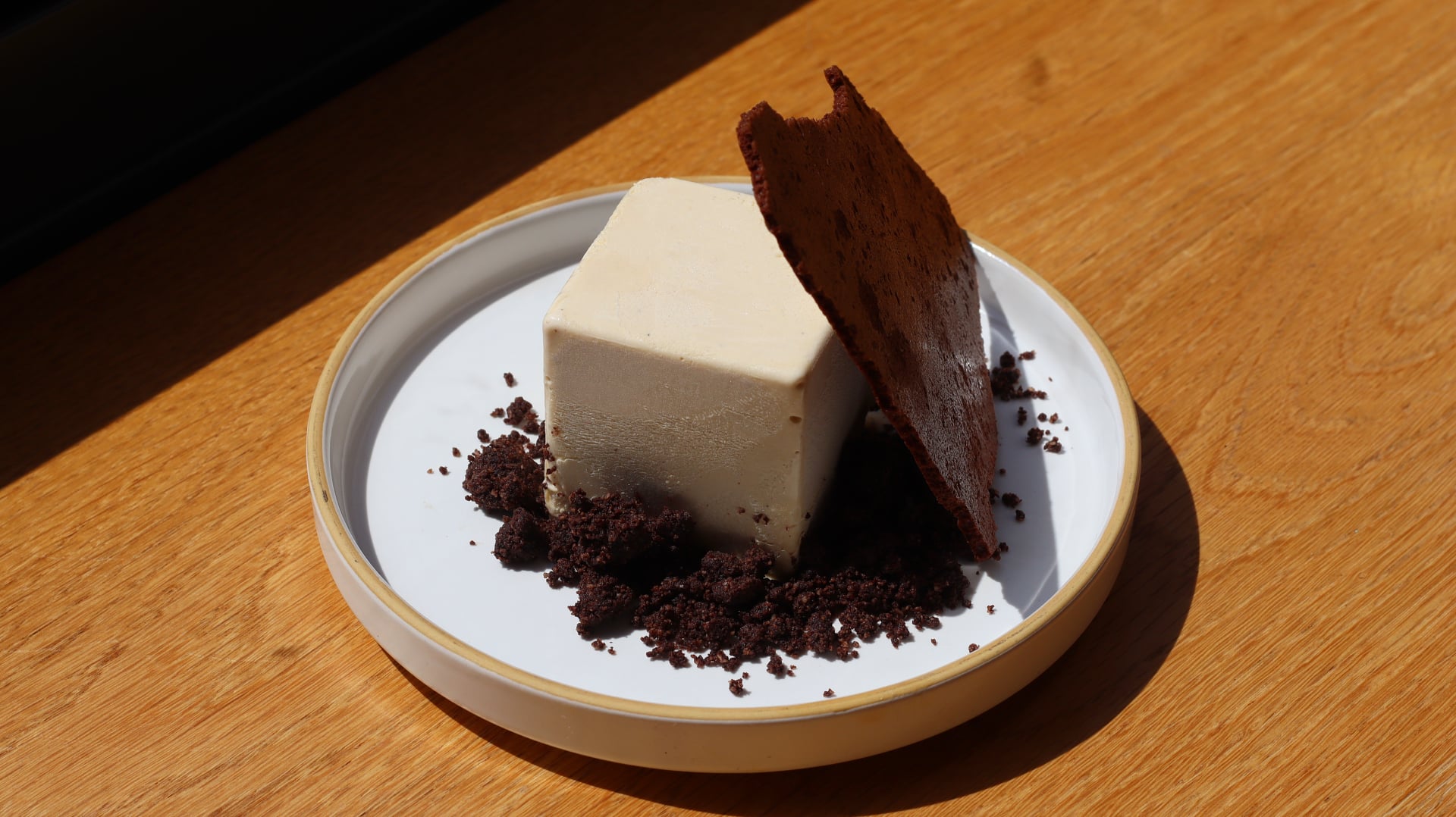
Coffee Parfait
TIER 2
Coffee Parfait
Taking the same recipe as Tier 1, we just replace water for espresso in the sugar syrup. The coffee brings a slightly more bitter flavour which complements the sweeter profile of the parfait really well. The star of the show is the dehydrated chocolate mousse. Think crunchy meringue shards, but made with a rich chocolate mousse. Finally it’s served with an almond cocoa crumble and a cold chocolate sauce.

6
INDIVIDUAL PARFAITS
Ingredients
Makes 6 individuals parfaits
Coffee Parfait
300g Double Cream
80g Egg Yolks
85g Caster Sugar
35g Espresso
15g Honey
Pinch of Flaked Salt
Chocolate Almond Crumble
55g Ground Almonds
40g Plain/All-Purpose Flour
40g Light Brown Sugar
50g Unsalted Butter, Cold & Cubed
25g Cocoa Powder
Pinch of Flaked Salt
Dehydrated Chocolate Meringue
190g Double/Heavy Cream
200g Dark Chocolate, 70% Cocoa Solids, Finely Chopped
135g Egg Whites
55g Caster/White Sugar
Pinch of Flaked Salt
Chocolate Sauce
50g Whole Milk
30g Espresso
50g Double/Heavy Cream
10g Caster/White Sugar
40g Dark Chocolate, 70% Cocoa Solids
Pinch of Flaked Salt
Special equipment
Stand mixer
Digital thermometer
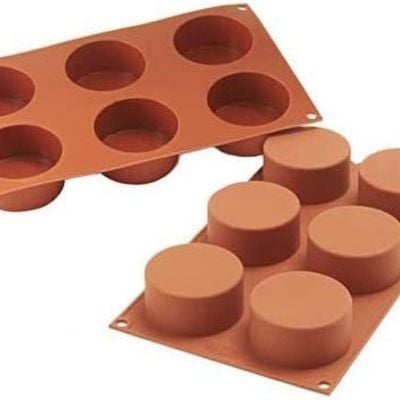
Silicon cylinder mold
Silicon mat
Raplette (optional)
Method
Coffee Parfait
1. Into the bowl of a stand mixer, add the egg yolks and whisk on a medium speed.
-
- 80g Egg Yolks
2. Meanwhile, in a small saucepan, add the espresso, honey and sugar. Place this onto a medium heat.
-
- 85g Caster Sugar
- 35g Espresso
- 15g Honey
3. Continue to cook the sugar mixture until it reaches 118C/244F. It can be a little bit tough as the coffee will cause the mixture to bubble up quite a lot. So if you get to around 114-116C on your digital thermometer that will be totally fine! Remove it from the heat and immediately slowly pour it over the whisking egg yolk mixture. Be careful not to pour the mixture directly onto the whisk or it will splatter. Whisk for 5 minutes on a medium high speed or until the mixture is thick, pale and holds a ribbon. Remove the bowl from the mixer and set it aside.
4. Add the cream, a pinch of flaked salt to a medium bowl and whisk by hand until it forms a medium soft peak.
-
- 300g Double Cream
- Pinch of Flaked Salt
5. Whisk the cream into the egg yolk base in two parts. You should end up with a nice smooth mixture.
6. Pour the mixture evenly across a silicon cube mold and freeze for 4 hours or overnight.
Chocolate Almond Crumble
1. Preheat the oven to 175C/345F non-fan assisted.
2. Into the bowl of a stand mixer, add all of the ingredients and mix on a medium low speed with a paddle attachment until it forms a crumble-like consistency.
-
- 55g Ground Almonds
- 40g Plain/All-Purpose Flour
- 40g Light Brown Sugar
- 50g Unsalted Butter, Cold & Cubed
- 25g Cocoa Powder
- Pinch of Flaked Salt
3. Squeeze the mixture between your hands to clump it together slightly. Pour the mixture onto a lined baking tray and bake for 12 minutes. Remove from the oven and allow to cool.
Dehydrated Chocolate Mousse
1. Preheat the oven to 100C/215F non-fan assisted.
2. Add the chopped chocolate to a tall measuring jug and set it aside.
-
- 200g Dark Chocolate, 70% Cocoa Solids, Finely Chopped
3. Pour the cream into a small saucepan and place it over a medium heat. Once it is hot, but not boiling, pour it over the chocolate. Allow it to sit for 2 minutes, then use a hand blender to blend until smooth. Transfer the mixture to a medium bowl.
-
- 190g Double/Heavy Cream
4. Into the bowl of a stand mixer, add the egg whites and whisk on a medium speed until frothy.
-
- 135g Egg Whites
5. Slowly add the sugar a tablespoon at a time. Then once you have added all the sugar, keep whisking until you have a medium stiff peak.
-
- 55g Caster/White Sugar
6. Take ⅓ of the meringue and whisk it through the chocolate base to even out the textures.
7. Fold the remaining meringue through in two parts along with a pinch of flaked sea salt.
8. Take a silicon baking mat and spread a thin layer of the mousse evenly across it. A raplette is a great tool to get an even thickness but using a palette knife is fine too. You will have excess mousse so pour it into jars and chill in the fridge to have as a dessert!
9. Slide the silicon mat onto a baking tray and bake for 1 hour and 40 minutes. The mousse should feel firm to the touch and if you break a piece off it should snap like a meringue shard.
10. Remove it from the oven and set aside. This is best made on the same day otherwise it will begin to soften. If it does, just pop it back in the oven t §00C for 20-30 minutes until it is firm again.
Chocolate Sauce
1. Add the espresso, cream, milk and sugar to a small saucepan. Place this on a medium heat.
-
- 50g Whole Milk
- 30g Espresso
- 50g Double/Heavy Cream
- 10g Caster/White Sugar
2. Meanwhile add the chocolate to a tall jug.
-
- 40g Dark Chocolate, 70% Cocoa Solids
3. Once the cream is hot, pour it over the chocolate and blend until smooth. Add a pinch of salt and then transfer it into a pouring jug, covered, and refrigerate for an hour.
Assembly
1. Remove the frozen coffee parfaits from the freezer and place them onto your serving plates.
2. Add a few tablespoons of the crumble around the base.
3. Snap off a large shard of the dehydrated chocolate mousse and rest this against the side of the parfait.
4. When ready to serve, pour the cold chocolate sauce over the top.
5. These are best after sitting at room temperature for about 5 minutes to soften slightly but just be aware they will melt around the edges just slightly (the crumble will hide this!)
Shop the Equipment




Jaffa Cakes
TIER 1
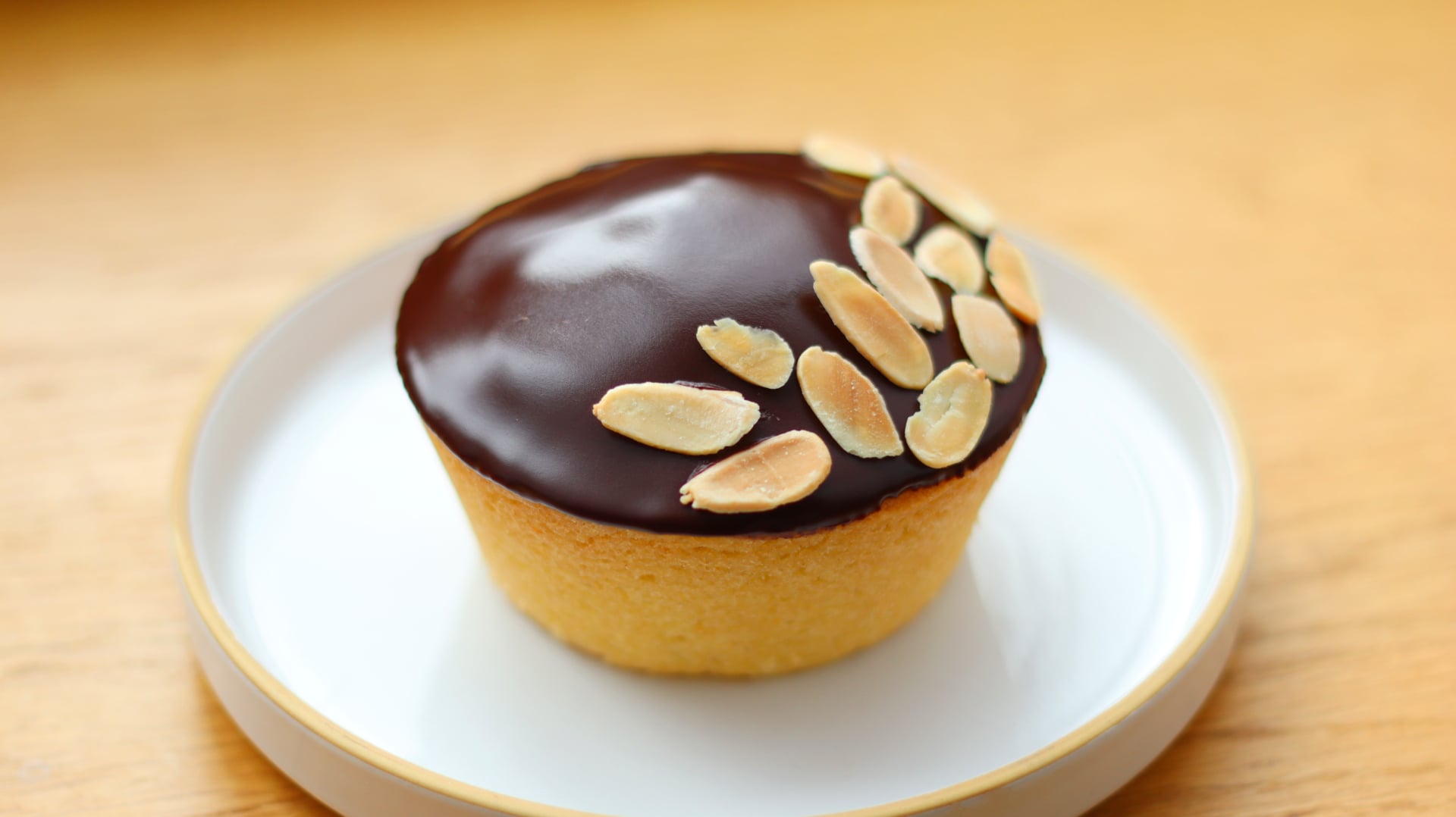
Jaffa Cakes
This recipe was heavily inspired by a cake I had at Ottolenghi’s bakery in London, where they sell a gluten-free orange and almond cake. I’ve never been able to find the recipe, so this is my attempt at trying to recreate it. A slightly more advanced take on a Jaffa Cake, it has a soft brown butter financier, filled with an bright orange compote and finished with a glossy chocolate glaze. It may look simple, but the combination of textures and the depth from the brown butter take it to another level.
6
INDIVIDUAL CAKES
Ingredients
Makes 6 individual cakes
Orange Compote
80g Orange Peel
330g Orange Segments
100g Caster/White Sugar
5g Pectin NH
5g Lemon Juice
Brown Butter & Orange Financier
260g Unsalted Butter
230g Egg Whites
4g Orange Zest
215g Powdered/Icing Sugar
110g Self Raising Flour (or 110g Plain/All-Purpose Flour + 1 Tsp Baking Powder)
115g Ground Almonds
1g Fine Sea Salt
Chocolate Glaze
125g Dark Chocolate, 70% Cocoa Solids
12g Honey
8g Water
37g Unsalted Butter
Toasted Flaked Almonds To Garnish
Special equipment
Food processor
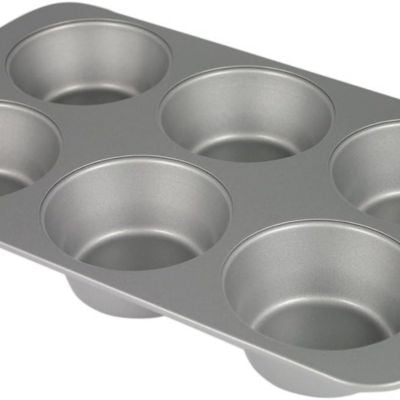
Jumbo muffin tin
Piping bags
Method
Orange Compote
1. Cut the oranges into quarters and remove the segments from the peel.
2. Cut the segments into chunks and add the required amount into a saucepan.
-
- 330g Orange Segments
3. Cut the peels into small chunks and add this into the pan.
-
- 80g Orange Peel
4. Place it onto a medium heat.
5. Meanwhile, whisk together the sugar and pectin and set it aside.
-
- 100g Caster/White Sugar
- 5g Pectin NH
6. Cook the orange mixture for about 3-5 minutes, until the segments have started to break down.
7. Whisk in the sugar mixture and cook it for a further 1-2 minutes, ensuring it reaches a boil.
8. Remove the pan from the heat and stir in the lemon juice.
-
- 5g Lemon Juice
9. Pour the entire mixture into a large food processor and blend briefly – about 10 seconds.
10. Pass the mixture through a sieve, onto a baking tray, scraping the bottom of the sieve to catch all of the compote.
11. Press a sheet of clingfilm on the surface and chill for 2-3 hours or overnight.
Brown Butter Orange Financier
1. Preheat the oven to 160C/320F non-fan assisted (145C/295F fan assisted). Lightly grease a jumbo muffin tin with butter and coat the inside with flour, tipping out any excess.
2. Into a small saucepan, add the unsalted butter. Place the pan over a medium heat.
-
- 260g Unsalted Butter
3. Continue to cook the mixture, whisking occasionally until it is a deep golden brown colour, and smells very nutty. Be careful not to burn it.
4. Immediately remove it from the heat and pour it into a clean bowl on a tared scale, and weigh 220g of brown butter. Set this aside to cool for 10-15 minutes.
5. Into a medium bowl, add the egg whites and whisk for 30 seconds until frothy.
-
- 230g Egg Whites
6. Tip in the sugar and orange zest and whisk again to combine. If the icing sugar is quite lumpy, sift it in.
-
- 4g Orange Zest
- 215g Powdered/Icing Sugar
7. Whisk in the self raising flour, ground almonds and salt until there are no streaks of flour.
-
- 110g Self Raising Flour (or 110g Plain/All-Purpose Flour + 1 Tsp Baking Powder)
- 115g Ground Almonds
- 1g Fine Sea Salt
8. Finally, pour in the cooled brown butter and whisk to combine.
9. Pour the batter equally into the prepared tin, just below ⅘ of each cavity.
10. Bake in the centre of the oven for 30 minutes or until an even golden brown colour.
11. Once baked, remove them from the oven, and allow them to cool in the tin for 30 minutes, then pop them out onto a wire cooling rack. The cakes are too soft to place straight onto a wire rack from the oven, so need to stay in the tin to hold their shape. Cool for a further 15-30 minutes.
12. Once cooled, use a small serrated knife to cut a hole out of the top of the financier. Keep the lid of the cake and set this aside.
13. Remove the orange compote from the fridge and briefly stir it to loosen it, then add it into a piping bag.
14. Pipe the compote into the hole in each cake, just to the top, then add the lid of cake back on top.
15. Place the cakes back in the fridge.
Chocolate Glaze
1. Into a small bowl, add all of the ingredients for the glaze.
-
- 125g Dark Chocolate, 70% Cocoa Solids
- 12g Honey
- 8g Water
- 37g Unsalted Butter
2. Place the bowl onto a pan of gently simmering water, and stir it with a spatula until it is smooth.
3. Immediately remove it from the heat and transfer it to a bowl that is just slightly bigger than your cake. If the bowl is too big, it will be difficult to get enough depth to the glaze to effectively dip it.
4. Remove the cakes from the fridge and immediately dip them into the glaze. Flip them upside down and then set them on a wire rack.
5. The glaze can appear slightly bumpy so if you want a really smooth finish you will need to do a second dip of the glaze.
6. Place the cakes in the fridge or freezer just briefly to set the glaze on top so it is no longer wet to the touch.
7. Warm the glaze back up over a bain marie, transfer if back into the small bowl, and dip the cakes a second time.
8. Let the glaze set for 5-10 minutes, then sprinkle some toasted flaked almonds on top to finish.
Shop the Equipment


Chocolate Fondant Cake
TIER 1
Chocolate Fondant Cake
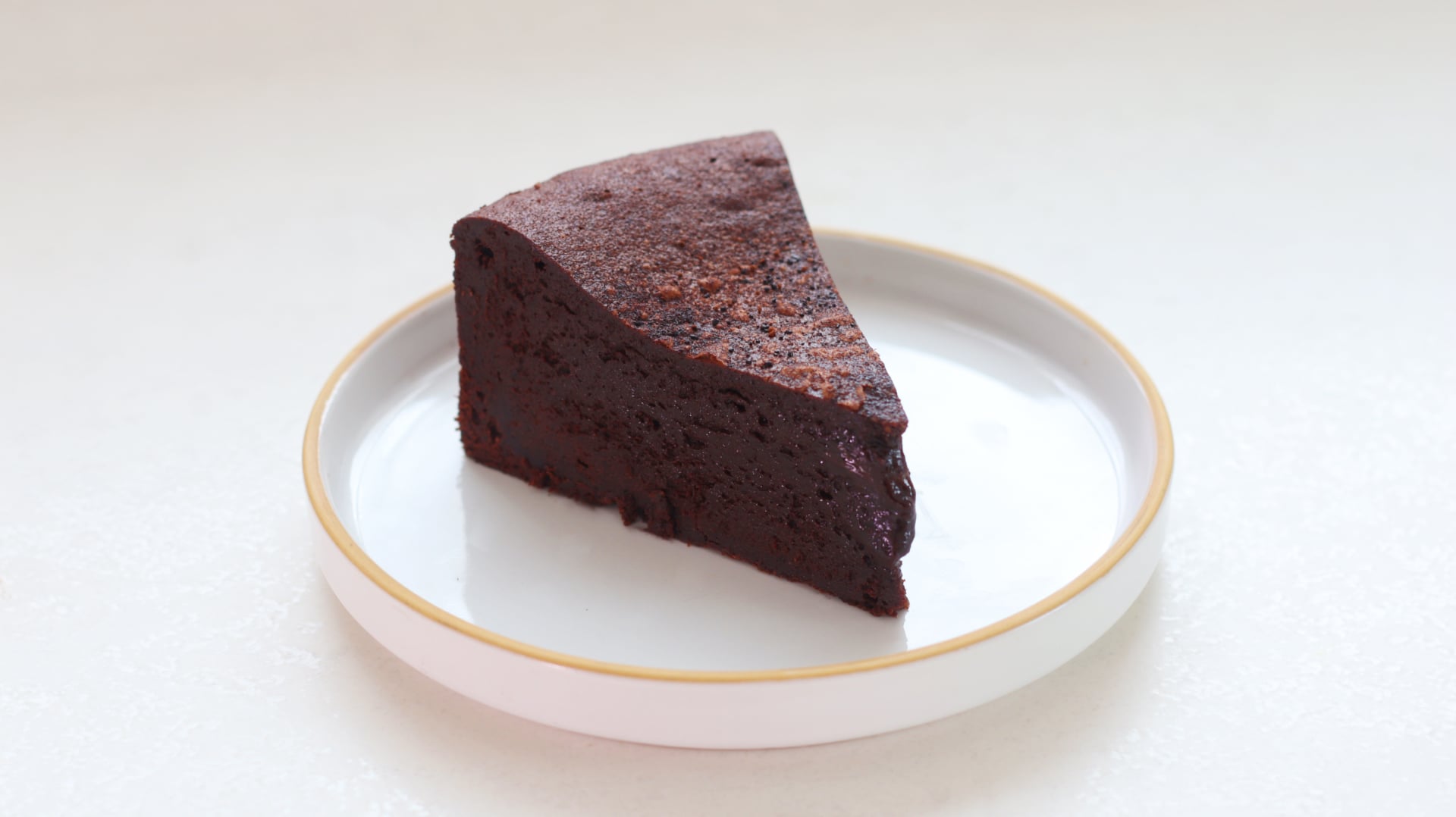
I love this dessert for how simple yet decadent it is, but my favourite part is how well it works as a make ahead option. During testing, I baked it, left it in the fridge overnight, then reheated it the next day and it still had an incredible gooey centre. Serve it simply with softly whipped vanilla cream.
8-10
SERVINGS
Ingredients
Makes 8-10 servings
300g Dark Chocolate (70% Cocoa Solids), Chopped
100g Milk Chocolate, Chopped
200g Unsalted Butter, Room Temperature
190g Caster/White Sugar
60g Light Brown Sugar
335g Whole Eggs
20g Egg Yolks
3g Flakey Sea Salt
90g Plain/All-Purpose Flour
15g Cocoa Powder
Special equipment
20cm/8” cake ring mold
Stand mixer or electric hand whisk
Method
1. Preheat the oven to 145C/295F non-fan assisted (130C/365 Fan). Take a 20cm/8” cake ring mold and lightly grease it with butter then dust the inside with cocoa powder. Tap out any excess.
2. Place this onto a piece of parchment paper, slightly scrunched around the edge of it so it hugs the cake ring slightly. Lift this onto a baking tray lined with a silicon baking mat.
3. Add the chopped chocolate to a medium bowl and place this over a pan of gently simmering water. Stir this occasionally until it is completely melted, then set this to one side to cool slightly.
- 300g Dark Chocolate (70% Cocoa Solids), Chopped
- 100g Milk Chocolate, Chopped
4. Into the bowl of a stand mixer, (or a large bowl if using an electric hand mixer), add the room temperature butter and sugars. Beat this on a medium speed with the paddle attachment for 3-4 minutes, or until thicker and paler in consistency. Scrape down the sides.
- 200g Unsalted Butter, Room Temperature
- 190g Caster/White Sugar
- 60g Light Brown Sugar
5. Slowly drizzle in the eggs (previously whisked together in a bowl) and scrape down the bowl a few times as you add the eggs to ensure the butter is fully incorporated. Don’t worry if once you add the eggs the mixture looks slightly split.
- 335g Whole Eggs
- 20g Egg Yolks
6. Pour in the slightly cooled chocolate mixture and mix just until it forms a smooth, chocolate batter.
7. Finally, sift in the flour and cocoa powder, and sprinkle over the salt. Stir this together with a spatula until there are no more dry ingredients.
- 3g Flakey Sea Salt
- 90g Plain/All-Purpose Flour
- 15g Cocoa Powder
8. Pour the batter into the prepared cake ring and spread it flat with a spatula.
9. Place it into the centre of the oven and bake for 45 minutes.
10. Once baked, remove it from the oven and allow it to cool for at least 30 minutes (this will give a very gooey consistency) or even longer. You can even refrigerate it, then place it back into a hot oven (200C/390F for 5 minutes) and then serve it. This will make the centre soft again (although not quite as soft as when you serve it the same day). This is best served with some freshly whipped cream.
Shop the Equipment


Chocolate Fondant with Strawberry Sorbet
TIER 2
Chocolate Fondant with Strawberry Sorbet
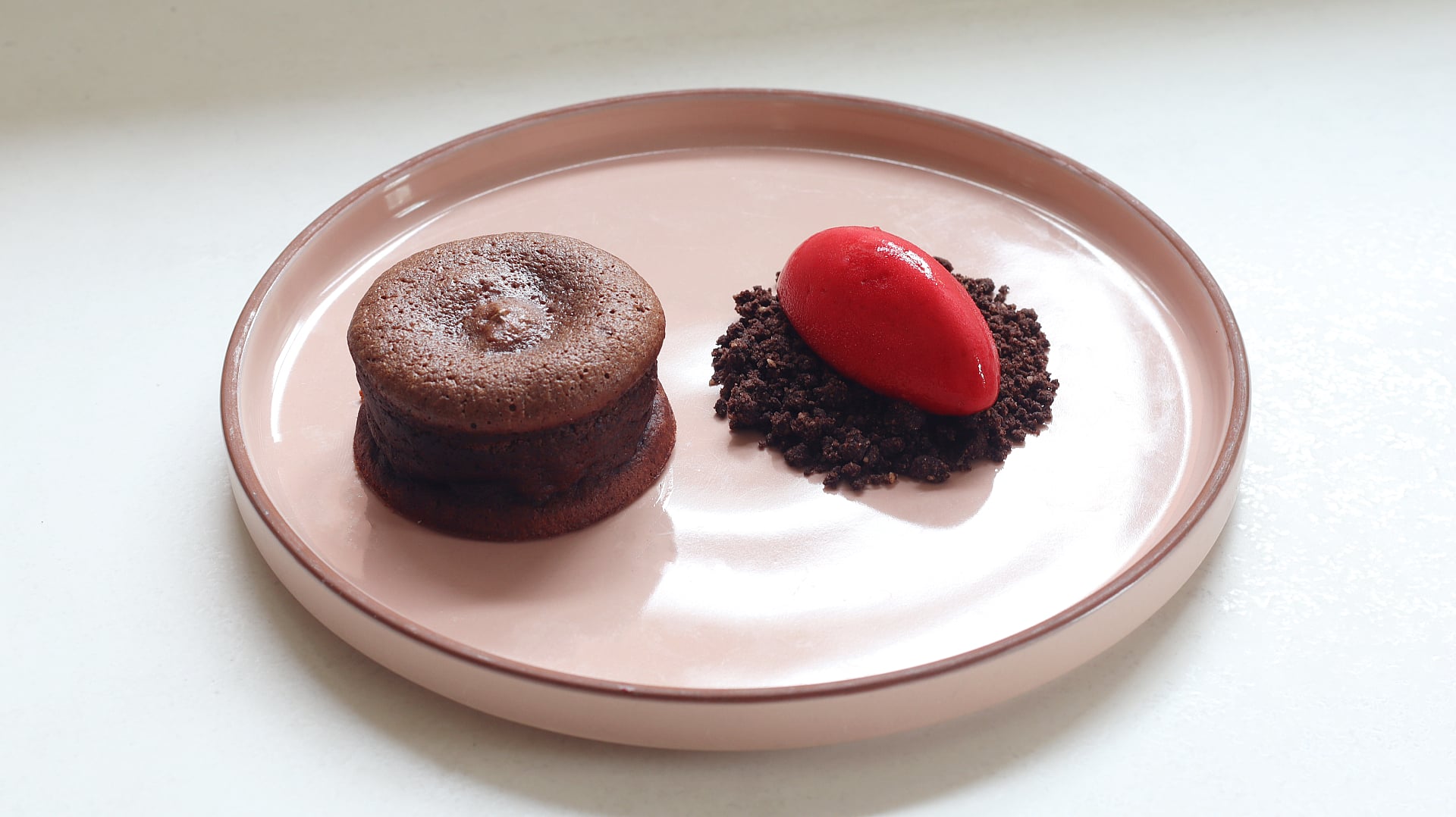
This is a more refined take on the Tier 1 recipe. The fondants are baked in individual ring moulds and plated with chocolate soil and raspberry sorbet. The soil adds crunch and a subtle saltiness, while the sorbet brings brightness and balance to the plate. All the elements can be prepared in advance, then the fondants are baked just before serving.
4
FONDANTS
Ingredients
Makes 4 Fondants
Strawberry Sorbet
90g Water
160g Caster/White Sugar
35g Liquid Glucose or any invert sugar
2g Locust Bean Gum or NH Pectin
450g Strawberry Puree
Citric Acid To Taste (1-2g)
Fine Sea Salt To Taste
Chocolate Crumble
50g Caster/White Sugar
50g Ground Almonds
30g Plain/All-Purpose Flour
20g Cocoa Powder
3g Flakey Salt
35g Unsalted Butter, Melted
Chocolate Fondant
200g Dark Chocolate (70% Cocoa Solids), Chopped
200g Unsalted Butter, Room Temperature
200g Icing/Powdered Sugar
220g Whole Eggs
75g Egg Yolks
55g Plain/All-Purpose Flour
45g Cocoa Powder
Pinch of Flakey Sea Salt
Special equipment
Digital thermometer
Hand blender
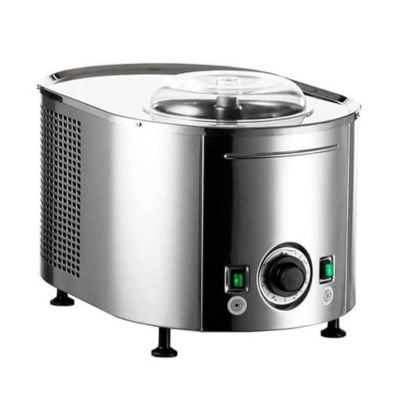
Ice cream machine
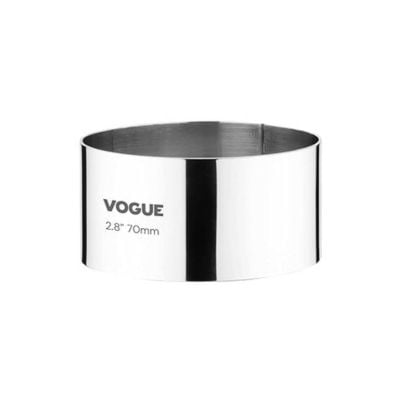
4 7×3.5cm (2.7×1.3”) metal ring molds
Stand mixer or electric hand whisk
Piping bags (optional)
Method
Strawberry Sorbet
1. Place a medium bowl inside a large bowl that is filled with ice water. Set this to one side.
2. Into a medium saucepan, add the water, sugar, glucose and locust bean gum.
- 90g Water
- 160g Caster/White Sugar
- 35g Liquid Glucose or any invert sugar
- 2g Locust Bean Gum or NH Pectin
3. Whisk the mixture over a medium heat until it reaches 85C/185F on a digital thermometer.
4. Immediately remove it from the heat and pour it into the medium bowl you set aside, over the ice. Stir this occasionally until it reaches around 10C/50F on a digital thermometer.
5. Transfer the cooled mixture to a tall measuring jug, then pour the strawberry puree on top. Blend till smooth with a hand blender.
- 450g Strawberry Puree
6. Add in the citric acid (or lemon juice) and blend. Taste the mixture and add more if needed to suit your taste.
- 1-2g Citric Acid
7. The mixture can be churned immediately in your ice cream machine, or left in the fridge for up to 24 hours.
8. When you are ready to churn it, add a pinch of salt and stir this through. Then pour it into your machine, churning according to the machine instructions. It usually takes around 15-30 minutes until it is a thick, scoopable texture.
9. Once it is done, it will still be slightly soft, so transfer it to a tupperware and place it back in the freezer for 2-3 hours. Then it will be the perfect scooping texture.
Chocolate Soil
1. Preheat the oven to 160C/320F non-fan assisted (145C/295F fan-assisted)
2. Place all the dry ingredients into a bowl and stir together with a spatula.
- 50g Caster/White Sugar
- 50g Ground Almonds
- 30g Plain/All-Purpose Flour
- 20g Cocoa Powder
- 3g Flakey Salt
3. Pour in the melted butter and stir together to form a crumbly chocolate mix.
- 35g Unsalted Butter, Melted
4. Tip the crumble onto a baking sheet and bake for 12 minutes. Remove from the oven and allow it to cool completely. If you would like the soil to be a finer consistency you can blend it briefly in a food processor but it’s optional! Store the mixture and set to one side.
Chocolate Fondant
1. Preheat the oven to 190C/375C non-fan assisted (175C/345F fan-assisted).
2. Lightly grease four 7×3.5cm (2.7×1.3”) metal ring molds with soft butter and then coat with cocoa powder, tapping out the excess. Place these onto a baking tray lined with a silicon mat or baking paper.
3. Place the chocolate into a bowl and place this over a pan of gently simmering water, stirring occasionally until it has melted. Remove it from the heat to cool for 5 minutes.
- 200g Dark Chocolate (70% Cocoa Solids), Chopped
4. Add the butter and sugar to the bowl of a stand mixer fitted with a paddle attachment and beat on a medium speed for 2-3 minutes, until it is very thick and pale.
- 200g Unsalted Butter, Room Temperature
- 200g Icing/Powdered Sugar
5. Lower the speed, and drizzle in the eggs slowly, scraping down the side of the bowl as needed.
- 220g Whole Eggs
- 75g Egg Yolks
6. Pour in the cooled chocolate and mix to combine, scraping down the bowl as needed.
7. Finally, sift in the flour and cocoa powder, along with a good pinch of the salt. Stir this through with a spatula until you have a smooth, thick batter.
- 55g Plain/All-Purpose Flour
- 45g Cocoa Powder
- Pinch of Flakey Sea Salt
8. Add the mixture to a piping bag and pipe it into the greased ring molds, filling them about ¾ of the way up.
9. Place the tray into the centre of the oven and bake for 14 minutes. They should feel slightly firm/bouncy when you touch the edge and then the centre should look slightly molten.
Assembly
1. While they are baking, prepare the plates. Take the chocolate soil and pour 1-2 tbsp on the side.
2. Remove the sorbet from the freezer and let it warm up for a few minutes before using a warm spoon to scoop some on top of the soil. Do this, just before the fondant comes out of the oven.
3. Once the fondants are baked, place a palette knife underneath each one and carefully lift it onto the serving plate.
4. Carefully remove the ring mold and peel away the baking paper. Serve immediately.
Shop the Equipment


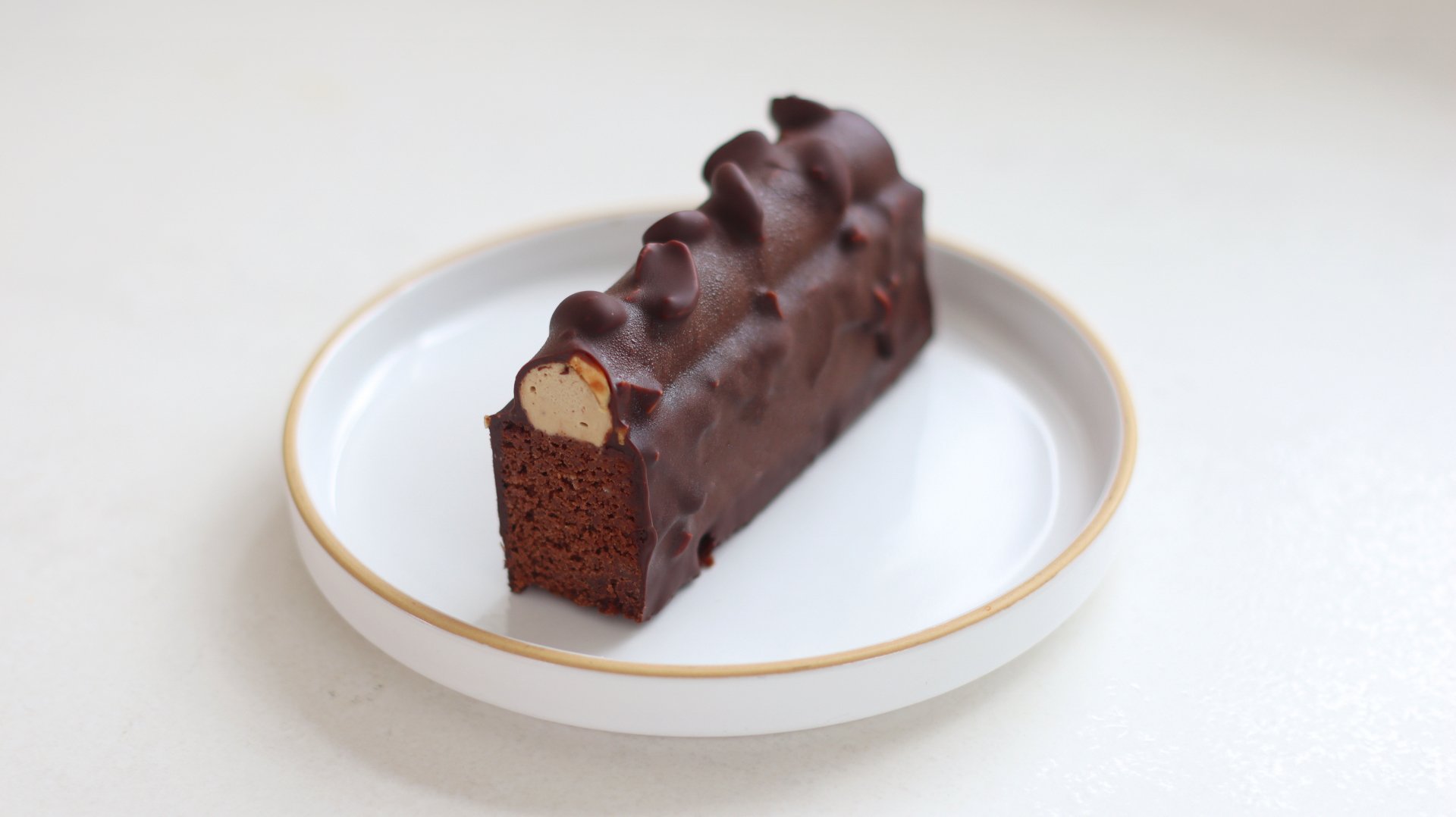
Coffee & Peanut Financier
TIER 1
Coffee & Peanut Financier
I’m a huge fan of “finger” style desserts and the great thing about this recipe is that it builds all the fundamental elements you’ll need to take on tier 2. The financier is almost like a brownie texture with a smooth coffee cremeux and a simple chocolate glaze. Peanut and coffee is a delicious combination but feel free to swap the peanuts with any other nut. The financier also stores really well so you can bake it, wrap it tightly and store it in the fridge for a few days until you need it.
12-14
FINANCIERS
Ingredients
Makes 12-14 Financiers
Coffee Cremeux
5g Powdered Gelatin + 30g Water
400g Double Cream
115g Egg Yolks
60g Sugar
1 Vanilla Pod
75g Espresso
1g Freshly Ground Coffee
Small Pinch of Flaky Salt
Chocolate Peanut Financier
200g Unsalted Butter
560g Dark Chocolate (70%)
160g Plain Flour
200g Icing Sugar
16g Baking Powder
2g Fine Sea Salt
520g Double Cream
400g Egg Whites
160g Ground Peanuts or Almonds
Chopped Peanuts To Garnish
Chocolate Peanut Glaze
300g Dark Chocolate, 70% cocoa solids
30g Neutral Oil
30g Chopped Peanuts
Special equipment
Digital thermometer
Hand blender
13×9” cake tin
Stand mixer
Piping bag
Large round tip nozzle
Method
1. Into a small bowl, add the gelatin and water to a small saucepan and let it bloom for 10 minutes.
2. Into a medium saucepan, add the cream, espresso, coffee grounds and beans from the fresh vanilla pod. Place it over a medium heat until steaming.
3. Meanwhile, whisk together the egg yolks and sugar until combined.
4. Pour the hot cream over the egg mixture, whisking to combine, then add it back into the saucepan. Place it over a medium heat.
5. Cook to 80-82C on a digital thermometer, then immediately pass it through a sieve, on top of a tall measuring jug.
6. Scoop in the bloomed gelatin and blend till smooth with a hand blender. Sprinkle in a pinch of flaky sea salt and stir it through with a spatula. Pour the mixture into a bowl and refrigerate for a minimum of 6 hours.
7. For the financier, preheat the oven to 160C/320F non-fan assisted (145C for fan assisted). Lightly grease a 13×9” cake tin with soft butter. Cut a strip of parchment paper long enough to cover the base of the tin and extend up and over two opposite sides, creating “handles.” Press it into the tin so it sticks to the base and sides. Then cover the other sides with two strips of parchment.
8. Add the chocolate and butter to a medium bowl and melt this over a pan of gently simmering water. Once melted, set it to one side to cool slightly.
9. Meanwhile, sift together the flour, icing sugar, baking powder and salt. Add the ground peanuts on top and whisk to combine.
10. Pour the cream and egg whites on top and whisk by hand just until combined and there are no streaks of dry ingredients.
11. Pour in the melted chocolate mixture and whisk again to combine.
12. Pour the smooth batter into the lined tray and bake in the oven for 70-75 minutes.
13. Remove it from the oven and allow it to cool for 30 minutes before refrigerating for 1 hour.
14. When the financiers have cooled, use the parchment handles to lift it out of the tin and onto a chopping board. Cut it into 12-14 rectangles, or as small/large as you would like to make them.
15. Remove the coffee cremeux from the fridge and add the mixture into a stand mixer fitted with a whisk attachment. Whisk on a medium speed until it has thickened to a medium stiff peak. Add the mixture into a piping bag fitted with a large round tip nozzle.
16. Pipe long lines of the cremeux along the top of the financier, and then use a slightly warm knife to trim off the ends so they are flush with the edge of the financier.
17. Place some chopped peanuts into the top of the cremeux, then place the financiers into the freezer for 3-6 hours or until they are solid.
18. When they are frozen, prepare the glaze. Add the chocolate and oil into a bowl and place it over a pan of simmering water, stirring until it is melted.
19. Remove it from the heat and stir through the chopped peanuts. The glaze needs to be around 45C/113F when you use it. Pour the mixture into a tall but thin rectangular container. Take the temperature and heat it up if needed or allow it to cool further.
20. Remove the financiers from the freezer and place a knife into the bottom. Dip the financier into the glaze until it is completely covered, then lift it up, allowing the excess to drip off before quickly flipping it over and placing it onto a tray.
21. Repeat this with the remaining financiers.
22. The financiers can be left at room temperature for 30 minutes then served, or stored in the fridge until needed.
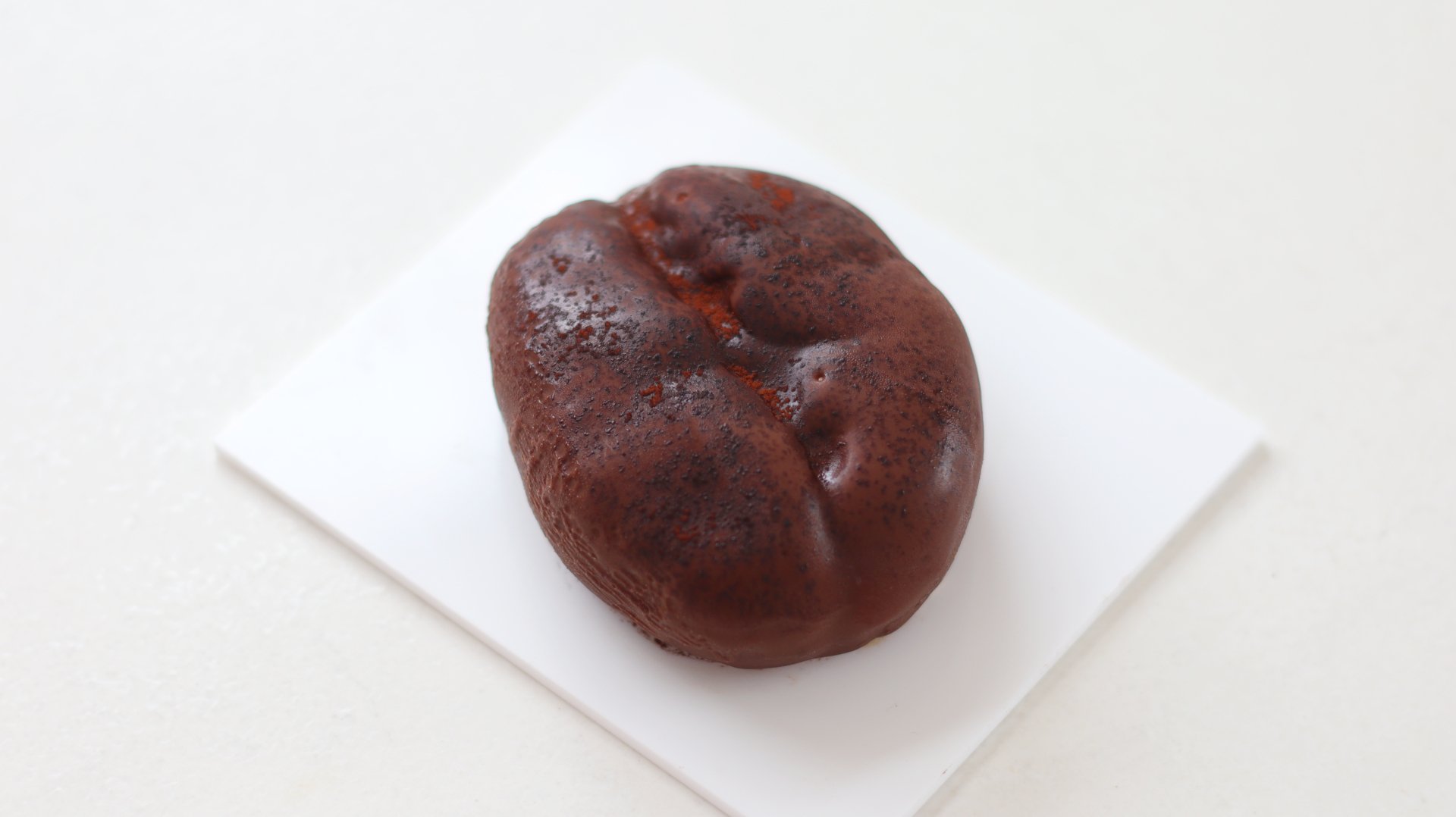
Coffee Bean Petit Gateaux
TIER 2
Coffee Bean Petit Gateaux
The showstopper! This style of dessert was made famous by pastry chef Cedric Grolet but no one ever seems to show you how to actually make them! The recipe has quite a few elements to prepare with a coffee cremeux, chocolate financier, recomposed streusel and a chocolate glaze. I’m a coffee snob, so I would always recommend using the freshest coffee you can get for the best flavour. If you don’t have the fancy coffee bean silicon mold, then feel free to freeze it in any small silicon mold you’ve got.
8-10
COFFEE BEANS
Ingredients
Makes 8-10 Coffee Beans
Coffee Cremeux
5g Powdered Gelatin + 30g Water
400g Double Cream
115g Egg Yolks
60g Sugar
1 Vanilla Pod
75g Espresso
1g Freshly Ground Coffee
Small Pinch of Flaky Salt
Chocolate Financier
130g Double Cream
100g Egg Whites
50g Icing Sugar
40g Ground Almonds
40g Plain Flour
4g Baking Powder
Pinch of Salt
50g Unsalted Butter
140g Dark Chocolate (70% Cocoa Solids)
Coffee Hazelnut Praline
220g Roasted Hazelnuts, Skinned
80g Pecans
12g Whole Coffee Beans
200g Sugar
50g Water
1 Vanilla Pod
Flakey Salt
Streusel
110g Light Brown Sugar
110g Ground Hazelnuts or Almonds
95g Plain/All-Purpose Flour
2g Bicarbonate of Soda
1g Fine Sea Salt
110g Cold Unsalted Butter, Cubed
Recomposed Streusel
215g Streusel
50g Dark Chocolate (70%)
25g Unsalted Butter
70g Coffee Hazelnut Praline
Chocolate Glaze
350g 55% Chocolate
300g Cocoa Butter
30g Neutral Oil
Cocoa Powder to Finish
Special equipment
Digital thermometer
35x25cm baking tray
Food processor
Stand mixer
Piping bag
Coffee bean silicon mold
Method
1. Into a small bowl, add the gelatin and water to a small saucepan and let it bloom for 10 minutes.
2. Into a medium saucepan, add the cream, espresso, coffee grounds and beans from the fresh vanilla pod. Place it over a medium heat until steaming.
3. Meanwhile, whisk together the egg yolks and sugar until combined.
4. Pour the hot cream over the egg mixture, whisking to combine, then add it back into the saucepan. Place it over a medium heat.
5. Cook to 80-82C on a digital thermometer, then immediately pass it through a sieve, on top of a tall measuring jug.
6. Scoop in the bloomed gelatin and blend till smooth with a hand blender. Sprinkle in a pinch of flaky sea salt and stir it through with a spatula. Pour the mixture into a bowl and refrigerate for a minimum of 6 hours.
7. For the financier, preheat the oven to 160C/320F non-fan assisted (145C for fan assisted). Lightly grease a 35x25cm baking tray with soft butter and line it with parchment paper – alternatively use a silicon sponge roll mat. Add the chocolate and butter to a medium bowl and melt this over a pan of gently simmering water. Once melted, set it to one side to cool slightly.
8. Meanwhile, sift together the flour, icing sugar, baking powder and salt. Add the ground almonds on top and whisk to combine.
9. Pour the cream and egg whites on top and whisk by hand just until combined and there are no streaks of dry ingredients.
10. Pour in the melted chocolate mixture and whisk again to combine.
11. Pour the smooth batter into the lined tray and bake in the oven for 15-17 minutes.
12. Remove it from the oven and allow it to cool for 30 minutes before refrigerating for at least 1 hour. You can also freeze this.
13. For the coffee hazelnut praline, into a medium saucepan, add the sugar and water. Place it on a medium heat, and cook the mixture until it reaches 116C/240F on a digital thermometer.
14. Once at temperature, pour in the hazelnuts, pecans, coffee beans and the beans from a fresh vanilla pod. Stir constantly with a spatula. The mixture will initially look quite clumpy, then the sugar will crystallise, but eventually, as you keep stirring, the sugars will caramelise and you should have a deep golden caramel surrounding the nuts. It will take around 3-5 minutes.
15. Immediately remove the pan from the heat, and tip the caramelised nuts onto a baking tray lined with a silicon mat. Sprinkle some sea salt flakes on top and let it set completely at room temperature for 30 minutes.
16. The praline should then be completely cool and solid to the touch. Break it into pieces and add it into a high-powered food processor. Blend for 3-4 minutes, scraping it down every so often, until you have a smooth, nutty paste. Store in an airtight container.
17. Into the bowl of a stand mixer, fitted with the paddle attachment, add all of the ingredients for the streusel.
18. Mix on a low speed until the butter has broken down and the mixture is sandy in texture.
19. Transfer this to a baking tray, lined with a silicon mat and spread it out. Place it into the freezer for 30 minutes. Meanwhile preheat the oven to 175C/345F non-fan assisted.
20. Place the chilled mixture into the oven and bake for 30 minutes. After around 15 minutes it should be slightly golden around the edges. Remove it from the oven and stir it all together with a spatula then place it back in the oven to bake until it is an even golden colour.
21. Once baked, allow it to cool at room temperature for at least 30 minutes.
22. For the recomposed streusel, add the chocolate, butter and praline into a bowl and place this over a pan of simmering water. Stir it together until the chocolate and butter have completely melted. Remove it from the heat.
23. Tip in the cooled streusel and stir to combine. Ensure if there are any large pieces of streusel, that you crush them slightly so they are smaller, before adding them in.
24. Pour the mixture onto a sheet of parchment paper and place a second sheet on top. Use a rolling pin to roll it relatively thin, then place it into the freezer for 30 minutes.
25. To assemble the dessert, remove the coffee cremeux from the fridge and whisk it to a medium peak in a stand mixer – avoid whipping it too stiff. Add the mixture into a piping bag.
26. If your coffee bean silicon mold has a cutter, use this to cut the out inserts from the recomposed streusel and financier. Sandwich them together with a little bit of cremeux. If you don’t have a cutter, then you can use a sharp knife to cut the required shapes that will fit your coffee bean mold. You can also freeze this dessert in any silicon mold you have!
27. Take the coffee bean silicon mold (or any silicon mold) and pipe the cremeux into the mold, filling it up about ¾ of the way. Use a spatula to press the cremeux to the edges, then place the financier/streusel insert into the cremeux. Top up the mold if needed with cremeux and then smooth the top with a palette knife. Repeat this for all of the molds you have. Place the molds onto a tray and freeze them for at least 12 hours.
28. Once frozen, remove them from the molds then place the desserts back in the freezer on a tray lined with a silicon mat for a further hour.
29. For the glaze, add the chocolate, cocoa butter and oil into a medium bowl. Place this over a pan of gently simmering water and stir it until it is completely melted.
30. The glaze needs to be at 45C/113F when you dip the desserts. Pour the mixture into a small, deep container that is just slightly larger than your dessert.
31. Remove one dessert at a time, and place a knife into the base. Dip the dessert into the so that it is covered right to the edge, then lift it up and hold it at a 45 degree angle until the dripping slows. Then lift it upright until it has set.
32. Dip a pastry brush back into the glaze and quickly brush this all around the bean to ‘rough’ it up slightly.
33. Finally, dust a thin layer of cocoa powder on top of the coffee bean then very quickly and carefully blow torch it to darken the cocoa powder slightly. Lift it onto a small serving dish.
34. Repeat this for all the remaining desserts, and then leave them in the fridge for at least an hour or overnight before serving.
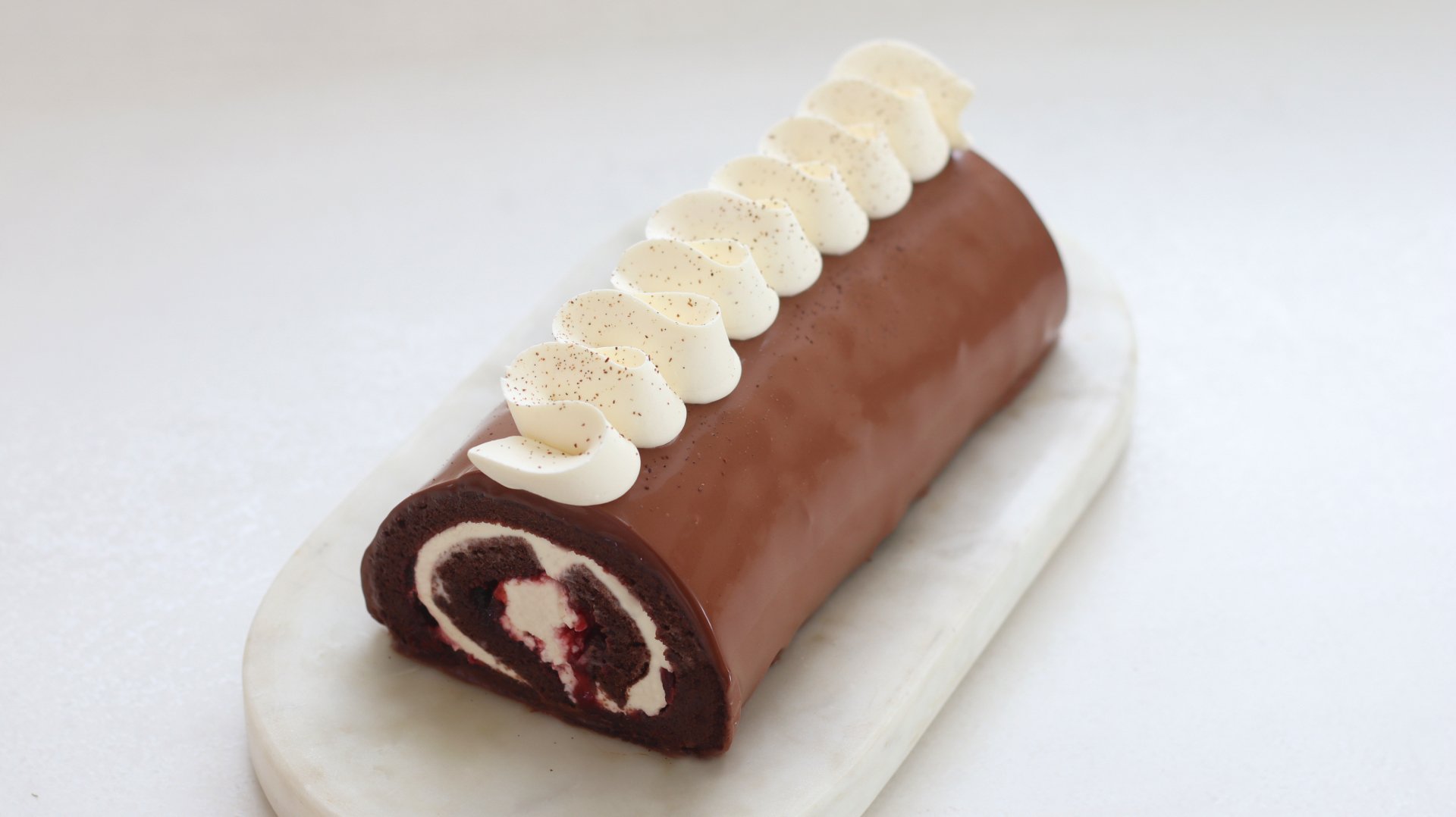
Black Forest Swiss Roll
TIER 2
Black Forest Swiss Roll
Black Forest gâteau is one of my all-time favourites, and the mix of cream, fruit, and chocolate is exactly what a good Swiss roll should be about too! This version layers the chocolate sponge from Tier 1 with cherry jam, mascarpone cream, and finishes with a stunning chocolate glaze. Watch the video to help you master the perfect roll, and you’ll catch the little accident I had along the way 😅.
1
SWISS ROLL CAKE
Ingredients
Makes 1 Swiss Roll Cake
Mascarpone Vanilla Cream
4g Powdered Gelatin, 250 bloom
24g Cold water
400g Double/Heavy Cream, Divided
1 Fresh Vanilla Pod
130g Mascarpone
20g Icing/Powdered Sugar
Chocolate Sponge
80g Egg Yolks
75g Caster/White Sugar, Divided
150g Egg Whites
45g Plain/All-Purpose Flour
25g Cocoa Powder
50g Vegetable Oil
35g Whole Milk
Chocolate Glaze
160g Dark Chocolate, 70% Cocoa Solids, Chopped
370g Double/Heavy Cream
10g Unsalted Butter
10g Glucose or Honey
Cherry Jam To Fill
Special equipment
Hand blender
39x27cm baking tray.
Electric hand whisk
Stand mixer
Piping bag
St Honore nozzle
Method
Mascarpone Vanilla Cream
1. Into a small bowl, add the powdered gelatin and cold water. Stir them together and set to one side for 5 minutes to bloom.
2. Into a tall jug, add the mascarpone and set this to one side.
3. Pour 330g of cream into a small saucepan, along with the sugar and the beans scraped from a fresh vanilla pod.
4. Place this over a medium heat, stirring until the mixture is steaming.
5. Remove it from the heat and pour it over the mascarpone. Scoop in the bloomed gelatin, and blend with a hand blender until smooth.
6. Finally, pour in the remaining 70g of cold cream and blend again. Pour the mixture onto a deep baking tray and cover the surface directly with clingfilm.
7. Refrigerate for a minimum of 3 hours.
Chocolate Sponge
1. Preheat the oven to 180°C/355°F Non-Fan Assisted.
2. Lightly grease a 39x27cm baking tray. Cut a rectangle of parchment paper so that it fits neatly inside the tray, and press it in.
3. Into a medium bowl, add the egg yolks, and 20g of caster sugar. Whisk the mixture with an electric hand mixer (or in a stand mixer) until it is thicker in volume and pale in colour. About 1-2 minutes. Set this to one side.
4. Into a medium bowl, add the egg whites and using an electric hand whisk (or stand mixer) whisk on a medium-low speed. Once the mixture is frothy, increase the speed to medium and slowly add the remaining 55g of caster sugar, about 1 tablespoon at a time. Whisk until you have a medium-stiff peak to the meringue.
5. Gently fold the first third of meringue into the egg yolk mixture. Once incorporated, add the second third, fold it through and then the final third.
6. Next, sift in the plain flour & cocoa powder, and fold the mixture carefully until there are no more streaks of dry ingredients.
7. Finally, pour in the vegetable oil and whole milk. Use a spatula to fold this in, making sure to scrape the bottom of the bowl.
8. Pour the batter onto the lined tray, and then using a spatula, spread the batter out evenly.
9. Bake the sponge for 12 minutes then allow it to cool for 30 minutes at room temperature.
Assembly
1. Once the sponge has cooled, flip it out of the tray and gently peel off the parchment paper. Then carefully flip the sponge over onto a large, clean sheet of parchment paper, so that the smooth top side (the side that wasn’t touching the tray during baking) is facing down.
2. Position the sponge with the long edge facing you. Choose one of the short ends—either the left or right edge—and slice off a thin piece at a 45-degree angle using a serrated knife. This angled cut makes it easier to start the roll neatly and helps it tuck in smoothly. Then, at the opposite end, score three lines, about 1cm/0.4” apart, being very careful not to cut through the sponge.
3. Take a few tablespoons of cherry jam and spread this evenly across the sponge using a palette knife.
4. Then, remove the mascarpone cream from the fridge, and scoop half of it into the bowl of a stand mixer fitted with a whisk attachment. Place the remaining half back in the fridge to use later.
5. Whisk the cream on a medium speed for 2-3 minutes, until you have a medium stiff peak.
6. Use an offset spatula to spread the cream in a very even layer across the sponge, right to the edges.
7. Starting from the short edge that you didn’t cut, begin to roll the sponge tightly using the parchment paper underneath to guide and lift the sponge as you go. Use firm but gentle pressure to keep the roll even and tight. Once fully rolled, wrap the parchment paper around the log. Then, place a flat tool like a bench scraper against the roll, and with your other hand, gently pull the loose end of the parchment paper. This will tighten the log and help create a more defined cylinder shape. Place the Swiss roll onto a tray and refrigerate for 1 hour, then into the freezer for 15 minutes.
Chocolate Glaze
1. Just before you remove the Swiss roll from the freezer, prepare the glaze, as we will use this immediately.
2. Into a tall jug, add the chopped chocolate and set this to one side.
3. Add the cream and glucose (or honey) to a small saucepan. Note – if you are using a cream with a lower fat percentage (35% for example), you will need less cream, around 260g.
4. Place this over a medium-low heat and stir until the mixture is steaming.
5. Immediately remove it from the heat, and pour it over the chocolate, and add the butter on top.
6. Let it sit for 2 minutes, then use a hand blender to blend until smooth. Avoid adding any air bubbles as you blend it.
7. Remove the Swiss roll from the freezer and place a wire rack over a tray to catch any excess glaze. To elevate the Swiss roll and allow the glaze to drip cleanly down the sides, set a few small ring molds under the roll so it sits slightly above the wire rack. This will keep the bottom from sticking and ensure an even coating all around.
8. Take the glaze and slowly pour it evenly all over the Swiss roll.
9. Let the excess drip off and the glaze set for a few minutes before taking a small knife and wiping away any drips that have set on the underside of the cake.
10. Use a large offset spatula to carefully lift the Swiss roll onto your serving plate, then with a sharp knife that has been heated, cut both ends of the Swiss roll to reveal the swirl. Clean up the plate to ensure a nice presentation. Leave this at room temperature for 30 minutes.
11. Take the remaining mascarpone cream and whisk it to a medium stiff peak. Add this into a piping bag fitted with a St Honore nozzle.
12. Pipe a zigzag of cream down the centre and serve.
Shop the Equipment


Boston Cream Pie
TIER 1
Boston Cream Pie
A childhood favourite of mine, a Boston cream pie often comes as a donut, but it’s also fantastic in cake form. It starts with two layers of vanilla sponge, which are filled with a thick layer of smooth vanilla crème pâtissière. The cake is then finished with a thin chocolate glaze.The beauty in the cake lies in how it is layered in the tin, and using acetate really helps to get a smooth, clean finish.
7"
CAKE
Ingredients
Makes 1 7-inch Cake
Vanilla Sponge
245g Caster Sugar
245g All Purpose/Plain or Cake Flour
15g Baking Powder
2g Fine Sea Salt
245g Whole Eggs
100g Vegetable Oil
85g Whole Milk
145g Unsalted Butter
1 Tsp Vanilla Bean Paste
Crème Pâtissiére
500g Whole Milk
1 Fresh Vanilla Pod
75g Caster/White Sugar
120g Egg Yolks
40g Cornstarch
1g Fine Sea Salt
45g Unsalted Butter, Cold & Cubed
Chocolate Glaze
100g Chocolate (55% Cocoa Solids)
50g Unsalted Butter
80g Double/Heavy Cream, Slightly Warm
Special equipment
2 x 7″ springform/removable base cake tins
Acetate
Hand blender (optional)
Stand mixer (optional)
Method
Vanilla Sponge
1. Pre-heat your oven to 180C/355F non-fan assisted.
2. Lightly grease the bottom of two 7” cake tins, and place a circle of parchment on the base. Lightly grease the sides and coat them with flour, tipping out any excess.
3. Place the butter & vanilla into a saucepan and melt it over a low heat. Once it has just melted, set it to one side to cool slightly.
4. In a large bowl, sieve together the dry ingredients – sugar, flour, salt & baking powder. Whisk until they are evenly combined.
5. In a separate jug, whisk together the eggs, oil & milk.
6. Slowly pour the wet ingredients into the dry bowl, whisking to combine until you have a smooth batter with no more streaks of flour.
7. Finally, pour in the melted butter and mix the batter slowly until everything is evenly combined and you have a smooth batter.
8. Pour 500g of batter into each cake tin.
9. Place the cakes in the oven and bake for around 30-35 minutes, at which time the cake should be golden and a skewer should come out clean.
10. Once baked, remove them from the oven and run a knife around the outer edge of the cake tin to ensure it releases. Then carefully flip it onto a wire rack.
11. Let the sponges cool for a few minutes, then flip them onto a sheet of cling film and wrap them, before refrigerating. 3-4 hours will be enough but overnight works great too!
Crème Pâtissiére
1. In a medium saucepan on the stovetop over medium heat, add the milk and the scraped vanilla pod just until it is steaming.
2. In a separate medium bowl, whisk together the sugar, egg yolks, cornstarch, and salt until smooth and thickened.
3. Slowly pour the hot milk mixture over the sugar and eggs mixture, whisking constantly.
4. Pour the mixture back into the saucepan. Whisk constantly over medium heat until it begins to bubble, then cook for 1 minute.
5. Remove the saucepan from the heat and pass the mixture through a sieve placed over a large bowl.
6. Blend (or whisk) in the butter until the mixture is smooth. Cover the surface with cling film and refrigerate for 2-3 hours.
Assembly
1. Once the cakes have chilled, use a serrated knife (or cake leveller) just to trim the top of the cakes off – don’t cut off too much!
2. Take a 7” cake tin with a removable bottom/springform tin/cake ring and line the inside with acetate. Place this onto a tray.
3. Take one of the sponges, and lift it into the tin/ring mold. Ensure the acetate is tight around the cake – if you need to, adjust the acetate and re-tape it so that there are no gaps between the acetate and the cake.
4. Remove the créme pâtissiére from the fridge and add it into a stand mixer (or whisk by hand) and whisk for around 2 minutes until the mixture becomes much smoother in texture. It might initially look slightly lumpy/gelatinous but as you whisk it will smooth itself out.
5. Scoop the créme pâtissiére on top of the sponge and use a spoon to spread it to the edges, creating an even layer.
6. Next, take the second layer of cake and flip it upside down so that the side you cut is now facing down. Lift this on top of the créme pâtissiére and carefully press it in with your hands.
7. To make the chocolate ganache, add the chocolate and butter to a bowl and place this over a pan of gently simmering water. Stir it until it has completely melted.
8. Take some slightly warm cream and pour this in, and then stir with a spatula until smooth.
9. Working quickly, immediately pour the ganache on top of the sponge, and then tilt the tin/ring mold so that it spreads evenly to the edges.
10. Place the entire cake in the fridge for 2-3 hours to set (or overnight) then remove it from the fridge.
11. Lift it out of the tin/ring mold and peel off the acetate. If any of the créme pâtissiére has stuck, simply smooth the edge of the cake with an offset spatula so that it is neat.
12. It is best served, left at room temperature for 30m-1 hours so that the chocolate can soften slightly.
13. To give it a nice finish as you serve it, gently blow torch the chocolate to give it a quick shine!
Shop the Equipment


Raspberry Sachertorte
TIER 2
Raspberry Sacher Torte
This is a new and improved version of my original Sachertorte. It has 2 layers of chocolate financier (which is delicious baked on its own too!), with a layer of raspberry compote in the centre. We then sandwich that in a chocolate mousse which uses a pâte à bombe base. The whole thing is frozen and finished with a shiny chocolate ganache glaze. I’d recommend a good quality hand blender for this glaze, to avoid adding too many air bubbles.
7"
CAKE
Ingredients
Makes 1 7-inch Cake
Chocolate Financier
210g Dark Chocolate (70% Cocoa Solids)
75g Unsalted Butter
75g Icing Sugar
60g Ground Almonds
60g Plain Flour
6g Baking Powder
1g Fine Sea Salt
150g Egg Whites (Room Temperature)
195g Double/Heavy Cream
Raspberry Compote
180g Raspberry Puree
40g Caster/White Sugar
3g Pectin Nh
15g Lemon Juice
Chocolate Mousse
90g Egg Yolks
45g Whole Eggs
70g Caster/White Sugar
200g Dark Chocolate (70% Cocoa Solids)
(a) 150g Cream (35-48% Fat)
(b) 275g Cream (35-48% Fat)
Chocolate Glaze
200g Dark Chocolate (55% Cocoa Solids), Chopped
240g Cream (35-40% Fat) – Ideally we want a cream that is lower in fat here as it will make the glaze more fluid. I used 39% fat.
40g Soft, Unsalted Butter
20g Raspberry Liqueur (Optional)
Special equipment
9×13” baking tray
6.3”x1.7” (16×4.5cm) ring mold
Stand mixer
Digital thermometer
Hand blender
7″ ring mold
Method
Chocolate Financier
1. Take a 9×13” baking tray, and lightly grease the bottom, lining it with a sheet of parchment paper. Pre-heat the oven to 175C/345F Non-fan assisted.
2. Into a small bowl, add the chocolate and butter and place this over a pan of gently simmering water. Stir until it has completely melted and then set it to one side to cool slightly.
3. Into a medium bowl, add the icing sugar, ground almonds, salt, flour, and baking powder. Whisk these together until they are combined.
4. Pour in the egg whites and whisk again until smooth.
5. Pour in the cream and whisk until smooth.
6. Finally, slowly pour in the chocolate mixture while whisking, until you have a thick chocolate batter.
7. Pour the batter into the lined tray and use an offset spatula to spread it out evenly.
8. Bake for 20 minutes in the oven and then remove and allow to cool at room temperature for 30 minutes, before refrigerating for 2-3 hours – chilling it will make it easier to cut without falling apart!
Raspberry Compote
1. If you don’t have raspberry puree, you can simply blend 180g of fresh raspberries and use that.
2. Pour the raspberry puree into a medium saucepan and place it on a medium low heat.
3. Meanwhile, in a small bowl, stir together the sugar and pectin.
4. Once the puree is steaming, whisk in the pectin sugar mixture and keep cooking until it reaches a boil.
5. Remove it from the heat, and whisk in the lemon juice.
6. Pour the mixture into a bowl and cover the surface directly with clingfilm. Refrigerate for 1-2 hours.
Assembly Part 1
1. Once the financier has chilled, use a 6.3”x1.7” (16×4.5cm) ring mold to cut two discs. If you don’t have enough space to cut two full discs, you can cut a second disc, and then cut some scraps and press the cake together slightly. Don’t worry too much if you don’t have a ring mold this exact size, you just want something smaller than the ‘main’ 7” ring mold that we are using later. This is the insert layer that gets sandwiched in between the chocolate mousse.
Note – we will need the spare financier scraps later to decorate the cake so set them to one side. When you have a moment, very briefly blend them to a crumb, then get them onto a tray and into the freezer to use later.
2. Lift one of the discs into the bottom of the 6.3” ring mold, which is on a tray lined with a silicon baking mat.
3, Remove the raspberry puree from the fridge and stir it to loosen it.
4. Pour this into the ring mold and spread it to the edges so that you have an even layer.
5. Place the second chocolate sponge on top and gently sandwich it together.
6. Place the ring into the freezer for 2-3 hours or until frozen.
Chocolate Mousse
1. The key to this mousse is ensuring that the temperatures are correct otherwise, it could split or go grainy.
2. Into a medium bowl, add the chocolate and place this over a pan of gently simmering water. Stir this until melted, then turn off the heat, but keep it on the water so it stays warm & fluid.
3. Then, add the whole eggs, egg yolks and sugar into the bowl of a stand mixer.
4. Place the bowl over a pan of gently simmering water and whisk by hand until it reaches around 60C/140F on a digital thermometer.
5. Immediately remove the bowl from the heat, place it onto a stand mixer and whisk on a medium speed.
6. Meanwhile, add the cream (a) into a small saucepan and place it over a medium heat, stirring until it is steaming.
7. Remove the cream from the heat and pour it over your melted chocolate, then use a hand blender to emulsify them together.
8. At this point we need to check the temperatures of both ingredients. The chocolate/cream needs to be between 40-50C (104-122F) and the egg yolk mixture needs to be between 20-25C (68-77F) when we combine them. This will ensure they combine properly.
9. If you find one is colder than the other, just gently stir it over a pan of very gently simmering water.
10. Once both components are at temperature, gently fold the egg yolk mixture (which will have thickened) into the chocolate in three parts until smooth. Set this bowl to one side.
11. Into the bowl of a stand mixer fitted with the whisk attachment, add the remaining cream (b). Whisk this until it forms medium soft peaks, do not overwhip it.
12. Take the soft cream and fold it into the chocolate base in three parts until you have a smooth mousse.
13. Take a 7” ring mold and tightly wrap the bottom with clingfilm (you can line it with acetate if you want – this will just make it slightly easier to demold). Place it onto a tray lined with a baking mat.
14. Scoop a small portion of the chocolate mousse into the ring mold, then remove the raspberry/chocolate insert from the freezer. Pop it out of the ring mold and press it into the chocolate mousse.
15. Top up the rest of the ring mold with the chocolate mousse, using a palette knife to completely smooth the top. You may have a little extra chocolate mousse – get this into some ramekins and chill it to have a nice dessert later!
16. Place the entire dessert into the freezer for a minimum of 6 hours, until frozen solid.
Chocolate Glaze
1. Once the glaze is ready we are going to pour it immediately over the cake so be prepared with the frozen cake nearby and a rack ready to pour it on. It can help to demold the mousse from the ring mold, then place it back in the freezer so when you are ready to glaze you don’t need to faff around getting it out of the mold.
2. Into a tall jug, add the chopped chocolate.
3. Add the cream into a small saucepan, and gently stir it until it is steaming.
4. Immediately remove it from the heat and pour it over the chopped chocolate.
5. Let it sit for a minute, then use a hand blender to blend it until smooth. Really try to avoid adding any air bubbles here.
6. Add in the soft butter and raspberry liqueur (optional) and blend again until smooth.
7. Remove the frozen mousse from the freezer and place it onto a glass, with a tray and wire rack underneath.
8. Pour the glaze evenly over the entire cake.
9. The glaze will set quickly, so once it has stopped dripping, use a knife to just trim away the drips.
10. Remove the blended-up crumbs from the freezer and press these into the bottom of the cake.
11. Then carefully lift it onto your serving plate. You might damage it slightly lifting it up/moving it, so just patch up any bits with more blended crumb!
12. Let it defrost for 2 hours at room temperature, then serve.
Shop the Equipment


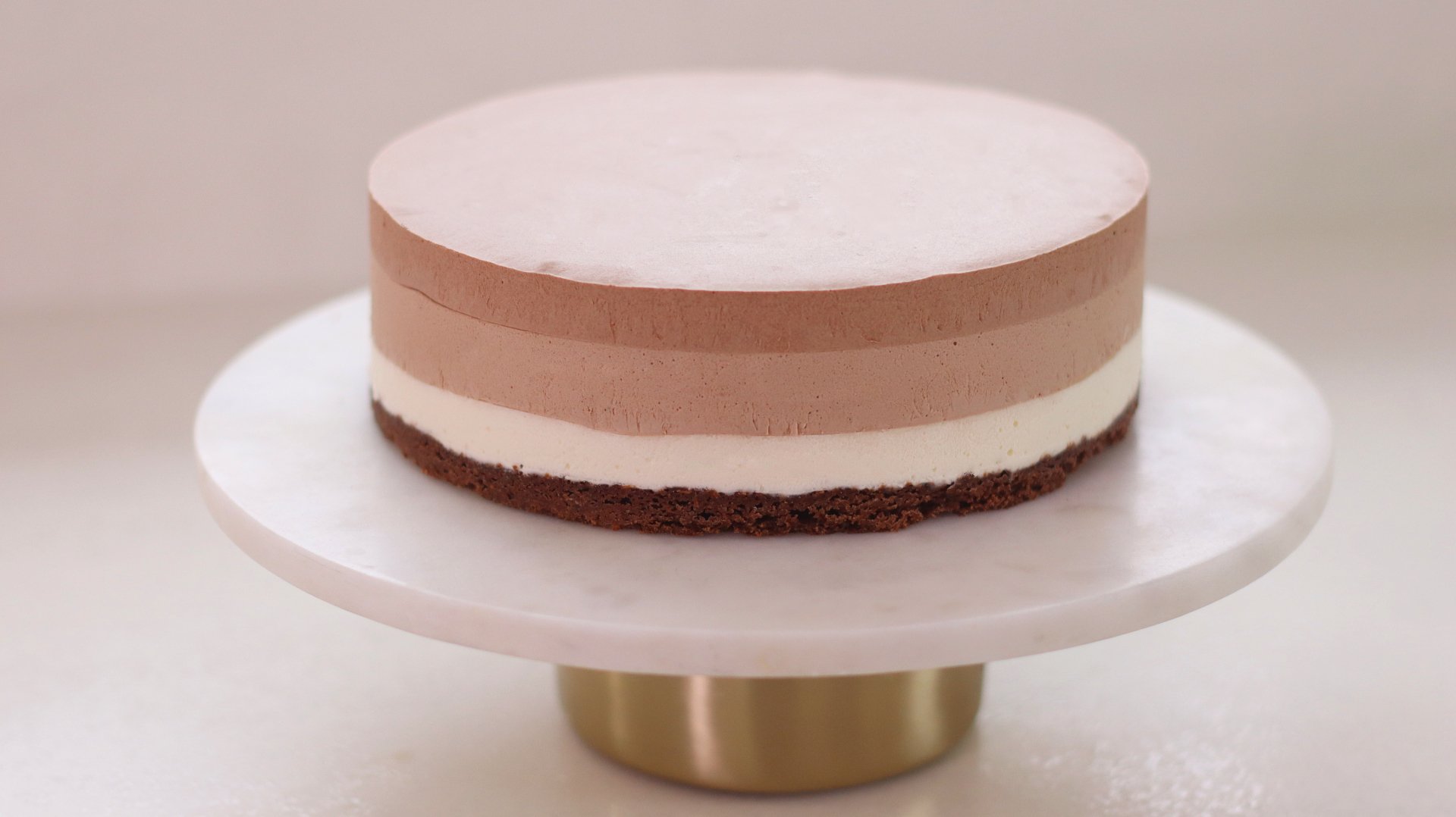
Triple Chocolate Cheesecake
TIER 1
Triple Chocolate Cheesecake
Unlike a traditional dense cheesecake, this one has a light, mousse-like texture (Triple Chocolate… Choussecake?!). The process is simple as we start by making a ganache with cream cheese, then fold in whipped cream to create that incredible texture. Each layer is easy to replicate since the measurements are nearly identical, with just a few small tweaks. The only tricky part is waiting for each layer to set! But once it’s ready to serve, you’re left with a beautiful ombré effect.
1
8" CHEESECAKE
Ingredients
Makes 1 8-inch Cheesecake
Chocolate Cookie Base
120g Oreos
20g-40g Unsalted Butter
Milk Mixture
275g Whole Milk
30g Honey
White Chocolate Layer
75g Milk Mixture (Above)
60g White Chocolate, Chopped
75g Double/Heavy cream
90g Cream Cheese, Full Fat
60g Double/Heavy cream
Milk Chocolate Layer
75g Milk Mixture (Above)
60g Milk Chocolate, Chopped
6g Cocoa Powder
75g Double/Heavy cream
90g Cream Cheese, Full Fat
60g Double/Heavy cream
Dark Chocolate Layer
75g Milk Mixture (Above)
65g Dark Chocolate (70% Cocoa Solids), Chopped
75g Double/Heavy cream
90g Cream Cheese, Full Fat
60g Double/Heavy cream
Special equipment
Food processor
8×2.75” ring mold
Acetate (optional)
Hand blender
Stand mixer
Method
Chocolate Cookie Base
1. Add the Oreos into a food processor and blend to a fine crumb. If you want, you can remove the white filling and just use 120g of Oreo biscuits.
2. Pour these into a medium bowl and set it to one side.
3. Add the butter into a small saucepan and place it on a low heat until melted.
4. Slowly pour about half of the butter mixture into the Oreos and stir to combine. Keep adding butter until the mixture resembles slightly wet sand. Oreos don’t require as much butter to pull together unlike a traditional biscuit base so add it slowly to avoid a very wet biscuit mixture.
5. Take an 8×2.75” ring mold and place a piece of acetate along the inside. Acetate isn’t completely necessary as we are freezing the mousse. If you don’t have acetate you can simply heat the outside of the ring mold with a hair dryer/heat gun when you need to demold it. Acetate just makes this process much easier and you end up with a slightly cleaner finish. Place the ring onto a baking tray.
6. Pour the Oreo mixture into the base of the ring and use the back of a measuring cup or something flat, to smooth the base out so that it is even. Place the tray into the freezer.
Milk Mixture
1. Add the milk and honey into a small saucepan, and place it over a medium-low heat until it is steaming – stirring occasionally. We are going to split this mixture between all three cheesecake bases.
The process for making the layers is identical, so it is easiest to set up three measuring jugs at once, each with the chopped chocolate in, then pour in the weighed milk mixture.
White Chocolate Layer
1. Into a tall jug, add the chopped chocolate, and pour over 75g of the hot milk mixture. The mixture needs to be hot so that the chocolate melts. Let it sit for 2 minutes before blending until smooth.
2. Add in the cream cheese, and the 75g of double/heavy cream. Blend again until smooth and there are no lumps of cream cheese. Cover the surface with clingfilm and refrigerate for 3 hours (or longer if needed).
Milk Chocolate Layer
1. Into a tall jug, add the chopped chocolate, and cocoa powder, and pour over 75g of the hot milk mixture. The mixture needs to be hot so that the chocolate melts. Let it sit for 2 minutes before blending until smooth.
2. Add in the cream cheese, and the 75g of double/heavy cream. Blend again until smooth and there are no lumps of cream cheese. Cover the surface with clingfilm and refrigerate for 3 hours (or longer if needed).
Dark Chocolate Layer
1. Into a tall jug, add the chopped chocolate, and pour over 75g of the hot milk mixture. The mixture needs to be hot so that the chocolate melts. Let it sit for 2 minutes before blending until smooth.
2. Add in the cream cheese, and the 75g of double/heavy cream. Blend again until smooth and there are no lumps of cream cheese. Cover the surface with clingfilm and refrigerate for 3 hours (or longer if needed).
Assembly
The assembly process is slightly tedious, as you have to wait for each layer to set before you can add the next one!
1. Remove the white chocolate layer from the fridge and place it into a medium bowl or the bowl of a stand mixer fitted with a whisk attachment. Whisk on a medium speed, until the mixture thickens and holds a medium peak. Set this to one side.
2. Into a bowl, add the remaining 60g of double/heavy cream and whisk until it holds a medium peak. Note – 60g can actually be quite tough to whisk if you are using an electric stand mixer so it is worth mixing 100g so that the whisk attachment can actually catch it, then just weigh the required 60g of cream.
3. Take the 60g of whipped cream, and fold this through the white chocolate layer, until smooth and combined. The final texture of the mixture should be thick, but still soft and slightly runny. We want a texture where we can pour the mousse into the tin and it will almost settle itself without too much assistance!
4. Remove the chilled chocolate base from the freezer and pour the white chocolate layer in. It should spread to the edges and settle, but if not just use a palette knife or a spoon to gently spread it, so that it is even. You can even give the tray a bit of a tap on the work surface to help it settle. Place the tray into the freezer for 30-60 minutes, or until the white chocolate layer feels firm enough to the touch to support another layer of mousse.
5. Repeat this exact same process with the milk chocolate and dark chocolate layers, freezing the mousse in between the milk and dark chocolate each layer. Note that because these layers have more cocoa solids, they will become thicker more quickly as you whisk them, so be careful not to over-whisk them and let them become too thick.
6. Once you have added the dark chocolate layer, place the entire cheesecake into the freezer. If you need to serve this quickly, 2-3 hours in the freezer will be absolutely fine, but you can also freeze it overnight too.
7. When you are ready to serve, remove the cheesecake from the freezer, and lift it onto your serving dish. Carefully pull off the ring mold and then peel away the acetate, to reveal a smooth cheesecake. The cheesecake now needs 2 hours to defrost before you can eat it (maybe slightly less if you only freeze it for 2-3 hours). Or, you can defrost it for 2 hours then get it straight into the fridge.
8. Just a note that the longer you leave it at room temperature, you will begin to see the base ‘weep’. This is just because the sugar draws moisture from the cheesecake mixture. Nothing has gone wrong, it’s just a natural scientific occurrence of the ingredients of the hygroscopic properties of sugar!
Shop the Equipment


Chocolate Orange Swirl Cookies
TIER 1
Chocolate Orange Swirl Cookies
These stunning cookies use the same base dough, one flavoured with orange and the other flavoured with cocoa powder. The doughs are laid on top of each other and carefully rolled into a tight log to create the spiral effect. You can get creative and colour one of the doughs, or even make a quick ganache and sandwich the cookies together!
18-20
COOKIES
Ingredients
Makes 18-20 Cookies
Chocolate Dough
170g Plain/All-Purpose Flour
2g Fine Sea Salt
30g Cocoa Powder
80g Icing/Powdered Sugar
30g Ground Almonds
110g Unsalted Butter, Cold & Cubed
40g Whole Eggs
Orange Dough
200g Plain/All-Purpose Flour
2g Fine Sea Salt
80g Icing/Powdered Sugar
30g Ground Almonds
110g Unsalted Butter, Cold & Cubed
Zest 1 Medium Orange
40g Whole Eggs
Egg Wash
1 whole egg, whisked
Special equipment
Stand mixer
Silicon mats (optional)
Rolling pin
Method
Chocolate Cookie Dough
1. Add all of the dry ingredients into the bowl of a stand mixer, along with the cubed butter.
2. Mix on a medium low speed for 2-4 minutes, until the butter has broken down, and the mixture has a breadcrumb/sandy-like texture.
3. Pour in the egg mixture and mix for about 20 seconds, the dough will not pull together however, so remove the bowl from the mixer and squeeze the dough with your hands, until it forms a dough.
4. Place the dough in between two silicon mats or pieces of parchment paper and roll it to about 3-5mm thick – the thinner the better really. You want to roll it as best as possible into a neat rectangle shape as that will reduce the wastage later on.
5. Place the dough into the fridge for a minimum of 3 hours.
Orange Cookie Dough
1. Add all of the dry ingredients into the bowl of a stand mixer, along with the cubed butter.
2. Mix on a medium low speed for 2-4 minutes, until the butter has broken down, and the mixture has a breadcrumb/sandy-like texture.
3. Pour in the egg mixture and mix for about 20 seconds, the dough will not pull together however, so remove the bowl from the mixer and squeeze the dough with your hands, until it forms a dough.
4. Place the dough in between two silicon mats or pieces of parchment paper and roll it to about 3-5mm thick – the thinner the better really. You want to roll it as best as possible into a neat rectangle shape as that will reduce the wastage later on.
5. Place the dough into the fridge for a minimum of 3 hours.
Assembly
1. Once the doughs have chilled remove them from the fridge, and apply a light egg wash to the chocolate dough. Then, lift the orange dough on top, gluing it in place.
2. Leave them at room temperature to soften for just a few minutes – this will make them easier to roll.
3. Once softer, with the chocolate dough on the bottom, carefully roll the dough, lengthways (with the short side of the rectangle of dough facing you), into a tight log. Wrap this in clingfilm and then refrigerate for at least 1 hour
4. Before they are done chilling, preheat the oven to 150C/300F, non-fan assisted.
5. Once chilled, use a very sharp knife to cut the log into discs of equal thickness – about 5mm, then lift the biscuits onto a tray lined with a silicon baking mat.
6. Immediately place the tray into the oven and bake until lightly golden around the edges – about 20-25 minutes. Allow to cool then serve.
Shop the Equipment


Chocolate and Raspberry Soufflé
TIER 1
Chocolate and Raspberry Soufflé
I’ve cheated a bit in Tier 1 and used the chocolate soufflé recipe from my book, because you honestly can’t beat it! But I tried adding a frozen raspberry insert in the middle, which oozes out once baked, and it really takes the dessert to the next level from both a flavour and a wow factor perspective. Make sure you use good quality chocolate with 50-60% cocoa solids to ensure the right consistency.
4-5
SOUFFLÉS
Ingredients
Makes 4-5 Souffles
Raspberry Insert
50g Raspberry Jam
50g Fresh Raspberries
Splash of Water
Chocolate Soufflé
– Beurre Manie
50g Unsalted Butter, Softened
50g Plain Flour
Pinch of sea salt
– Chocolate Base
270g Whole Milk
50g Granulated/Caster Sugar
200g Chopped Dark Chocolate, 50-60% Cocoa Solids
110g Egg Yolks
French Meringue
180g Egg Whites
70g Granulated/Caster Sugar
Special equipment
3.8cm x 1.9cm silicone half-sphere mould (15 hole) OR a small silicone ice cube tray
Stand mixer
Piping bags
Ramekins
Method
Raspberry Insert
1. Into a medium saucepan, add the fresh raspberries, raspberry jam and just a little splash of water (3 tsp roughly).
2. Place it over a medium low heat, and stir it together until the raspberries have broken down, and it is bubbling and has thickened just slightly.
3. Into a silicone half sphere mould, or a silicone ice cube tray, pour the raspberry mixture in, spread it out so it is even, and then freeze for 3 hours or until it is solid.
Chocolate Soufflé
– Beurre Manie
1. Into a small bowl, add the butter, flour and salt and use a spatula to form it into a paste. Sometimes it is actually easier just to use your hands and mix it together as the quantities are so small.
2. Set this bowl to one side.
– Chocolate Base
1. Into a medium saucepan, add the milk and sugar. Place it over a medium heat and stir occasionally until the sugar has dissolved and the mixture is steaming.
2. Remove it from the heat and add in the beurre manie from above. Whisk this through until it has dissolved, then place the pan back on the heat and whisk constantly until the mixture has thickened and holds a slightly more elastic consistency.
3. Remove it from the heat and whisk in the chocolate until the chocolate has completely dissolved. Don’t worry if it looks slightly greasy or split here. Scoop this mixture into a medium bowl.
4. Add the egg yolks on top and immediately whisk this (to make sure the eggs don’t cook from the heat), until you have a smooth, glossy mixture.
5. Cover the surface with cling film and let it rest for 30 minutes.
French Meringue & Assembly
1. Preheat the oven to 160C/320F Fan Assisted.
2. Lightly grease the ramekins with soft butter, using an upwards stroking motion.
3. Tip in a few tablespoons of sugar and swirl this around, tipping out the excess. Place these on a tray and set to one side.
4. Meanwhile, add the egg whites into the bowl of a stand mixer fitted with a whisk attachment and whisk on a medium low speed until the mixture is frothy and thick bubbles have formed.
5. With the speed on medium, slowly add in the sugar a tablespoon at a time, waiting about 15 seconds in between each addition.
6. Once you’ve added all the sugar, keep whisking until you have a stiff meringue.
7. Fold the meringue in thirds, into the chocolate base, until you have a homogenous mixture with no streaks of meringue.
8. Remove your frozen raspberry inserts from the freezer.
9. Add the soufflé mixture into a piping bag, and pipe the mixture into the ramekins, filling them about 3⁄4 of the way. Then press your raspberry into the middle and cover it up, filling the ramekin to the top with the remaining soufflé mixture.
10. Use a palette knife to smooth the top and create a flush edge, then quickly run your thumb around the outside of the soufflé to create a rim.
11. Place them into the oven immediately and bake for 18 minutes.
12. Remove them from the oven and serve immediately. They should be well risen!
Shop the Equipment


Chocolate Mousse Cake
TIER 1
Chocolate Mousse Cake
There are only two elements to this cake – the sponge and the mousse. I show you how to master each one, then it’s just a case of building your cake! I recommend using a ring mould for the most professional finish, and running a warm palette knife over the top of your mousse to create a smooth top. This is such a simple recipe but it looks amazing, the texture is divine, and it’s so full of flavour.
1
6-INCH CAKE
Ingredients
Makes 1 6-inch Cake
Chocolate Sponge
80g Egg Yolks
20g Caster Sugar (A)
60g Caster Sugar (B)
150g Egg Whites
40g Plain Flour
28g Cocoa Powder
50g Vegetable Oil
30g Whole Milk
Chocolate Mousse
170g Whole Milk
120g Chocolate (70% Cocoa Solids), Finely Chopped
120g Chocolate (30% Cocoa Solids), Finely Chopped
300g Double/Heavy Cream
Pinch Sea Salt Flakes
Special equipment
39cm x 27cm baking tray
Electric hand whisk (or stand mixer)
Hand blender
16cm ring mould (4.5cm high)
Method
Chocolate Sponge
1. Preheat the oven to 180C/356F Non-Fan Assisted (160C Fan Assisted) and then lightly grease a medium-sized baking tray (this recipe uses a 39cm x 27cm tray). Cut a rectangle of parchment paper so that it fits neatly inside the tray, and press it in firmly with your hands.
2. Into a medium bowl, add the egg yolks and sugar (A). Whisk the mixture with an electric hand mixer (or in a stand mixer) until it is thicker in volume and pale in colour. About 1-2 minutes. Set this to one side.
3. Into a medium bowl, add the egg whites and using an electric hand whisk (or a stand mixer) whisk on a medium-low speed. Once the mixture is frothy, increase the speed to medium and slowly add the sugar (B), about 1 tablespoon at a time. Whisk until you have a medium-stiff peak to the meringue.
4. Pour the egg yolk mixture on top of the meringue and gently fold it through using a spatula until well combined.
5. Next, sift in the plain flour & cocoa powder, and fold it in carefully until it is fully incorporated.
6. Finally, pour in the vegetable oil and whole milk. Use a spatula to fold this in, making sure to scrape the bottom of the bowl.
7. Pour the batter onto the lined tray, and then using a spatula, spread the batter out evenly. Try to ensure the batter is relatively even.
8. Bake the sponge for 12 minutes then allow it to cool for 30 minutes at room temperature.
Chocolate Mousse
1. Add the milk to a small saucepan and place it onto a medium low heat, stirring occasionally.
2. Meanwhile, add the chopped chocolate into a medium bowl.
3. Once the milk is simmering, pour it over the chocolate and let it sit for 2 minutes with a plate on top.
4. Then, remove the plate and use a hand blender to blend the milk and chocolate until smooth and set it to one side.
5. Into a medium bowl, add the cream and use an electric hand whisk to whisk it to a soft-medium peak.
6. Then, whisk the cream through the chocolate mixture in three parts until smooth. It’s important to whisk it through, as if you try to fold it, the cream will not incorporate properly and remain lumpy.
7. Lastly, fold in the salt.
Assembly
1. Take your cooled sponge and tip it out onto a silicon mat/piece of parchment paper.
2. Use your cake ring to cut 2 circles out of the chocolate sponge.
You will have enough remaining sponge to make the Tier 2 recipe, so make sure to save this if you’re moving straight onto Tier 2!
3. Take one of the sponges and place it on a tray lined with a silicon mat/piece of parchment paper. Place your cake ring over the top and gently push the sponge to the sides of the cake ring to make sure it’s even and there are no gaps.
4. Pour your chocolate mousse over the sponge until it reaches halfway up the cake ring. Then add your second layer of chocolate sponge and pour the remaining chocolate mousse over the top until it reaches the top of the cake ring.
You may have a little mousse left over but you can pour this into ramekins to have little pots of delicious chocolate mousse!
5. If you have a slightly uneven top to your mousse cake, heat the edge of a palette knife or scraper and run it evenly over the top of the cake to smooth out the top.
6. Place the cake in the fridge for at least 4 hours until set and ready to serve.
7. To remove the ring, simply gently heat the sides with a blowtorch and it should lift off smoothly. Finish with a pinch of flaky sea salt just before serving.
Shop the Equipment


Chocolate Praline Mousse Cakes
TIER 2
Chocolate Praline Mousse Cakes
In Tier 2 we add two extra elements to really level up the cake – a hazelnut praline filling and a cocoa gavotte decoration. I’ve turned these into individual plated desserts by using smaller ring moulds, but you can make one large mousse cake if you’d prefer. I’ve adjusted the mousse recipe slightly here and only used 70% cocoa solids, but if you prefer a sweeter flavour then follow the same 50/50 split as Tier 1.
5
7CM MOUSSE CAKES
Ingredients
Makes 5 7cm Mousse Cakes
Hazelnut Praline
165g Caster Sugar
50g Water
250g Whole Roasted Hazelnuts, Without Skins
Pinch of Flaked Sea Salt
Chocolate Sponge
40g Egg Yolks
10g Caster Sugar (A)
30g Caster Sugar (B)
75g Egg Whites
20g Plain Flour
12g Cocoa Powder
25g Vegetable Oil
15g Whole Milk
Chocolate Mousse
130g Whole Milk
10g Honey
175g Chocolate (70% Cocoa Solids), Finely Chopped
220g Double/Heavy Cream
Pinch Sea Salt Flakes
Cocoa Gavotte
150g Water
15g Unsalted Butter
1g Salt
11g Plain Flour
30g Icing/Powdered Sugar
3g Cornstarch/Cornflour
35g Egg Whites
4g Cocoa Powder
Special equipment
Digital thermometer
Hand blender
Silicon mat
Food processor
Electric whisk
Small baking tray (16cm x 26cm)
5 7cm mousse rings (3.5cm high)
Heat gun/Blow torch
Method
Hazelnut Praline
1. Into a medium saucepan, add the sugar & water. Place it on a medium heat, and cook the mixture until it reaches 110C/230F on a digital thermometer.
2. Once at 110C/230F, pour in the hazelnuts. Stir constantly with a spatula. The mixture will initially look quite clumpy, then the sugar will crystallise, but eventually, as you keep stirring, the sugars will caramelise and you should have a deep golden caramel surrounding the nuts. It will take 3-5 minutes.
3. Immediately remove the pan from the heat, and tip the caramelised nuts onto a baking tray lined with a silicon mat. Sprinkle some sea salt flakes on top and let it set completely at room temperature for 30 minutes.
4. The praline should then be completely cool and solid to the touch. Break it into pieces and add it into a high-powered food processor. Blend for 3-4 minutes, scraping it down every so often, until you have a smooth, nutty paste. Store in an airtight container.
Chocolate Sponge
1. Preheat the oven to 180C Non-Fan Assisted (160C Fan Assisted) and then lightly grease a small baking tray (this recipe uses a cm x cm baking tray). Cut a rectangle of parchment paper so that it fits neatly inside the tray, and press it in firmly with your hands.
2. Into a medium bowl, add the egg yolks, and sugar (A). Whisk the mixture with an electric hand mixer until it is thicker in volume and pale in colour. About 1-2 minutes. Set this to one side.
3. Into a medium bowl, add the egg whites and using an electric hand whisk, whisk on a medium-low speed. Once the mixture is frothy, increase the speed to medium and slowly add the sugar (B), about 1 tablespoon at a time. Whisk until you have a medium-stiff peak to the meringue.
4. Pour the egg yolk mixture on top of the meringue and gently fold it through using a spatula until well combined.
5. Next, sift in the plain flour & cocoa powder, and fold it in carefully until it is fully incorporated.
6. Finally, pour in the vegetable oil and whole milk. Use a spatula to fold this in, making sure to scrape the bottom of the bowl.
7. Pour the batter onto the lined tray, and then using a spatula, spread the batter out evenly. Try to ensure the batter is relatively even.
8. Bake the sponge for 10-12 minutes, until dry to the touch, then allow it to cool for 30 minutes at room temperature.
Chocolate Mousse
1. Into a small saucepan, add the milk and honey and place it onto a medium low heat, stirring occasionally.
2. Meanwhile, add the chopped chocolate into a medium bowl.
3. Once the milk is simmering and the honey has dissolved, pour it over the chocolate and let it sit for 2 minutes.
4. Then, use a hand blender to blend until smooth and set it to one side.
5. Into a medium bowl, add the cream and use an electric hand whisk to whisk it to a medium-soft peak.
6. Then, whisk the cream through the chocolate mixture in three parts until smooth. It’s important to whisk it through, as if you try to fold it, the cream will not incorporate properly and remain lumpy.
7. Lastly, fold in the salt.
Assembly
1. Take your cooled sponge and tip it out onto a silicon mat/piece of parchment paper.
2. Use one of your mousse rings to cut 5 circles out of the chocolate sponge and place them inside of your mousse rings. Gently push the sponge to the sides of the mousse rings to make sure there are no gaps.
3. Next, add a dollop of hazelnut praline to the centre of each sponge (I like to use a piping bag). You want it to cover about ⅔ of the sponge, not go all the way to the sides.
4. Then, add the chocolate mousse until it reaches the top of the mousse ring (again, I like to use a piping bag).
5. If your mousse is slightly thicker then use a palette knife to press the mousse to the edges and ensure there are no gaps. Then, heat your palette knife in some hot water, dry it with a tea towel and smooth the top of your mousse rings to ensure a nice even finish.
6. Place the cakes in the fridge for at least 3-4 hours until set and ready to serve.
Cocoa Gavotte
1. Into a medium saucepan, add the water, salt & butter. Place it over a medium heat.
2. Meanwhile, into a medium bowl, add all of the remaining ingredients and whisk them together till smooth.
3. Once the water is boiling, slowly pour it over the bowl of ingredients, whisking constantly to ensure that the mixture is tempered.
4. Once you’ve added all the water, pour the mixture back into the pan, and whisk constantly over a medium heat until it thickens to a custard-like consistency.
5. Place a sheet of cling film over a small baking tray and pour your gavotte mixture on top. Place another sheet of cling film over the top and refrigerate it for 30 minutes – 1 hour.
6. Preheat the oven to 175C/345F.
7. Onto a tray lined with a silicon mat, take a dollop of the gavotte mixture and create a line of it at the top of your tray. Do the same about half way down your tray. Then, using a palette knife, spread it nice and thin. It needs to be thin (almost opaque) otherwise the texture won’t be correct.
8. Place it into the oven and bake for 12-15 minutes until crispy (the top might be slightly cracked).
9. Repeat this with a second tray of mixture.
10. Once baked, allow them to cool for 5 minutes, then snap them into shards ready to decorate. It is best to make these fresh as they will soften the longer they are left. If you make them ahead of time, you can place them back into the oven for 2-3 minutes, to crisp up again.
11. When ready to serve, remove your mousse cakes from the fridge and use a heat gun/blow torch to gently warm the sides of your mousses and lift off the cake rings.
12. Place your chocolate gavotte shards on top/around the sides of your mousses in whatever design you would like!
Shop the Equipment


Chocolate Babka
TIER 1
Chocolate Babka
I love the design of this Babka! It’s such a showstopper and so unbelievably tasty. This recipe teaches you the foundations of enriched dough, which we fill with a super easy chocolate filling. It’s just the braiding that requires a bit more brain power, but watch the video and I’ll walk you through it step by step – I promise it’s easier than it looks!
2
BABKAS
Ingredients
Makes 2 Babkas
For the dough
750g White Bread Flour
150g Caster Sugar
15g Instant Dry Yeast
225g Whole Milk
165g Whole Eggs
9g Salt
1 Tsp Vanilla Bean Paste
150g Unsalted Butter, Cold + Cubed
For the chocolate filling
240g Unsalted Butter
160g Caster Sugar
80g Cocoa Powder
Pinch of sea salt flakes
For the egg wash
2 Egg Yolks (35g)
Splash of Water
For the sugar syrup
100g Caster Sugar
100g Water
Special equipment
Stand mixer
2 x 2lb loaf tins
Method
1. Into the bowl of a stand mixer, add the milk and eggs followed by the strong white bread flour, the sugar, salt and yeast. Lastly, add the vanilla bean paste. Knead together on a medium-low speed (speed 3 on a KitchenAid) for 8 minutes.
2. Next, slowly add the butter a few pieces at a time (waiting 20-30 seconds between each addition), and keep kneading until smooth. You may need to scrape down the sides of the bowl to make sure all the butter is incorporated. This will take about 10-12 minutes.
3. Once your dough is ready, lift it out of the bowl and shape it into a tight ball. Place the dough into a lightly greased bowl and lightly grease the top of the dough (I use an oil spray but alternatively, you can put some oil on your hands and gently rub the dough). Cover the surface of the dough directly with cling film, and the top of the bowl. Chill in the fridge overnight (minimum 12 hours).
4. Just before you’re ready to roll your dough, make the chocolate filling.
5. In a saucepan, melt the butter over a medium heat
6. In a separate bowl, add the sugar, cocoa powder and salt
7. Once your butter has melted, pour it over the dry ingredients and whisk until combined
8. Allow the mixture to cool at room temperature for about 15 minutes, stirring with a spatula occasionally until it becomes the consistency of soft butter. It may take longer if your room temperature is a little warmer. To speed it up, just pop it in the fridge and stir every few minutes.
9. Once your Babka dough has chilled, lightly flour your surface and place the dough on top. Flour the dough and roll it out to roughly 18”x24” (roughly the width of your two loaf tins placed side by side). The dough should be nice and thin.
10. Next, spread your chocolate filling all over the top of the dough, right to the edges.
11. Using your hands, starting with the edge closest to you, roll the dough into a tight log, then place it in the freezer for 10 minutes (you can bend it slightly to make sure it fits!).
12. Once your dough has chilled, cut off any rough ends and then cut the dough lengthways directly down the centre. Next, place one half of the log over the top of the other half in a cross shape. Starting with one side of the cross, braid the dough into a tight plait, then repeat with the other side.
13. Line the bottom of your loaf tins with a piece of parchment paper. Place one of your tins next to the dough, cut the dough to the same length as the tin, then place it in your tin. Repeat with the other tin. You’ll likely have a little dough remaining.
14. Cover the tins with a tea towel and leave to proof for 2 hours. If you’re in a particularly cold kitchen, you can put your tins in the oven and add a small cup of boiling water to the bottom of the oven. Replace this every 30 minutes or so to speed up the proofing process slightly.
15. Preheat the oven to 160C/320F Non- Fan Assisted just before the time is up.
16. Once your Babkas have proofed, mix together the egg wash ingredients and paint it over the Babkas.
17. Just before adding your Babkas to the oven, add some boiling water to a tray and place this on the bottom shelf of your oven. Add the Babkas to the middle shelf and bake for 60-70 minutes. To check they are cooked in the middle, probe the centre of the Babkas with a digital thermometer – they should be over 90C/195F.
18. Whilst the Babkas are baking, make your sugar syrup. Add the water and sugar to a saucepan and stir over a medium heat until it’s gently simmering and all the sugar has dissolved.
19. Once baked, remove the Babkas from the oven and lightly run a knife around the outside of the tins to loosen them. Tip them onto a wire rack and use a pastry brush to soak them in the sugar syrup. Wrap the Babkas in cling film and leave to cool for 1 hour. It’s important to leave them for an hour to allow the middle of the Babkas to completely set.
20. Once cooled, your Babka’s are ready to serve! They’re best eaten straight away (or within a few hours) as they have the tendency to dry out a little, but if you want to serve them later I’d pop them in the oven for 5-7 minutes before serving.
Shop the Equipment


Hazelnut Truffle
TIER 3
Hazelnut Truffle
6
TRUFFLES
Ingredients
Makes 6 Truffles
Vanilla Cremeux
8g Powdered Gelatin + 48g Water
500g Double Cream
145g Egg Yolks
50g Sugar
1 Vanilla Pod
Praline Cremeux
250g Vanilla Cremeux
100g Hazelnut Praline
85g Mascarpone
Feuilletine
50g Unsalted Butter – Room Temperature
50g Icing Sugar
50g Egg Whites
50g Plain Flour
Feuilletine Praliné Crunch
70g Hazelnut Praline
20g Milk Chocolate
35g Paillete Feuilletine
Chocolate Shell
300g Dark Chocolate
300g Cocoa Butter
55g Chopped Hazelnuts
OR
500g Dark Chocolate
140g Neutral Oil
55g Chopped Hazelnuts
(Follow the same process for the above recipe but dip the frozen sphere at 35C/95F)
Roasted Hazelnuts Chocolate Shavings To Decorate
*Hazelnut Praline Recipe is available here
Special equipment
20mm, 40mm, 50mm Sphere Molds
Stand Mixer
Digital Thermometer
Piping Bags
Hand Blender
Method
Vanilla Cremeux
1. Add the gelatin and cold water to a dish and allow it to bloom for 5m.
-
- 8g Gelatin
- 48g Cold Water
2. Into a bowl, add the egg yolks and sugar. Whisk to combine. Then add a small splash of cream and whisk that in (this will help to prevent lumps when we add it into the cream)
-
- 145g Egg Yolks
- 50g Sugar
3. Into a medium saucepan, add the cream & vanilla. Then whisk in the egg yolk mixture.
-
- 500g Double Cream
- 1 Vanilla Pod, Seeds Scraped Out
4. Place the pan onto a medium heat and whisk constantly. Cook the mixture until it reaches around 70-75C (158F-167F). The mixture should have thickened slightly, but be careful not to cook it for too long, otherwise it will scramble.
5. Immediately remove it from the heat and pour it through a sieve.
6. Add in the bloomed gelatin and blend or whisk to combine it. (I like to sieve it again after this but that is optional)
7. Pour 250g of the mixture into a separate bowl as we will use this for the praline cremeux. Add the remainder to a bowl and cover the surface with cling film. Chill for 6 hours or overnight.
Praline Cremeux
1. Into a bowl, add the hazelnut praline & mascarpone (the mascarpone is optional but I like the creaminess it adds!)
-
- 100g Hazelnut Praline
- 85g Mascarpone
2. Pour over the hot vanilla cremeux that you just made. Then blend or whisk the mixture together until it is smooth.
-
- 250g Vanilla Cremeux
3. Cover the surface with cling film and chill for 6 hours or overnight.
Feuilletine
1. Into a stand mixer, add the soft butter and sugar. Beat on a medium speed until it forms a smooth paste.
-
- 50g Unsalted Butter, Soft
- 50g Icing Sugar
2. Once smooth, pour in the egg whites and beat again. It may look slightly split and the egg whites may not incorporate fully but that’s ok!
-
- 50g Egg Whites
3. Finally, tip in the flour and beat until it forms a smooth paste.
-
- 50g Plain Flour
4. Take a scoop of the mixture and spread it as thin as possible on a silicon mat. It is really important to get it nice and thin as it will puff up as it bakes. It should look almost translucent once spread out.
5. Place it into a preheated oven at 175C/350F and bake until a nice deep golden colour. It should take around 5-8 minutes.
6. Remove the tray from the oven, and once it has cooled, break the mixture into tiny pieces.
Feuilletine Praliné Crunch
1. Into a bowl, add the crushed feuilletine, melted chocolate & hazelnut praline.
-
- 70g Hazelnut Praline
- 20g Milk Chocolate, Melted
- 35g Feuilletine
2. Stir together until combined.
Assembly Part 1
1. Take the 30mm sphere mold, and scoop a teaspoon of the feuilletine crunch into one half.
2. Place a whole roasted hazelnut into the centre.
3. Scoop and another teaspoon of the mixture into the other half of the sphere.
4. Carefully sandwich the two sides of the mold together, as you do this some mixture may squeeze out but try and seal the mold as best as possible. Place this in the freezer for one hour.
5. Next, take the 40mm sphere mold and scoop the chilled vanilla cremeux into a piping bag. Pipe the mixture into the bottom half of the mold, filling it up about ¾ of the way.
6. Remove the frozen praline sphere from the freezer and press this into the cremeux.
7. Place the lid of the sphere mold on top, and pipe the remaining vanilla cremeux into the mold so that it is completely full. Again, some cremeux might burst out, but just try your best to secure the mold so that it is joined in the centre and forms a neat sphere shape. Freeze this for 4 hours.
8. Once frozen, take the 50mm sphere mold and add the praline cremeux into a piping bag – again no need to whisk this up you can add it straight from the fridge into a piping bag.
9. Pipe the praline cremeux, into the bottom half of the mold filling it up ¾ of the way. Remove the vanilla cremeux ball from the mold and press it into the praline cremeux.
10. Place the lid onto the sphere mold and pipe the remaining praline cremeux into the hole in the top, filling the mold up (again, don’t if some spills out, just try and secure the mold as best as possible) Freeze this for 4-6 hours. This process needs to be repeated a few times to create lots of spheres if you only have 1 mold.
Final Assembly
1. Into a large bowl, add the chocolate and cocoa butter (or the chocolate and oil).
-
- 300g Dark Chocolate
- 300g Cocoa Butter
2. Place the bowl over a pan of simmering water and stir until completely melted.
3. Remove it from the heat and stir in the chopped hazelnuts. Allow the mixture to cool to 25-27C (77-80C). Pour it into a tall jug.
4. Remove the frozen praline sphere from the freeze and press a skewer into the bottom.
5. Dunk the sphere into the chocolate that is now at temperature. Let the excess drip off then carefully place it onto a silicon mat or a serving dish.
6. To decorate, I added a few chocolate shavings on top but you can decorate as you wish!
7. Allow to sit at room temperature for 1 hour before serving.

Baileys Yule Log
TIER 1
Baileys Yule Log
1
YULE LOG
Ingredients
Makes 1 yule log
Chocolate Sponge
80g Egg Yolks
20g Sugar (A)
55g Sugar (B)
150g Egg Whites
50g Vegetable Oil
35g Whole Milk
45g Plain Flour
25g Cocoa Powder
Baileys Chantilly
300g Double/Heavy Cream
30g Baileys
1-2 Tsp Sugar
½ Tsp Vanilla Paste
Tempered Chocolate To Decorate
Special equipment
12×10.5” Sponge Roll Mat
Stand Mixer/Electric Whisk
Acetate
Method
Chocolate Sponge
1. Preheat the oven to 180C/355F.
2. Into a medium bowl, add the egg yolks, sugar (A). Whisk the mixture by hand or in a stand mixer until it is thicker in volume and pale in colour.
-
- 80g Egg Yolks
- 20g Sugar (A)
3. Into a stand mixer, add the egg whites and whisk on a medium low speed. Once the mixture is frothy, increase the speed to medium and slowly add the sugar, about 1 tablespoon at a time. Whisk until you have a medium-stiff peak to the meringue.
-
- 55g Sugar (B)
- 150g Egg Whites
4. Gently fold the first third of meringue into the egg yolk mixture. Once incorporated, add the second third, fold it through and then the final third.
5. Next, sift in the plain flour, cocoa powder, and fold it in carefully until it is fully incorporated.
-
- 45g Plain Flour
- 25g Cocoa Powder
6. Finally, pour in the vegetable oil and whole milk. Use a spatula to fold this in. Really ensure you scrape the bottom of the bowl as the oil can get caught at the bottom and not fully incorporate.
-
- 50g Vegetable Oil
- 35g Whole Milk
7. Lightly grease a 12×10.5” sponge roll silicon mat. Alternatively, you can grease a half sheet pan lightly with butter and place a sheet of baking paper on top.
8. Pour the batter into the mat, and then using a raplette or an offset spatula and spread the batter out evenly. Try to ensure that when using a spatula or raplette that you spread the batter so that it is very level.
9. Bake the sponge for 12-14 minutes then allow it to cool for 30 minutes.
Baileys Chantilly
1. Into a large bowl, add all of the ingredients and whisk until it reaches a medium peak. Be careful not to underwhip it too much, as if it is too soft, it will leak out as you roll it.
-
- 300g Double/Heavy Cream
- 30g Baileys
- 1-2 Tsp Sugar
- ½ Tsp Vanilla Paste
Assembly
1. To assemble the yule log, cut out a large piece of parchment paper. Take the cooled sponge and flip it (carefully) out of the silicon mat so that the smooth surface that was exposed to the oven, is now facing onto parchment.
2. Make sure that the short edge of the sponge (10.5”) is at the top and bottom, while the longer side (12.5”) is on the sides. Then take a sharp knife, and cut a 45 degree angle at the very bottom of the sponge (the dotted line).
3. Spoon the baileys cream onto, and use an offset spatula to spread it out so you have a relatively even layer. You might not quite need all of the cream depending on how thick you want it to be.
4. Then with parchment paper assisting you, roll the sponge on itself, as tight as possible so that you get a good spiral.
5. Then once it is rolled up, wrap the parchment around the cake, and then use a ruler or something long and flat, and press this against the underside of the sponge whilst also pulling the bottom sheet of the parchment. This will create tension and tighten the roll. Place it in the fridge for 30m.
6. To decorate the cake, I just made a few chocolate leaves. I made a small batch of tempered chocolate, and dipped a small pastry brush into it. Then I swiped the brush on long a sheet of acetate, in individual strokes, to create little leaves. Lift the acetate sheet up and set it in a slightly curved position.
7. Once the cake has chilled, un-roll it carefully from the parchment and place it onto your serving plate.
8. Use a hot knife to cut the rough ends off either side.
9. Then place a strip of card or paper into the centre and dust icing sugar over the top.
10. Remove the card and carefully place the tempered chocolate leaves into the centre.

Snickers
TIER 3
Snickers Bar
8
BARS
Ingredients
Makes 8 bars
Tempered Chocolate
400g Milk Chocolate + 60g Milk Chocolate
AND
200g Milk Chocolate + 30g Milk Chocolate
Salted Caramel
175g Double Cream
45g Whole Milk
45g Glucose (1)
80g Caster Sugar
90g Glucose (2)
1.5g Sea Salt Flakes
60g Unsalted Butter
Pailleté Feuilletine
50g Unsalted Butter, Room Temperature
50g Icing Sugar
50g Egg Whites
50g Plain Flour Hazelnut Praline
300g Whole Roasted Hazelnuts
200g Caster Sugar
60g Water
2g Fleur De Sel (Or Flaked Sea Salt)
*This will make more than you need
Feuilletine Praliné Crunch
200g Hazelnut Praline
45g Dark Chocolate
30g Paillete Feuilletine
18g Cocoa Butter (Optional)
Roasted Peanuts To Fill
Special equipment
1 x Snack Bar Polycarbonate Chocolate Mold
Piping Bags
Chocolate Scraper
Digital Thermometer
Stand Mixer
Food Processor
Acetate Sheet / Coloured Cocoa Butter Transfer Sheet
Method
Salted Caramel
1. Into a saucepan, add the whole milk, double/heavy cream and glucose.
-
- 175g Double Cream
- 45g Whole Milk
- 45g Glucose (1)
2. Bring the mixture to a gentle simmer, whisking to ensure the glucose has dissolved fully. Once it is hot, set it to one side, but ensure it stays warm while you create the caramel.
3. Into a medium saucepan, add the glucose and the caster sugar.
-
- 80g Caster Sugar
- 90g Glucose (2)
4. Place it over a medium heat and bring it to a deep caramel. Try to avoid stirring the mixture, and shake the pan to help disperse the sugar. If the sugar isn’t breaking down, very quickly stir it in with a spatula.
5. Keep a careful eye on it, it will go from a deep golden colour to burnt quickly!
6. Once you have a nice deep golden colour, immediately pour in the hot cream mixture, being very careful as it will bubble up violently.
7. Whisk the mixture and cook over a medium heat for 1 minute.
8. Remove it from the heat and pour it through a sieve into a separate bowl.
9. Let it cool for 2 minutes, then add in the salt & butter and blend (or whisk) until smooth.
-
- 60g Unsalted Butter
- 1.5g Sea Salt Flakes
10. Pour the mixture into a container and store at room temperature. It should thicken slightly overnight and become a more pipeable consistency that isn’t quite as loose.
Hazelnut Praline
1. Into a medium saucepan, add the sugar & water. Place it on a medium heat, and cook the mixture until it reaches 110C/230F on a digital thermometer.
-
- 200g Caster Sugar
- 60g Water
2. Once at 110C/230F, pour in the hazelnuts. Stir constantly with a spatula. The mixture will initially look quite clumpy, then the sugar will crystallize, but eventually as you keep stirring, the sugars will caramelise and you should have a deep golden caramel surrounding the nuts.
-
- 300g Whole Roasted Hazelnuts
3. Immediately remove the pan from the heat, and tip the caramelised nuts onto a baking tray lined with a silicon mat. Sprinkle some sea salt flakes on top and let it set completely at room temperature for 30 minutes.
-
- Pinch Sea Salt Flakes
4. After 30 minutes, the praline should be completely cool and solid to the touch. Break it into pieces and add it into a high powered food processor. Blend for 4 minutes, scraping it down every so often, until you have a smooth, nutty paste. Store in an airtight container.
Pailleté Feuilletine
1. Into a stand mixer, add the soft butter and sugar. Beat on a medium speed until it forms a smooth paste.
-
- 50g Unsalted Butter, Soft
- 50g Icing Sugar
2. Once smooth, pour in the egg whites and beat again. It may look slightly split and the egg whites may not incorporate fully but that’s ok!
-
- 50g Egg Whites
3. Finally, tip in the flour and beat until it forms a smooth paste.
-
- 50g Plain Flour
4. Take a scoop of the mixture and spread it as thin as possible on a silicon mat. It is really important to get it nice and thin as it will puff up as it bakes. It should look almost translucent once spread out.
5. Place it into a preheated oven at 175C/350F and bake until a nice golden colour. It should take around 3-5 minutes.
6. Remove the tray from the oven, and once it has cooled, break the mixture into tiny pieces.
Tempering – Milk Chocolate
1. Take a medium saucepan and place a small amount of water in the bottom. Place it over a low heat until it is a very very gentle simmer. You do not want this to be too hot otherwise the chocolate will heat up too quickly.
2. Pour your first part of chocolate into a bowl and place it on the pan.
-
- 400g Milk Chocolate
3. Stir the mixture constantly with a rubber spatula until it reaches a temperature of of 45C/113F on a digital thermometer. The bowl will retain some heat so it is best to take it off the pan at about 43C/109F and then keep stirring until it reaches 45C/113F.
4. Once at temperature, with the bowl off the heat, immediately add in the remaining chocolate.
-
- 60g Milk Chocolate
5. Again, stir the mixture constantly with a rubber spatula, scraping the sides as you go, until it cools down to 27C/80F.
6. Place the bowl of chocolate back on the heat, and being very careful not to overheat it here, heat it to between 28-30C (82-86F). Your chocolate is now in temper.
7. Ensure you completely dry the bottom of your bowl, before pouring the chocolate into a piping bag (if any water mixes in with the chocolate it will seize).
8. Take the chocolate bar mold and pipe the tempered chocolate into the snack bar mold, filling each cavity to the top.
9. Take a chocolate scraper and vigorously tap each side of the mold to settle the chocolate and help to release any air bubbles.
10. After 30 seconds of tapping – tip the mold upside down (it is best to place a silicon mat underneath!) and tap the mold, to get rid of the excess chocolate.
– A quick note – if it is very cold, your chocolate may set faster in the mold in which case 30s may be too long to wait before tipping it out. It is not the end of the world but you will just end up with a slightly thicker chocolate shell.
11. Keep tapping the mold until the drips have stopped.
12. Once they have stopped, use your scraper to scrape the top of the mold so that you wipe away any excess chocolate and create a nice flush top.
13. Place the mold on its side, and leave it to set at room temperature for 30 minutes – 1 hour. Again, it may depend on your room temperature, if it is very cold it will set much faster, if it is hot, it will take a little longer!
Assembly
1. To prepare your feuilletine praliné crunch, melt the chocolate (and cocoa butter if you have it) and stir this into your hazelnut praline.
-
- 200g Hazelnut Praline
- 45g Dark Chocolate
- 18g Cocoa Butter
2. Next, add in the pailleté feuilletine and stir it all together until combined.
-
- 30g Pailleté Feuilletine
3. The chocolate should’ve set in the mold now – add your salted caramel to a piping bag, and pipe a layer of this into the bottom of each cavity of the mold.
4. Take a few roasted peanuts, and press these into the salted caramel.
5. Next, add the hazelnut praline crunch to a piping bag, and pipe a layer into the mold on top of the caramel, leaving just enough room at the top so that you can cap the mold.
6. Allow this to set at room temperature (you will see it appears dull and will be not be wet to the touch).
Note – most chocolatiers would probably say you need to let the praline crunch fully crystalise for 12 hours before capping the mold but..it is up to you 🙂
7. Once set, you need to temper your second batch of milk chocolate (200g + 30g) – this is a much smaller amount of chocolate so be careful when tempering as it will heat + cool much faster.
8. Once the chocolate is in temper, add it into a piping bag.
– Note: If you have a hair dryer or a heat gun, you can very gently heat the top of your chocolate mold – this will melt the chocolate ever so slightly and make it easier for the fresh tempered chocolate to adhere.
9. Pipe the chocolate to cover each cavity of the chocolate bar.
10. Place a sheet of acetate on top (or a coloured cocoa butter transfer sheet) and then with your chocolate scraper, apply firm pressure and scrape across the top of the mold, press out any excess chocolate and air bubbles from the mold, to create a tight seal of the acetate sheet to the mold.
– If you don’t have an acetate sheet you can also scrape the mold with the exact same technique – just without the acetate sheet on there.
11. You can allow the chocolate bars to sit at room temperature for 12 hours (or an hour then pop it in the fridge for 5 minutes)
12. Once the chocolate has set, crack the mold firmly against your counter top. If the chocolate doesn’t release, try twisting the mold and then repeating the crack.

Black Sesame & Blackberry
TIER 2
Black Sesame & Blackberry Chocolate Bars
8
BARS
Ingredients
Makes 8 bars
Tempered Chocolate
400g White Chocolate + 60g White Chocolate
AND
200g White Chocolate + 30g White Chocolate
Black Sesame Praline
300g Black Sesame Seeds
250g Sugar
50g Water
15g Neutral Oil
Blackberry Ganache
130g Blackberry Puree
100g Dark Chocolate
To Decorate
Coloured Cocoa Butter (Red + White)
Special equipment
1 x Snack Bar Polycarbonate Chocolate Mold
Piping Bags
Chocolate Scraper
Digital Thermometer
Food Processor
Hand Blender
Acetate Sheet or Decorated Cocoa Butter Transfer Sheet
Method
Black Sesame Praline
1. Take your black sesame seeds and pour them onto a baking tray.
-
- 300g Black Sesame Seeds
2. Place them into a preheated oven at 160C/320F for 12 minutes, until toasty.
3. Meanwhile, add the water into a saucepan, and pour the sugar on top.
-
- 50g Water
- 250g Sugar
4. Place it over a medium heat until it begins to bubble up and it looks slightly golden underneath the bubbles.
5. Begin to gently stir the caramel, cooking it until it reaches a deep golden brown.
6. Take the caramel off the heat and pour it onto a tray lined with a silicon mat.
7. Allow it to cool for 30m at room temperature until solidified.
8. Add the toasted black sesame seeds into a food process, and break up the caramel into shards, adding that in too.
9. Start blending on a low speed for about 1 minute, then slowly drizzle in the neutral oil.
-
- 15g Groundnut Oil
10. Keep blending on a medium speed for 5-7 minutes or until it forms a smooth black paste. You may need to scrape down the food processor as it is blending. The time it takes to blend my depend slightly on your food processor.
11. Pour the praline into a container and set to one side.
Decorating Molds
1. Take your pre-coloured cocoa butter (white), and place the bottle in the microwave, heating in 20 second bursts, shaking the bottle each time.
2. Keep heating the cocoa butter until as you shake it, you can feel a small amount of melted cocoa butter, but the entire bottle is not completely melted, and the centre of the bottle is still relatively solid with cocoa butter. Shaking the bottle will temper the melted chocolate so that it is ready for the mold.
3. Squeeze a small amount of the melted cocoa into a dish, then wearing a glove, dip your finger in a small amount of the cocoa butter and swipe your finger along the inside of each cavity of the mold. Allow the cocoa butter to set for a few minutes at room temperature.
4. Repeat the technique with the red cocoa butter, swiping streaks with your finger on the inside of each cavity.
5. Once the cocoa butter has set, use a scraper to scrape the top of the mold to get rid of any cocoa butter that may have stuck to the outside.
Tempering – White Chocolate
1. Take a medium saucepan and place a small amount of water in the bottom. Place it over a low heat until it is a very very gentle simmer. You do not want this to be too hot otherwise the chocolate will heat up too quickly.
2. Pour your first part of chocolate into a bowl and place it on the pan.
-
- 400g White Chocolate
3. Stir the mixture constantly with a rubber spatula until it reaches a temperature of 45C/113F on a digital thermometer. The bowl will retain some heat so it is best to take it off the pan at about 43C/109F and then keep stirring until it reaches 45C/113F.
4. Once at temperature, with the bowl off the heat, immediately add in the remaining chocolate.
-
- 60g White Chocolate
5. Again, stir the mixture constantly with a rubber spatula, scraping the sides as you go, until it cools down to 27C/80F.
6. Place the bowl of chocolate back on the heat, and being very careful not to overheat it here, heat it to between 28-30C (82-86F). Your chocolate is now in temper.
7. Ensure you completely dry the bottom of your bowl, before pouring the chocolate into a piping bag (if any water mixes in with the chocolate it will seize).
8. Take the chocolate bar mold and pipe the tempered chocolate into the mold, filling each cavity to the top.
9. Take a chocolate scraper and vigorously tap each side of the mold to settle the chocolate and help to release any air bubbles.
10. After 30 seconds of tapping – tip the mold upside down (it is best to place a silicon mat underneath!) and tap the mold, to get rid of the excess chocolate.
– A quick note – if it is very cold, your chocolate may set faster in the mold in which case 30s may be too long to wait before tipping it out. It is not the end of the world but you will just end up with a slightly thicker chocolate shell.
11. Keep tapping the mold until the drips have stopped.
12. Once they have stopped, use your scraper to scrape the top of the mold so that you wipe away any excess chocolate and create a nice flush top.
13. Place the mold on its side, and leave it to set at room temperature for 30 minutes – 1 hour. Again, it may depend on your room temperature, if it is very cold it will set much faster, if it is hot, it will take a little longer!
Blackberry Ganache
1. Into a medium saucepan, add the blackberry puree. Place it on a medium heat until it is hot, but not boiling.
-
- 130g Blackberry Puree
2. Take the hot puree and pour it over a jug of chopped dark chocolate.
-
- 100g Dark Chocolate
3. Let it sit for 1-2 minutes, then blend until it is very smooth.
4. Allow to sit at room temperature, until it has cooled to around 35C/95F. You want the ganache to be loose and pipeable, but not too hot otherwise it could melt your chocolate in the mold.
Assembly
1. Take the chocolate mold that has now set, and add the black sesame praline & ganache to separate piping bags.
2. Pipe a line of black sesame praline in the bottom of the chocolate cavity, followed by the blackberry ganache. You want to fill the cavity up, but leave just enough room to be able to cap the chocolate bar.
3. Allow the ganache to set at room temperature – it should look dull once it has set – it may take 30m to one hour.
Note – most chocolatiers would probably say you need to let the ganache fully crystalise for 12 hours before capping the mold but..it is up to you 🙂
4. Once the ganache has set, you need to temper your second batch of white chocolate (200g + 30g) – this is a much smaller amount of chocolate so be careful when tempering as it will heat + cool much faster.
5. Once the chocolate is in temper, add it into a piping bag again.
– Note: If you have a hair dryer or a heat gun, you can very gently heat the top of your chocolate mold – this will melt the chocolate ever so slightly and make it easier for the fresh tempered chocolate to adhere.
6. Pipe the chocolate to cover each cavity of the chocolate bar.
7. Place a sheet of acetate on top (or a coloured cocoa butter transfer sheet) and then with your chocolate scraper, apply firm pressure and scrape across the top of the mold, press out any excess chocolate and air bubbles from the mold, to create a tight seal of the acetate sheet to the mold.
– If you don’t have an acetate sheet you can also scrape the mold with the exact same technique – just without the acetate sheet on there.
8. You can allow the chocolate bars to sit at room temperature for 12 hours (or an hour then pop it in the fridge for 5 minutes).
9. Once the chocolate has set, crack the mold firmly against your counter top. If the chocolate doesn’t release, try twisting the mold and then repeating the crack.

Roasted Hazelnut Tablet
TIER 1
Roasted Hazelnut Tablet
3
BARS
Ingredients
Makes 3 bars
Tempered Chocolate
400g Milk Chocolate + 60g Milk Chocolate Roasted
Hazelnuts or your choice of toppings
Optional Decoration – Wax Stamp
Special equipment
1 x Tablet Bar Mold
Piping Bag
Chocolate Scraper
Digital Thermometer
Method
Tempering – Milk Chocolate
1. Before tempering your chocolate it is important to properly clean your chocolate mold with either a cotton pad or a microfibre cloth. This will prevent scuffs or marks from appearing on the final tablet.
2. Take a medium saucepan and place a small amount of water in the bottom. Place it over a low heat until it is a very very gentle simmer. You do not want this to be too hot otherwise the chocolate will heat up too quickly.
3. Pour your first part of chocolate into a bowl and place it on the pan.
-
- 400g Milk Chocolate
4. Stir the mixture constantly with a rubber spatula until it reaches a temperature of of 45C/113F on a digital thermometer. The bowl will retain some heat so it is best to take it off the pan at about 43C/109F and then keep stirring until it reaches 45C/113F.
5. Once at temperature, with the bowl off the heat, immediately add in the remaining chocolate.
-
- 60g Milk Chocolate
6. Again, stir the mixture constantly with a rubber spatula, scraping the sides as you go, until it cools down to 27C/80F.
7. Place the bowl of chocolate back on the heat, and being very careful not to overheat it here, heat it to between 28-30C (82-86F). Your chocolate is now in temper.
8. Ensure you completely dry the bottom of your bowl, before pouring the chocolate into a piping bag (if any water mixes in with the chocolate it will seize).
9. Take the chocolate bar mold and pipe the tempered chocolate into the tablet bar mold. You don’t need to completely fill the mold, only about ⅔.
10. Take a chocolate scraper and vigorously tap each side of the mold to settle the chocolate – this will allow it to fully disperse across the mold and also release any air bubbles.
11. While the chocolate is still wet, carefully press the toppings of your choice into the chocolate – avoid pressing them in too hard or you could press them through to the front of the mold.
12. Allow the mold to sit at room temperature for 12 hours, or 1 hour at room temperature, then pop the mold in the fridge for 5 minutes.
13. When the chocolate has set, carefully crack the mold on the surface – don’t do this too aggressively as you could force some of the toppings out!
Optional Decoration – Wax Stamp
1. Start by placing your custom wax stamp into the freezer for a minimum of 30 minutes.
2. You then need to temper white chocolate and use a colouring to create the red. The chocolate can be coloured using “IBC Power Flowers” – it is a little expensive, but a good system for colouring chocolate. You heat your white chocolate to 45C – add the colouring, then cool to 27C, then heat it back up to 28-30C.
3. Add the coloured tempered chocolate into a piping and pipe small dots along a silicon mat. You will need to work pretty quickly so the chocolate doesn’t set.
4. Remove the wax stamp from the freezer and carefully press this down onto the dot of piped chocolate.
5. Let it sit there for about 6-8 seconds, then carefully lift it off to reveal the stamp.
6. Use a small amount of melted chocolate to stick the wax stamp to the chocolate bar.

Chocolate Sheet Cake
TIER 2
Chocolate Sheet Cake
1
9"x13" SHEET CAKE
Ingredients
Makes 1 9″x13″ sheet cake
Chocolate Sheet Cake
340g Unsalted Butter
340g Brewed Coffee
85g Cocoa Powder
170g Dark Chocolate
430g Light Brown Sugar
6 Large Eggs + 3 Large Egg Yolks (Cold)
255g Plain Flour
1 Tbsp Baking Soda
½ Tsp Salt Chocolate Chips
Brown Sugar Ganache
200g Dark Chocolate
25g Unsalted Butter
35g Light Brown Sugar
200g Double Cream
75g Sour Cream
Chocolate Swiss Meringue Buttercream
200g Egg Whites
375g Sugar
500g Unsalted Butter, Soft & Room Temperature
6g Salt
1 Tsp Vanilla Bean Paste or 1 Fresh Vanilla Pod
200g Melted Dark Chocolate
Chocolate Drip
100g Dark Chocolate
60g Unsalted Butter
Special equipment
Stand Mixer
9×13” Cake Tin
Piping Bag
1M Star Tip Nozzle
Digital Thermometer
Method
Chocolate Cake
1. Preheat the oven to 175C/345F. Into a large bowl, add the butter, and pour over the hot coffee.
-
- 340g Unsalted Butter
- 340g Brewed Coffee
2. Whisk the mixture together until the butter has completely melted. If the coffee is a little cool, then just pop the bowl over a pan of gently simmering water until melted.
3. Once melted, add in the chocolate and cocoa powder and whisk the mixture together. Again, you want to whisk this until the chocolate has completely melted. If it needs a little heating, just pop it over a pan of simmering water.
-
- 85g Cocoa Powder
- 170g Dark Chocolate
4. Add in the sugar and whisk until there are no more lumps of sugar.
-
- 430g Light Brown Sugar
5. Add in the cold eggs and whisk to combine.
-
- 6 Large Eggs + 3 Large Egg Yolks (Cold)
6. Finally, sift in the flour, salt & baking soda. Gently whisk the mixture together until there are no more dry parts of flour.
-
- 255g Plain Flour
- 1 Tbsp Baking Soda
- ½ Tsp Salt
7. Take a 9×13” rectangle cake pan. Lightly spray it with a cake release spray. Place a sheet of parchment paper on the bottom of the tin. If you are not using cake release spray, coat the base with soft butter, place the sheet of parchment down. Then grease the edges with butter and dust them with cocoa powder.
8. Pour the cake batter into the tin.
9. Take a handful of chocolate chips and dust them lightly in flour. Shake off any excess flour then sprinkle them on top of the cake.
-
- Chocolate Chips
10. Place the cake into the oven and bake for around 40-45m, or until a skewer comes out clean from the centre. It may take longer – every oven is different so keep an eye on it.
11. Once baked, let it cool in the tion for 5 minutes, then carefully place a wire rack on top of the tin.
12. Take a tea towel, and hold the wire rack against the top of the tray. Very carefully flip the tray over, then slowly lift the cake pan so that the cake releases onto the wire rack.
13. Allow it to cool for 5 minutes, then wrap the cake tightly in cling film and refrigerate the cake for 4-6 hours. This is optional but helps to keep the cake moist.
Brown Sugar Ganache
1. Add the chocolate into a medium bowl, then place it over a pan of gently simmering water. Stir until it is completely melted.
-
- 200g Dark Chocolate
2. Set that to one side to stay warm, while you add the cream, sugar and butter to a saucepan. Place it on a medium low heat, stirring constantly until the butter has melted and the sugar has dissolved into the cream. Make sure the cream is not boiling – just hot.
-
- 25g Unsalted Butter
- 35g Light Brown Sugar
- 200g Double Cream
3. Slowly pour the cream into the chocolate in three additions.
4. With your spatula, stir the cream into the chocolate, stirring from the centre of the bowl in very tight circular motions. This is an important technique in order to properly emulsify the ganache (Although if you do have one, you can use a hand blender to blend the cream and chocolate together until smooth).
5. Once you have added all the cream, fold the sour cream into the ganache.
-
- 75g Sour Cream
6. Set the mixture to one side (cover the surface directly with cling film), until it has set into a spreadable frosting consistency. Roughly 2-3 hours at room temperature, but it may take more/less depending on your environment.
7. Once the ganache has set up and the cake has cooled. Use a sharp serrated knife to carefully slice the cake in half horizontally. This can be a little tough to do evenly as it is a large cake, but if you have a cake leveller, that makes things a lot easier! At this point it is worth placing the cake on a cake board so it is easy to maneuver.
8. Use a palette knife to evenly spread the frosting onto one layer of the cake.
9. Carefully sandwich the second layer of cake on top. 10. Place the cake in the fridge while you make the buttercream.
Chocolate Swiss Meringue Buttercream
1. Into a large metal bowl, or the bowl of a stand mixer, add the egg whites, sugar, vanilla and salt.
-
- 200g Egg Whites
- 375g Sugar
- 6g Salt
- 1 Tsp Vanilla Bean Paste or 1 Fresh Vanilla Pod
2. Place the bowl of a pan of gently simmering water. Whisk the mixture constantly until the sugar has dissolved and it reached a temperature of around 65C/149F on a digital thermometer.
3. Once at temperature, remove it from the heat and place it onto a stand mixer. Attach the whisk and whisk for 5-7 minutes, or until the bowl feels completely cool to the touch. As this is mixing, melt your chocolate. You want to ensure it is warm when you add it in, but not too hot, so by starting it now, it should be at a good temperature when you are ready to use it.
-
- 200g Dark Chocolate, Melted
4. With the mixer still on a medium speed, slowly add in the soft butter, one piece at a time. As long as the butter is soft, you should be able to add it in relatively quickly. Wait about 10s in between each addition.
-
- 500g Unsalted Butter, Soft & Room Temperature
5. Initially it will look quite soupy, then it may begin to look curdled, but don’t panic – this is normal.
6. Once you have added all the butter, keep whisking for a further 3-4 minutes until the buttercream is completely smooth.
7. Next, pour in the melted chocolate. Keep whisking (you may need to scrape down the sides to fully incorporate all the chocolate) until you have a smooth chocolate buttercream.
Assembly Part 1
1. Remove the chilled cake from the fridge and place a heaped scoop of chocolate buttercream on top.
2. With an offset spatula, spread the buttercream as evenly as possible around the entire cake. Don’t worry too much about perfectly sharp edges or making sure it is completely smooth, we are just adding a rough crumb coat.
3. Add enough buttercream and keep smoothing it out until you have a relatively even crumb coat. Lift the cake into the fridge for 30 minutes to chill.
4. After 30 minutes, remove the cake from the fridge and add a second layer of buttercream, this time slightly thicker. Again, use an offset spatula to spread the buttercream out as evenly as possible but don’t panic too much about perfectly smooth edges. Just use your palette knife & cake scraper to get it as sharp as you want.
5. Lift the cake and place it in the fridge while you make the chocolate drip.
Chocolate Drip
1. Into a medium bowl, add the chocolate & unsalted butter.
-
- 100g Dark Chocolate
- 60g Unsalted Butter
2. Place the bowl over a pan of very gently simmering water and stir it until it has completely melted.
3. Remove the bowl from the heat and let it cool, gently stirring occasionally until it has cooled to around 30-32C (86F-89F) on a digital thermometer.
Final Assembly
1. Once the drip is at temperature, remove the cake from the fridge.
2. Add the drip into a piping bag or using a spoon, carefully drip the chocolate over the edge of the cake.
3. Next, take the remaining buttercream and add it into a piping bag fitted with a 1M star tip nozzle.
4. Applying even pressure, start at the top of the cake, and pipe and even shell border, covering the parts of the cake where the top of the drip can be seen. The key to getting an even border, is just to apply even pressure, squeeze a dollop of the buttercream, stop piping, then drag the piping bag towards you.
5. Once you have covered the top, repeat the piping along the bottom of the cake.
6. Then at this point, you can decorate the centre of the cake any way you want! I chose to fill the centre with chocolate curls, but you could add candles or sprinkles…whatever you fancy!
7. Allow the cake to come to room temperature for at least an hour before serving so the ganache can warm up.

Choux au Chocolat
We would love to see your Bake It Better creations!
Show off your skills by sharing your desserts
#BakeItBetter

Chocolate Peanut Butter Cookies
We would love to see your Bake It Better creations!
Show off your skills by sharing your desserts
#BakeItBetter

Thick Milk Chocolate Chip Cookies
We would love to see your Bake It Better creations!
Show off your skills by sharing your desserts
#BakeItBetter
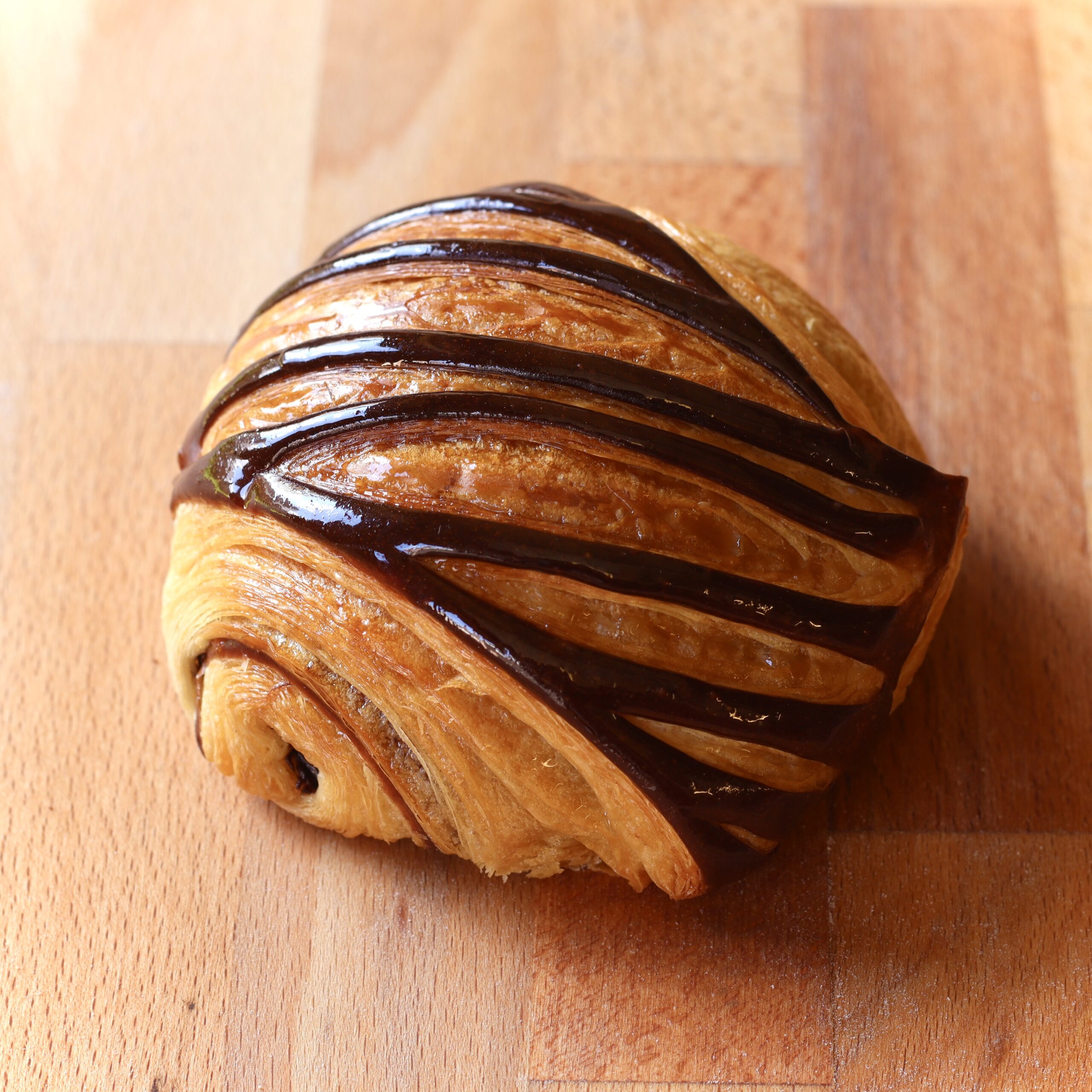
Bi-Color Pain Au Chocolat
We would love to see your Bake It Better creations!
Show off your skills by sharing your desserts
#BakeItBetter

Pain Au Chocolat
We would love to see your Bake It Better creations!
Show off your skills by sharing your desserts
#BakeItBetter

Strawberry Shortcake
We would love to see your Bake It Better creations!
Show off your skills by sharing your desserts
#BakeItBetter

Gourmet Brownie
We would love to see your Bake It Better creations!
Show off your skills by sharing your desserts
#BakeItBetter

We would love to see your Bake It Better creations!
Show off your skills by sharing your desserts
#BakeItBetter

Golden Gianduja Tart
We would love to see your Bake It Better creations!
Show off your skills by sharing your desserts
#BakeItBetter

Chocolate Hazelnut Tart
We would love to see your Bake It Better creations!
Show off your skills by sharing your desserts
#BakeItBetter

Chocolate Orange Cheesecake
We would love to see your Bake It Better creations!
Show off your skills by sharing your desserts
#BakeItBetter

Oreo & Vanilla Cheesecake
We would love to see your Bake It Better creations!
Show off your skills by sharing your desserts
#BakeItBetter

Chocolate Mousse Gateaux
We would love to see your Bake It Better creations!
Show off your skills by sharing your desserts
#BakeItBetter

Black Forest Gateaux
We would love to see your Bake It Better creations!
Show off your skills by sharing your desserts
#BakeItBetter

Sacher Torte
We would love to see your Bake It Better creations!
Show off your skills by sharing your desserts
#BakeItBetter

Opera Cake
We would love to see your Bake It Better creations!
Show off your skills by sharing your desserts
#BakeItBetter

Chocolate Praline Finger Cake
We would love to see your Bake It Better creations!
Show off your skills by sharing your desserts
#BakeItBetter

Strawberry Roll Cake
We would love to see your Bake It Better creations!
Show off your skills by sharing your desserts
#BakeItBetter

Chocolate Moelleux
We would love to see your Bake It Better creations!
Show off your skills by sharing your desserts
#BakeItBetter

Strawberry Popsicle
We would love to see your Bake It Better creations!
Show off your skills by sharing your desserts
#BakeItBetter

Chocolate Parfait
We would love to see your Bake It Better creations!
Show off your skills by sharing your desserts
#BakeItBetter

Chocolate Praline Bon Bons
We would love to see your Bake It Better creations!
Show off your skills by sharing your desserts
#BakeItBetter

Salted Caramel Bon Bons
We would love to see your Bake It Better creations!
Show off your skills by sharing your desserts
#BakeItBetter

Tempering Chocolate
We would love to see your Bake It Better creations!
Show off your skills by sharing your desserts
#BakeItBetter

Chocolate Eclairs
We would love to see your Bake It Better creations!
Show off your skills by sharing your desserts
#BakeItBetter

Chocolate Spider Web Mirror Glaze
We would love to see your Bake It Better creations!
Show off your skills by sharing your desserts
#BakeItBetter

Chocolate Hazelnut Finger
We would love to see your Bake It Better creations!
Show off your skills by sharing your desserts
#BakeItBetter

Chocolate Pot De Creme
We would love to see your Bake It Better creations!
Show off your skills by sharing your desserts
#BakeItBetter

Chocolate Chip Cookies
We would love to see your Bake It Better creations!
Show off your skills by sharing your desserts
#BakeItBetter

Chocolate & Hazelnut Praline Tart
We would love to see your Bake It Better creations!
Show off your skills by sharing your desserts
#BakeItBetter

Naked White Chocolate Drip Cake
We would love to see your Bake It Better creations!
Show off your skills by sharing your desserts
#BakeItBetter