
Panna Cotta 101
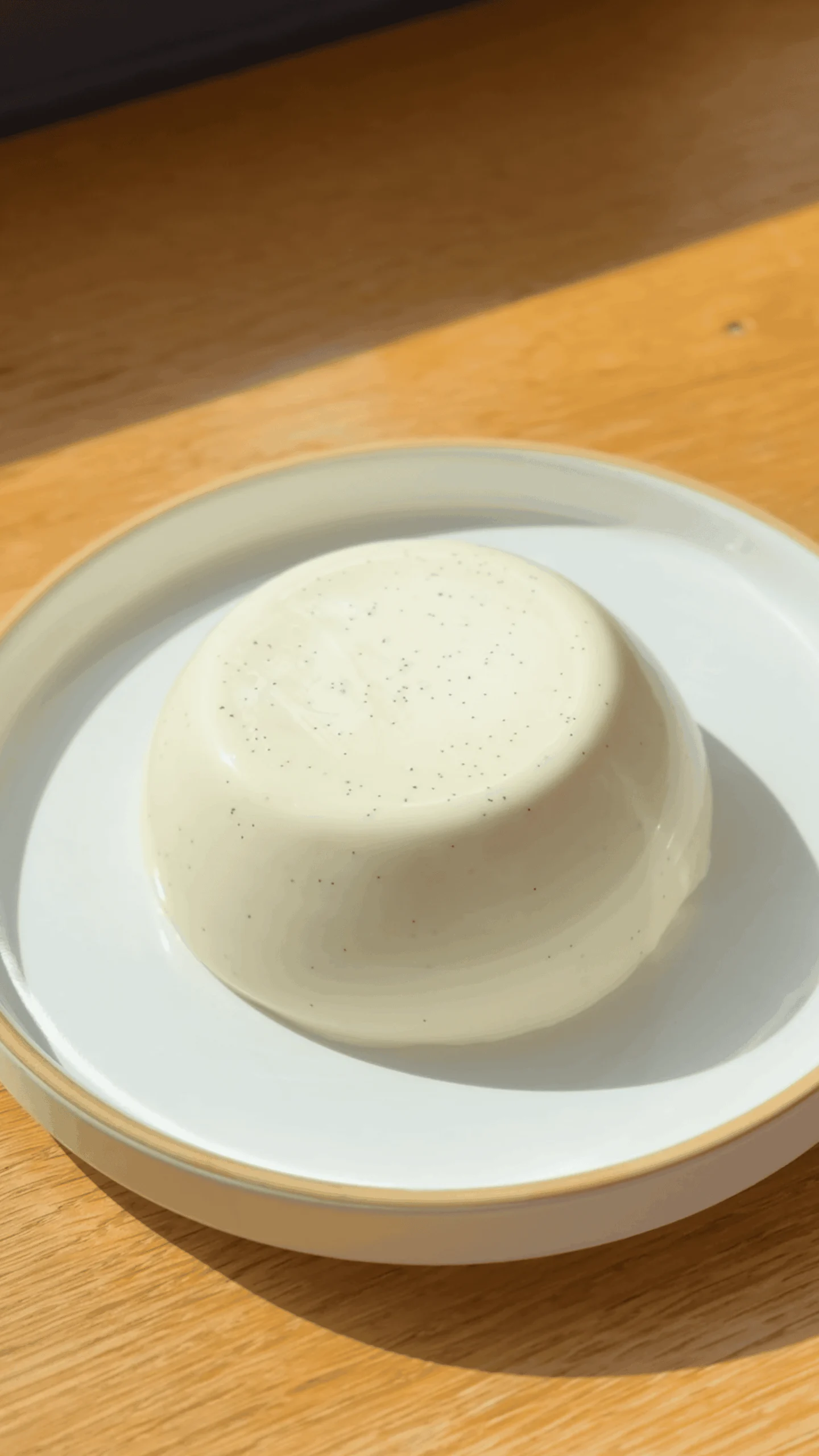
Panna Cotta 101
A Panna Cotta is a classic dessert, but too many times it comes out rubbery and gelatinous! In this deep dive, we are going to look at three different ways to stabilise it using powdered gelatin, leaf/sheet gelatin and iota carrageenan (which is a vegetarian alternative).
The goal with this recipe was to create the same melt in the mouth texture across all three stabilisers without even knowing it was stabilised.
Because stabilisers can be quite potent, make sure to get your self a micro scale, so that you can accurately weigh each one (especially Iota which is very potent)
If you’re looking for a fruitier version, try my Strawberry Panna Cotta too!
The gelatin recipes make 3 panna cottas each (depending on the size of your mould), while the iota recipe makes 2, as some of the mixture is lost during boiling. All of the recipes can easily be scaled up, I’ve just kept the cream and sugar quantities the same for comparison purposes. If you are scaling up the leaf/sheet recipe, I would recommend working in half sheet increments i.e 3, 3.5, 4 sheets etc.
Ingredients
Method
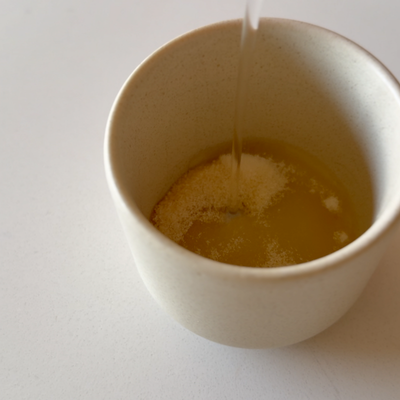
Into a small bowl, add the powdered gelatin and cold water. Stir to combine, and then set aside to bloom for 10 minutes. If you do not have 250 bloom powder, check the conversion table at the bottom of the recipe.
Into a medium saucepan, add the sugar, fresh vanilla pods, cream and milk. To make sure the vanilla doesn't clump up and disperses evenly, massage the vanilla beans through the sugar before adding the liquid.
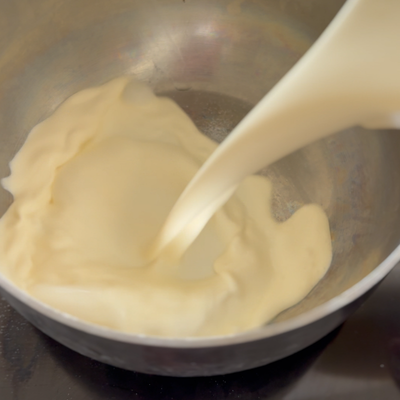
Place the pan over a medium heat, stirring with a spatula until the mixture is steaming and the sugar is completely dissolved. Don't use a whisk as we don't want to add lots of air bubbles.
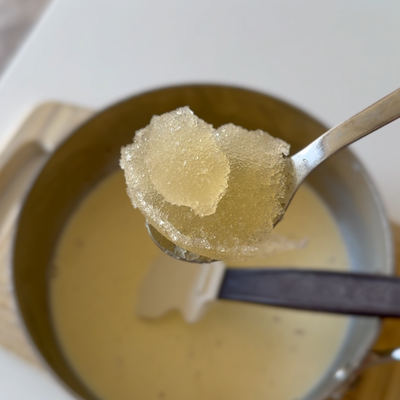
Remove the pan from the heat and scoop in the bloomed gelatin. Stir this until the gelatin has completely dissolved.
To ensure the vanilla doesn't sink to the bottom of the panna cotta when you serve it, pour the mixture into a bowl, placed over some ice water. Stir it for about 5 minutes, or until the mixture has thickened slightly and the vanilla seeds are suspended throughout the mixture.
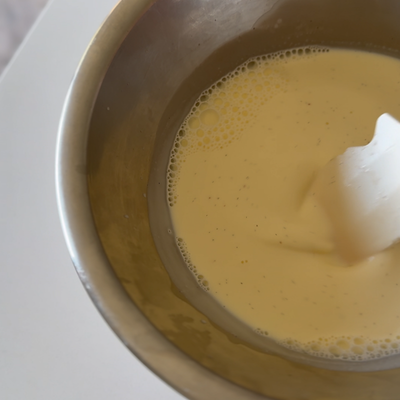
Transfer it to pudding molds, pouring it just below the rim.
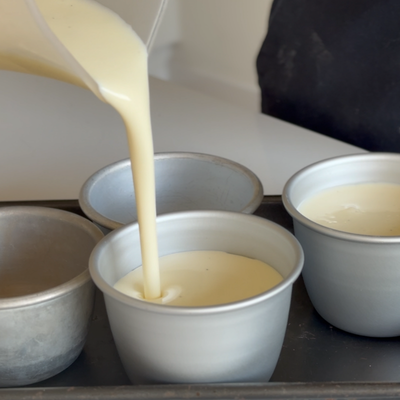
Leave the panna cottas uncovered, and refrigerate for 4-6 hours or ideally overnight.
Into a bowl of ice water, add the gelatin leaves and allow them to soak for 5-10 minutes. Note: We do not weigh our gelatin leaves/sheets, we work by sheet number. Manufacturers adjust the weight of each sheet according to its bloom strength, so that different grades provide a the same gelling strength. Here, you simply need 2.5 leaves/sheets, regardless of the grade.
Follow the same process as the gelatin powder panna cotta. Once it is steaming, remove the mixture from the heat and squeeze the excess water from the gelatin leaves. Lift these into the pan and stir to dissolve completely.
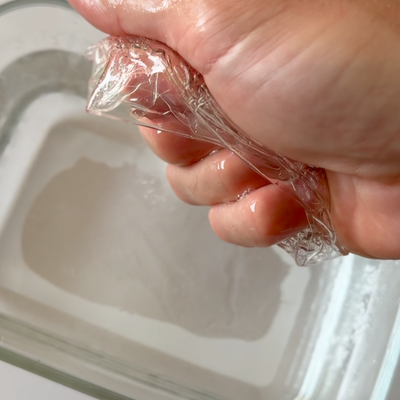
Transfer the mixture to a clean bowl and stir it over ice water until the mixture thickens slightly. Transfer it to pudding molds, pouring it just below the rim. Leave the panna cottas uncovered, and refrigerate for 4-6 hours or ideally overnight.
Into a small bowl, thoroughly stir together the sugar and iota carrageenan. Add in the fresh vanilla and work it through with your fingertips to disperse it.
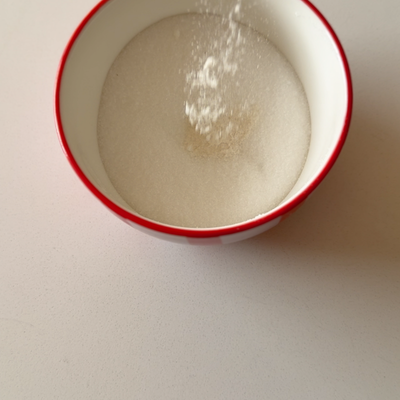
Add the cream and milk into a saucepan and pour the sugar mixture in.
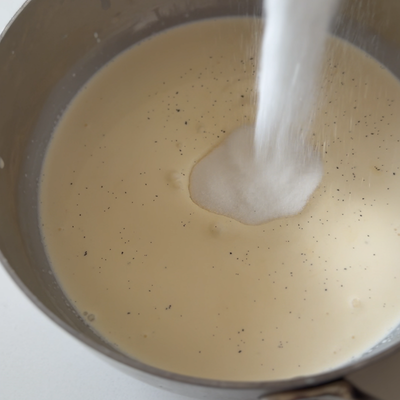
Place the pan on a medium heat and stir it with a spatula until it reaches a gentle boil.
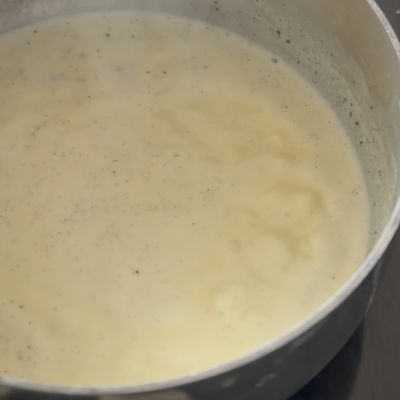
Remove it from the heat and transfer the mixture to a clean bowl and stir it over ice water until the mixture thickens slightly. As it boiled (unlike the gelatin mixture), you might get a few foamy bubbles which you can skim off with a spoon if you wish.
The iota mixture will thicken faster over the ice water compared to the gelatin versions, so it doesn't need too long - only 1-2 minutes. If it gets too thick, you can pass the mixture through a sieve as you pour it into the ramekins.
Transfer it to pudding molds, pouring it just below the rim. Leave the panna cottas uncovered, and refrigerate for 4-6 hours or ideally overnight.
To de-mold the panna cottas, I prefer to take a bowl of hot (not boiling) water, and carefully dip the molds to the rim for 3 seconds.
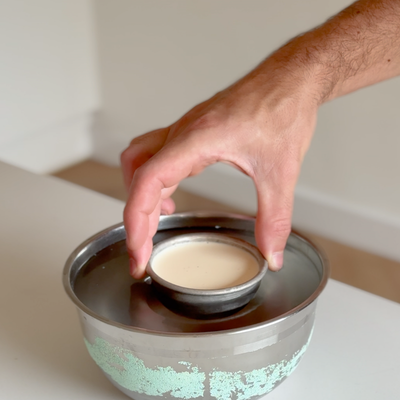
Gently rotate the panna cotta mold in your hand. If it starts to pull away from the edges of the mold and gently slide around inside, it is ready to plate. If it doesn’t move, dip it briefly into the warm water again and check once more. Be careful not to leave it in the water for too long. You want just enough heat to loosen the panna cotta from the mold. If it becomes very soft and you can see melted liquid sloshing around the edges as you rotate it, it has been heated for too long, or the water is too hot.
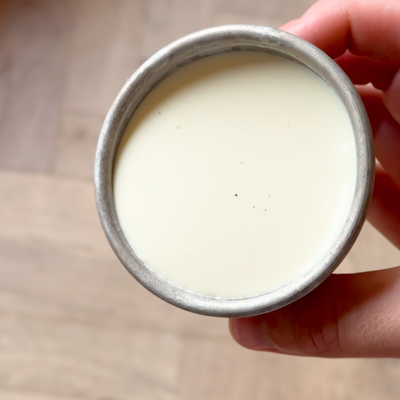
Place a plate on top of the mold, flip it over and gently lift it off. It should release nicely. If it is still not coming off and you don't want to heat it further, hold the plate and mold firmly together with your hands and give it a very brief shake. You should hear a suction release noise. Then place the plate down and remove the mold.
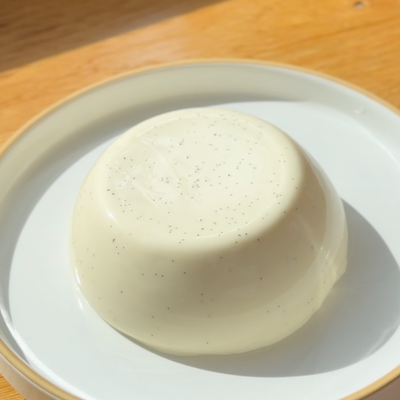
Once de-molded, the panna cottas can be eaten straight away but here are a few notes on serving them, and the recipes:
- Leaving the gelatin panna cottas at room temperature for 5 minutes will just soften them slightly and make the texture even more melt in the mouth. The recipe has been designed so that they have this texture straight from the fridge, but letting them warm up slightly improves it even more. If your room temperature is particularly warm however, these panna cottas are much less heat stable so they will start to droop, and should be served as quickly as possible.
- Iota Carrageenan is much more heat stable so the panna cottas will hold their shape longer, in warmer temperature. If you need to leave the panna cotta at room temperature for longer, say 10-20 minutes before serving, I would increase the iota to 0.4g and then it will hold its shape really well, while the texture will slowly soften giving you a great balance of shape and that melt in the mouth texture.
- If you want to avoid all the stress of demolding them, you can simply set the panna cottas inside of a serving glass. If you are doing this, you can even lower the amount of stabiliser a tiny bit.
- If you do not have 250 bloom strength gelatin powder, using the table below to convert the required amount to your specific bloom. For example, if you have 220 bloom gelatin powder you would need to multiply the required amount for the recipe (5g of 250 bloom) by 1.13 = 5.7g of 220 bloom.
- Manufacturers adjust the weight of gelatin leaves/sheets according to their bloom strength, so that one sheet provides a consistent amount of gelling power regardless of its bloom strength.
